
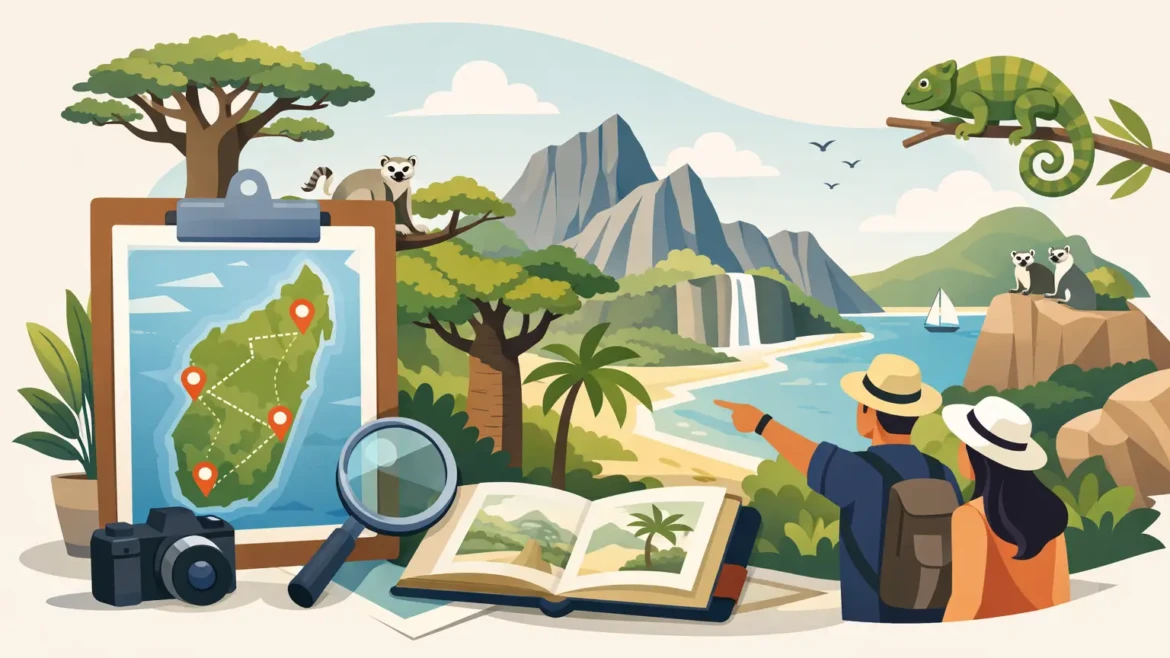
A Madagascar trip can go wrong in one very predictable way – trying to see everything. This island is vast, roads are slow, weather shifts by region, and the best experiences often happen far from each other. If you are researching how to customize Madagascar tour plans, the smartest starting point is not a map. It is deciding what kind of trip you want to remember most.
For some travelers, that means dawn walks for lemurs in rainforest parks. For others, it means baobabs at sunset, a few nights on the coast, and enough comfort between long drives to stay energized. The best customized itinerary is not the one with the most stops. It is the one that matches your interests, your pace, and the realities of travel on the ground.
Start with your trip priorities
Madagascar rewards focus. A traveler who wants wildlife photography should not be pushed into a rushed cross-island route just because it looks ambitious on paper. A couple planning a once-in-a-lifetime trip may want a balance of national parks, local villages, and beach time rather than days of back-to-back overland travel.
Before choosing regions, decide what matters most. Usually that is one of five things: endemic wildlife, dramatic landscapes, cultural immersion, soft adventure, or coastal downtime. Most trips include a mix, but one should lead. That main priority shapes everything else, from driving times to hotel style.
If wildlife comes first, eastern rainforest circuits often make sense. If landscapes are your focus, western baobabs or tsingy routes may be stronger. If you want variety in a limited timeframe, a classic south or central route can deliver a lot without feeling scattered. Customization works best when there is a clear center of gravity.
How to customize Madagascar tour routes by region
Madagascar is not a destination where you casually add a stop because it looks close. A place that appears nearby on a map may take a full day to reach. That is why route design matters as much as destination choice.
The east is ideal for rainforest, lush scenery, and species-rich parks. Travelers often choose this region for close lemur encounters, chameleons, frogs, orchids, and that humid green atmosphere people picture when they think of tropical biodiversity. It is a strong fit for first-time visitors who want iconic wildlife without committing to the country’s harshest road conditions.
The west feels completely different. Here you get dry forests, baobabs, river landscapes, and the kind of golden evening light that photographers love. It can feel more remote and logistically demanding, but it offers some of Madagascar’s most unforgettable scenery.
The south tends to suit travelers who want contrast – highlands, canyons, spiny forest, ring-tailed lemurs, and long overland arcs with changing landscapes. It is one of the best ways to understand how diverse the island really is. The trade-off is time. You need enough days to enjoy the route rather than simply endure it.
Then there is the coast and islands, including Nosy Be and nearby beach extensions. These are perfect if you want to end with rest after inland travel, or if your trip is more about tropical scenery, marine activities, and relaxed luxury than intense park-hopping.
Match the itinerary to your travel style
One of the biggest mistakes travelers make is customizing for attractions instead of for energy. Two itineraries can include the same highlights but feel completely different depending on drive lengths, hotel standards, early starts, and how often you change base.
If you like active days and do not mind long transfers, you can cover more ground. If you prefer comfort and time to absorb each place, fewer stops will create a better trip. Neither approach is more correct. It depends on how you travel.
Couples often do best with a route that mixes high-impact nature with breathing room. Friend groups may be happy with more movement, especially if adventure is the point. Families or older travelers usually benefit from fewer one-night stays and stronger attention to road comfort.
This is where a private itinerary has real value. You are not adapting yourself to a fixed group departure. The trip is built around your pace.
Choose experiences, not just destinations
When people ask how to customize Madagascar tour programs, they often start naming parks. A better approach is to name moments. Do you want to see indri calling in the forest at sunrise? Walk through tsingy formations? Drift down a river with camping nights? Visit local markets and villages between nature stops? End on the beach with snorkeling and fresh seafood?
Those experiences shape a stronger itinerary than a checklist of famous places.
Some travelers want expert-guided wildlife observation, where the value comes from time with skilled local guides who can spot tiny nocturnal species and explain habitat in detail. Others want cinematic landscapes and easier walks. Some care deeply about cultural encounters and want time in towns, craft workshops, or rural communities rather than spending every day in a park.
The more specific you are about the experience, the easier it is to build a trip that feels personal.
Be realistic about timing and season
Season matters in Madagascar more than many travelers expect. Rain can affect roads. Wildlife visibility changes through the year. Beach conditions, humidity, and internal flight reliability can also shift by season and region.
That does not mean there is only one good time to go. It means the right itinerary in July may not be the right itinerary in January.
If your travel dates are fixed, customize around what is strongest during that window. A good local operator will not force a route that looks great online but performs poorly in your actual month of travel. Sometimes the smartest customization is subtraction – removing one overly ambitious leg so the rest of the trip runs smoothly.
Trip length matters just as much. In 10 to 12 days, it is usually better to do one major region well, or combine two complementary areas carefully. In 14 to 16 days, you have room for broader contrast. Beyond that, more remote combinations become realistic without turning the journey into a constant transfer.
Budget for comfort where it matters most
Custom does not have to mean extravagant. It means intentional.
In Madagascar, budget decisions have a bigger impact on experience than travelers sometimes expect. A stronger vehicle, a reliable driver, a well-placed hotel, or a knowledgeable specialist guide can make the difference between a tiring trip and an extraordinary one. This is especially true on long overland routes.
If you want to control cost, focus spending on the parts that most affect safety, comfort, and access. You might choose moderate hotels in secondary stops and save your higher-end stays for places where atmosphere and location really matter. You may decide to keep the route tighter instead of adding expensive domestic flight combinations that reduce time on the ground.
Value in Madagascar is not about choosing the cheapest version. It is about choosing the version that works.
Why local planning makes customization better
This is a country where logistics shape the journey. Drive times can change. Road conditions can vary. Park access, guide quality, hotel consistency, and timing between regions all need local attention.
That is why customization works best with an operator that is truly managing the trip on the ground, not simply reselling a generic plan from afar. A team based in Madagascar can tell you whether your route is too rushed, whether a detour is worth it, and where to invest in better guiding or accommodations.
For US travelers planning from a distance, that local control removes a lot of uncertainty. It is also what allows a trip to stay flexible without becoming chaotic. Travelers of Madagascar, for example, builds private itineraries with local drivers, guides, and vetted hotels so customization is backed by execution, not just good sales language.
Questions to answer before you request a custom itinerary
The fastest way to get a strong proposal is to be clear about your non-negotiables. Tell your planner how many days you have, what type of wildlife or landscapes excite you most, how much driving feels acceptable, what hotel standard you prefer, and whether you want a beach finish.
It also helps to say what you do not want. Maybe you are not interested in camping, do not want domestic flights, or would rather skip very rugged roads. That kind of clarity saves time and leads to a better result.
Photos can inspire a trip, but preferences build one. The more honest you are about pace, comfort, and interests, the more custom the itinerary will actually feel.
The best customized trip feels effortless
A well-designed Madagascar itinerary should feel richer, not busier. You should move through distinct landscapes, meet the island through expert local eyes, and still have enough space to enjoy the journey rather than recover from it.
The real goal is not to fit Madagascar into a schedule. It is to shape the schedule around the Madagascar you most want to experience. Start there, and the trip becomes something far better than a standard tour – it becomes your own version of this extraordinary island.