
Guide de voyage Antananarivo : Histoire, principales attractions et excursions depuis la capitale malgache

Antananarivo — souvent appelée Tana par les habitants — est le cœur battant de Madagascar. Nichée au milieu des hautes terres vallonnées de l’intérieur de l’île, cette capitale fascinante combine des siècles d’héritage royal, des marchés animés et un patchwork de maisons aux toits rouges qui s’étendent sur des collines escarpées. Que vous soyez attiré par l’histoire, la culture ou la nature, Antananarivo offre un aperçu authentique de la vie malgache — et constitue le point de départ idéal pour explorer le reste de l’île.
Brève histoire d’Antananarivo
Antananarivo est un centre de pouvoir et de culture depuis plus de quatre siècles. La ville a été fondée au début des années 1600 par le roi Andrianjaka du peuple merina, qui a installé son enceinte royale sur l’une des douze collines sacrées de la ville. Le nom « Antananarivo » signifie « Ville des Mille », en hommage aux mille guerriers qui la protégeaient.
À la fin du XVIIIᵉ siècle, sous le règne du roi Andrianampoinimerina, Antananarivo devient la capitale d’un royaume malgache unifié. Au XIXᵉ siècle, la ville se développe avec la construction de palais, de tombeaux royaux et de portes fortifiées reflétant à la fois les traditions malgaches et les influences européennes. Lorsque Madagascar devient une colonie française en 1895, Antananarivo conserve son rôle de centre politique et administratif — et après l’indépendance en 1960, elle devient officiellement la capitale nationale.
Aujourd’hui, Antananarivo demeure une ville de contrastes saisissants : héritage royal mêlé à l’architecture coloniale, marchés traditionnels à côté de cafés modernes, et vues intemporelles sur les rizières des hautes terres.
Que voir et faire à Antananarivo
1. La colline royale et le Rova
Dominant l’horizon de la ville se trouve le Rova d’Antananarivo, l’ancien complexe palatial qui abritait autrefois les souverains de Madagascar. Soigneusement restauré après un incendie dévastateur, il constitue l’un des monuments culturels les plus importants du pays. Les visiteurs peuvent explorer les palais, les tombeaux royaux et profiter d’une vue panoramique sur les toits rouges de Tana.
À proximité, le palais d’Andafiavaratra expose des objets royaux et du mobilier d’époque, offrant un éclairage précieux sur le passé royal de la ville.
2. Explorer les marchés et la vie locale
Les marchés d’Antananarivo sont un véritable festin pour les sens. Le marché d’Analakely est un labyrinthe d’étals vendant fruits, épices, vêtements et objets artisanaux. C’est l’endroit idéal pour ressentir l’énergie locale et découvrir l’artisanat malgache.
Pour des souvenirs de qualité, rendez-vous au marché artisanal de La Digue, où vous trouverez cornes de zébu sculptées, sacs en raphia et sculptures traditionnelles en bois. N’oubliez pas de marchander — cela fait partie de l’expérience !
3. Musées et jardins
Les amoureux de nature et d’histoire apprécieront le parc botanique et zoologique de Tsimbazaza, un espace verdoyant abritant des lémuriens, des reptiles et des plantes endémiques.
Le Musée de la Photographie de Madagascar est un autre incontournable : il présente des images saisissantes de l’évolution de la ville au fil des décennies. Si vous préférez les espaces ouverts, faites une balade paisible dans le Jardin d’Andohalo, ou détendez-vous autour du lac Anosy, encadré par les jacarandas en fleurs entre octobre et novembre.
4. Gravir les collines de la Haute-Ville
La haute-ville d’Antananarivo se découvre à pied. Ses escaliers abrupts et ses ruelles étroites relient belvédères, anciennes églises et maisons d’époque coloniale. Se promener dans des quartiers comme Ambohijatovo et Faravohitra révèle des panoramas magnifiques, des scènes de rue animées et le charme authentique qui caractérise Tana.
Excursions et sorties autour d’Antananarivo
Antananarivo est entourée de superbes campagnes, de réserves naturelles et de sites culturels — tous accessibles en quelques heures. Voici les meilleures excursions à faire depuis la capitale.
1. Lemurs’ Park (Excursion d’une demi-journée)
À seulement 22 km au sud-ouest de la ville, Lemurs’ Park est un sanctuaire paisible où plusieurs espèces de lémuriens évoluent librement parmi des jardins tropicaux. C’est idéal pour les familles ou les voyageurs pressés qui souhaitent observer de près les primates emblématiques de Madagascar. Le parc présente également des plantes endémiques et un petit café pour se rafraîchir. Une demi-journée suffit — vous pouvez ensuite profiter d’un déjeuner en ville ou visiter des boutiques artisanales à proximité.
2. Ambohimanga – La colline royale sacrée (Excursion d’une demi-journée)
À environ 20 km au nord-est de Tana se trouve Ambohimanga, un site classé au patrimoine mondial de l’UNESCO et l’un des lieux les plus sacrés de Madagascar. Cet ancien complexe royal fut autrefois la résidence des rois merina et reste un centre spirituel majeur pour le peuple malgache. Le site comprend des portes en pierre, des tombeaux royaux et des maisons traditionnelles entourées de rizières. C’est une visite incontournable pour les passionnés d’histoire et de culture malgaches.
Comptez 3 à 4 heures pour une visite guidée, incluant le trajet à travers les paysages des hautes terres.
3. Croc Farm (Excursion d’une demi-journée près de l’aéroport)
Si vous arrivez à Tana ou en partez, la Croc Farm, près de l’aéroport d’Ivato, constitue un excellent arrêt. Elle abrite crocodiles, lémuriens, tortues et caméléons dans des enclos soigneusement aménagés. Le restaurant sur place sert de savoureux plats malgaches et les jardins offrent un cadre reposant pour passer quelques heures.
4. Réserve exotique de Peyrieras & forêt d’Andasibe (Excursion d’une journée — 5 h à 20 h)
Pour les amoureux de nature, la meilleure excursion d’une journée depuis Antananarivo combine deux étapes inoubliables : la réserve Madagascar Exotic de Peyrieras et le parc national d’Andasibe-Mantadia.
Départ : 5 h — tôt le matin, mais le trajet vers l’est sur la RN2 offre de superbes vues sur les villages des hautes terres et les vallées tropicales.
Votre premier arrêt est la réserve de Peyrieras, à environ 75 km de la capitale. Ce petit sanctuaire est célèbre pour son incroyable collection de caméléons, grenouilles, geckos et papillons. Vous y verrez aussi quelques lémuriens de près, et les guides donnent des explications passionnantes sur la faune endémique de Madagascar.
Poursuivez encore 2 heures pour atteindre Andasibe, l’une des forêts tropicales les plus accessibles de l’île. Le parc abrite le célèbre Indri indri, le plus grand lémurien vivant, dont le cri résonne de manière envoûtante dans la forêt. Vous pourrez aussi observer sifakas, lémuriens bambous, orchidées colorées et végétation tropicale luxuriante.
L’itinéraire typique inclut une marche guidée dans la réserve d’Analamazaotra, un déjeuner dans un lodge local, puis une courte visite d’une forêt communautaire l’après-midi.
Retour : vers 20 h, après une journée complète au cœur de la nature malgache. C’est une longue excursion, mais aussi l’une des plus enrichissantes près de la capitale — parfaite pour découvrir la biodiversité de l’île sans prendre l’avion vers d’autres régions.
Pourquoi visiter Antananarivo
Antananarivo est bien plus qu’une simple porte d’entrée vers Madagascar — c’est une destination qui révèle le cœur et l’histoire de l’île. De la grandeur de ses palais royaux au rythme de ses marchés, en passant par la sérénité de ses vues en hauteur, la ville offre une expérience véritablement authentique.
Ajoutez à cela la possibilité d’explorer des sanctuaires de faune, des collines sacrées et la forêt enchanteresse d’Andasibe, tous accessibles en une journée, et vous obtenez un mélange parfait de culture et de nature.
Que vous restiez deux jours ou une semaine, Antananarivo vous surprendra par sa profondeur, sa diversité et son charme indéniable — une ville qui capture l’âme même de Madagascar.
Vous aimerez aussi…
Ambositra : porte d’entrée du royaume Zafimaniry et cœur de la sculpture sur bois malgache
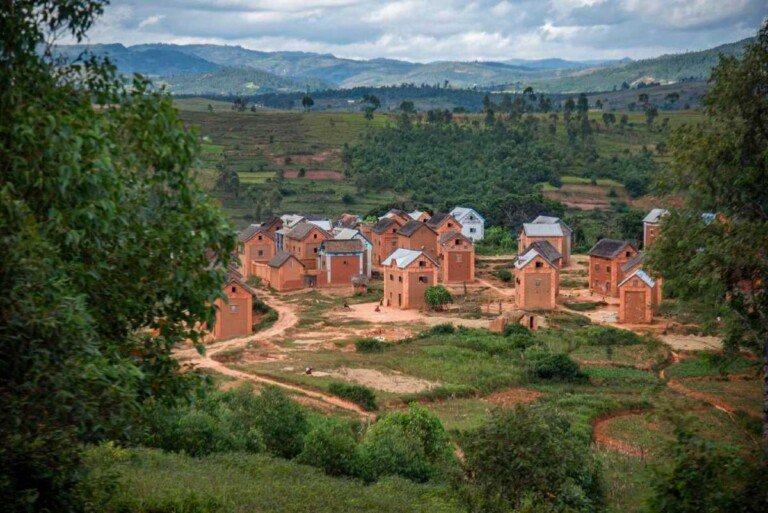
Nichée dans les Hautes Terres centrales de Madagascar, la ville animée d’Ambositra est bien plus qu’une simple halte pratique sur la Route Nationale 7. Connue comme la « capitale de l’art du bois », elle constitue la porte culturelle et artistique vers l’une des cultures les plus uniques et isolées de l’île : le peuple Zafimaniry. Cette région, où de fraîches rizières en terrasses recouvrent les collines ondulantes et où l’air est parfumé par l’eucalyptus et le pin, offre aux voyageurs une immersion profonde au cœur des traditions artisanales malgaches et de paysages spectaculaires des Hautes Terres. La véritable aventure commence toutefois au-delà des limites de la ville, lors des treks de plusieurs jours menant aux villages reculés des Zafimaniry, une culture reconnue par l’UNESCO, dont le savoir-faire complexe de la sculpture sur bois représente l’un des derniers héritages vivants de l’ancienne culture forestière malgache. Cet article explore l’âme artistique d’Ambositra, plonge dans l’histoire et la symbolique des Zafimaniry, et propose un guide détaillé pour entreprendre les inoubliables treks de 2 à 3 jours au cœur de leur territoire montagneux.
Ambositra : le battement de cœur de l’artisanat malgache
Ambositra est la capitale de la région Amoron’i Mania et, historiquement, un carrefour entre les groupes ethniques Betsileo et Merina. Son nom signifie « là où il y a beaucoup de soldats », rappelant son importance stratégique passée. Aujourd’hui, la bataille qui s’y joue est celle de la préservation culturelle, menée à coups de ciseaux à bois et de talent brut.L’épicentre de la sculpture sur bois : L’identité de la ville est indissociable du bois. Des dizaines d’ateliers et de boutiques artisanales bordent ses rues, exposant une impressionnante variété d’objets faits main. Les visiteurs peuvent observer des maîtres artisans et leurs apprentis transformer des blocs de bois précieux tels que le palissandre, l’ébène ou le bois de rose en marqueteries complexes, sculptures et meubles. Le savoir-faire, transmis de génération en génération, est omniprésent. Le Centre d’Artisanat est une étape incontournable pour apprécier la qualité et la diversité des œuvres, allant de maquettes détaillées de voitures et d’avions anciens à d’élégants jeux d’échecs et cadres finement décorés.
Au-delà du bois : un pôle culturel : Si le bois règne en maître, Ambositra recèle d’autres trésors culturels. La ville est une excellente introduction à la culture Betsileo, réputée pour ses techniques sophistiquées de riziculture. Les paysages environnants forment une mosaïque de rizières méticuleusement aménagées en terrasses, témoignage de leur ingéniosité agricole. À courte distance de la ville, de petits villages traditionnels permettent d’observer ce mode de vie ancestral. Le marché local est un spectacle vivant et coloré, mêlant odeurs et saveurs, où l’on trouve aussi bien des produits frais et des épices que des paniers et textiles artisanaux.
Camp de base pratique : Pour les voyageurs, Ambositra est la base logistique essentielle avant et après un trek. C’est ici que l’on organise les guides, que l’on achète les provisions de dernière minute et que l’on s’acclimate au climat des Hautes Terres. Plusieurs hôtels et opérateurs locaux réputés sont spécialisés dans l’organisation de treks guidés vers les villages Zafimaniry, garantissant une expérience sûre, respectueuse et enrichissante.
Le peuple Zafimaniry : gardiens UNESCO d’une culture forestière ancestrale
Le voyage d’Ambositra vers le territoire Zafimaniry est un véritable retour dans le temps. Les Zafimaniry sont un sous-groupe des Betsileo qui se sont réfugiés il y a plusieurs siècles dans les montagnes forestières isolées à l’est d’Ambositra, fuyant les bouleversements politiques et la déforestation liés au royaume Merina. Cet isolement extrême a permis la préservation de leur culture unique, proclamée Chef-d’œuvre du patrimoine oral et immatériel de l’humanité par l’UNESCO en 2003.Une culture sculptée dans le bois : Les Zafimaniry sont les derniers représentants d’une culture du bois autrefois répandue dans les Hautes Terres forestières de Madagascar. Leur vision du monde s’exprime entièrement à travers le bois. Chaque homme est charpentier, maîtrisant l’ensemble du processus, depuis le choix des essences pour leurs propriétés symboliques et pratiques jusqu’aux techniques complexes d’assemblage sans clous ni vis modernes.
Symbolisme et architecture : Leur travail du bois est profondément symbolique. Les maisons traditionnelles sont de véritables chefs-d’œuvre d’architecture, construites sans métal, uniquement grâce à des chevilles et tenons en bois parfaitement ajustés. Les façades sont souvent ornées de motifs sculptés, chacun porteur d’un sens précis :
- Papatoko (toile d’araignée) : symbolise les liens familiaux et la communauté.
- Tanamparoratra (taille de guêpe) : représente le lien entre les vivants et les ancêtres.
- Tambanorana (nénuphar) : symbole de pureté.
- Voronondolo (œil de pigeon) : évoque la vigilance et la famille élargie.
Ce langage symbolique se retrouve également sur les objets du quotidien : assiettes en bois, outils et, surtout, les célèbres panneaux décoratifs Alando. Visiter leurs villages revient à parcourir un musée à ciel ouvert de symboles vivants.
Le trek : un voyage de plusieurs jours au cœur d’un patrimoine vivant
Entreprendre un trek vers les villages Zafimaniry est le point culminant de toute visite à Ambositra. C’est une expérience physiquement exigeante mais profondément gratifiante, mêlant paysages naturels grandioses et immersion culturelle intense. Les treks varient d’une randonnée sportive à la journée à des itinéraires plus complets de 2 ou 3 jours, permettant une approche plus lente et authentique.Pourquoi un trek de plusieurs jours est essentiel : Un trek de 2 ou 3 jours est fortement recommandé par rapport à une excursion à la journée. Il permet d’atteindre des villages plus authentiques et moins fréquentés, situés au cœur du territoire, tels que Fempina, Sakaivo ou Ifasina. L’expérience devient alors un véritable échange culturel. Vous passez la nuit chez l’habitant ou dans un campement simple, partagez les repas avec les familles locales et observez le rythme de la vie quotidienne à l’aube et au crépuscule.
Exemple d’itinéraire de trek de 3 jours :
- Jour 1 : Ambositra – point de départ – premier village. Après un petit-déjeuner matinal, départ en 4×4 depuis Ambositra pour 1 à 2 heures de route en montagne, jusqu’à la fin de la piste. Rencontre avec les porteurs Zafimaniry (un soutien économique essentiel pour la communauté) et début de la randonnée. Marche de 3 à 5 heures à travers forêts de pins et vallées ondulantes, arrivée au premier village dans l’après-midi. Visite des ateliers, découverte du processus de sculpture, dîner traditionnel et nuit sur place.
- Jour 2 : immersion profonde et villages successifs. Après un petit-déjeuner simple, journée complète de randonnée entre plusieurs villages (5 à 7 heures de marche). Traversée de crêtes montagneuses spectaculaires, de forêts sacrées et découverte des plantes médicinales avec le guide. Chaque village révèle des styles architecturaux et des motifs distincts. Nuit dans un second village.
- Jour 3 : retour à la civilisation. Dernière matinée au village, idéale pour acheter directement auprès des artisans, de manière éthique et significative. Après les adieux, retour à pied jusqu’à la route, puis trajet en véhicule vers Ambositra, arrivée en fin d’après-midi avec des souvenirs et des images inoubliables.
Logistique, guides et préparation : Ce trek ne se fait pas en autonomie. Un guide local est obligatoire, tant pour l’orientation que pour le respect des codes culturels. Des opérateurs reconnus comme Ivato River Lodge (situé près d’Ambositra et spécialisé dans ce type d’expériences) sont vivement recommandés.
Que prévoir : Chaussures de randonnée déjà rodées, vêtements chauds (nuits fraîches en altitude), veste imperméable, sac de couchage, lampe frontale, gourde avec pastilles de purification ou filtre, argent liquide pour l’artisanat, et un véritable esprit d’aventure. Des porteurs peuvent être engagés pour transporter l’équipement.
Préservation et tourisme responsable
La culture Zafimaniry fait face à des pressions modernes. La déforestation menace les essences de bois essentielles à leur artisanat. L’attrait du travail urbain éloigne les jeunes générations, mettant en péril la transmission des savoirs. Le tourisme responsable est un outil puissant de préservation.
En participant à un trek avec un opérateur sérieux, vous contribuez directement à l’économie locale par les honoraires des guides et porteurs, l’hébergement chez l’habitant et l’achat d’œuvres authentiques. Vous démontrez ainsi que ce patrimoine unique a une valeur reconnue et admirée à l’échelle internationale, renforçant la fierté culturelle de la communauté.
Conclusion : bien plus qu’un trek, un passage porteur de sens
Ambositra et les terres Zafimaniry offrent une expérience de voyage qui engage à la fois le corps, l’esprit et l’âme. Elle commence dans l’effervescence créative d’une ville des Hautes Terres, où le bois devient art, et s’achève par une randonnée en montagne vers la source même de cette inspiration. Ce n’est pas un voyage passif, mais un pèlerinage actif à la rencontre des gardiens d’un savoir ancestral.
Marcher sur les sentiers forestiers entre les villages, dormir au sein d’une communauté ayant peu changé depuis des siècles et comprendre les histoires derrière chaque motif sculpté est un privilège rare. Ce voyage est bien plus qu’une randonnée : c’est une immersion dans l’âme de l’artisanat malgache, laissant une profonde admiration pour le peuple Zafimaniry, non comme une culture figée, mais comme une communauté vivante et résiliente, fière de préserver son chef-d’œuvre du patrimoine immatériel pour le monde.
Contactez Nous
Circuits recommandés
No pages found.