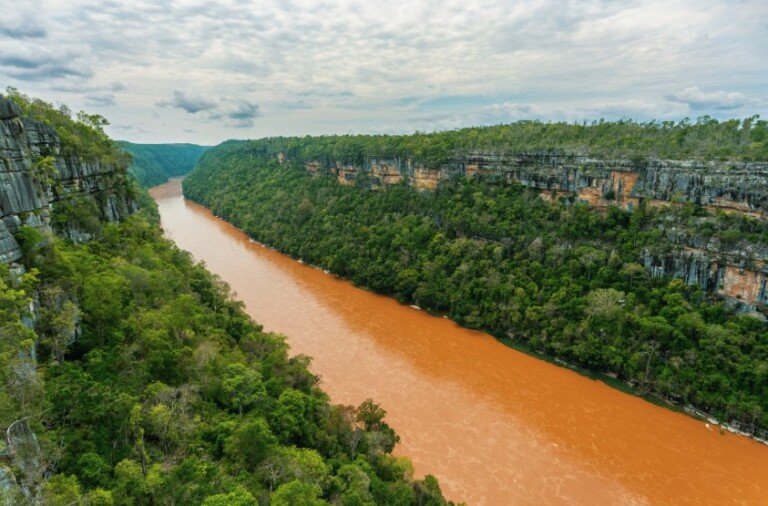
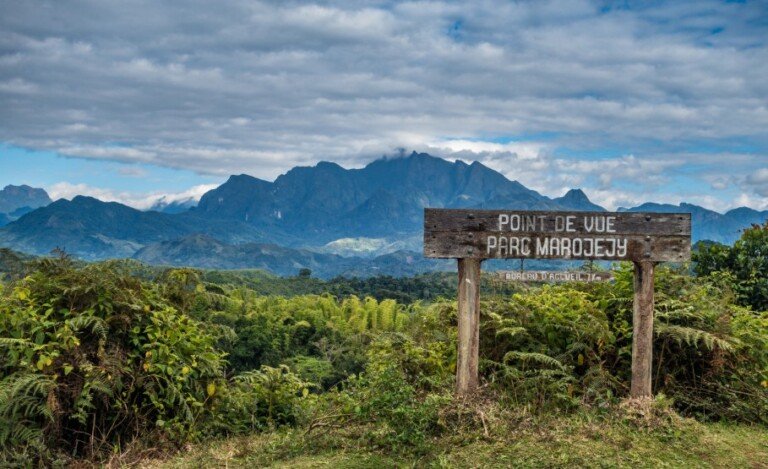
Madagascar, an island of many faces, offers an unparalleled wealth of biodiversity and spectacular landscapes.
At the heart of this journey, you will discover three emblematic sites: the Alaotra region, renowned for its vast marshlands and reed forests; the untouched primary rainforest of Zahamena, listed as a UNESCO World Heritage Site; and Andasibe National Park, a true paradise for nature lovers.
Exploring these regions means total immersion in a unique environment where flora and fauna inspire constant wonder.
The Alaotra region is home to the only reed-dwelling fishing lemur, a rare endemic species living among marshes and waterways.
The dense, well-preserved forest of Zahamena shelters exceptional biodiversity, with numerous rare and endemic species, while Andasibe National Park, famous for its iconic lemurs such as the Indri, stands as a sanctuary for wildlife and plant life.
This journey is designed for true nature enthusiasts, offering deep immersion into one of the richest and most mysterious ecosystems on Earth.
Day 1 – Arrival in Antananarivo
Arrival at Ivato International Airport, where you are welcomed and assisted before transferring to your centrally located hotel in Antananarivo, Madagascar’s capital spread across rolling hills. Depending on arrival time, first impressions include lively streets, traditional markets, and panoramic views over the Upper and Lower Towns.
Overnight at Havana Resort Hotel or similar.
Day 2 – Antananarivo → Ambatondrazaka
Approx. 310 km – 10 hours’ drive
Early departure from Antananarivo at 07:00 am, heading east toward the lush regions of the Alaotra basin. After approximately three hours of driving (about 100 km), arrival in Moramanga, an important crossroads town. Here the route turns north, leaving the main paved road and entering a more remote area.
The secondary road toward Ambatondrazaka is in poor condition, significantly slowing progress but offering insight into rural Madagascar, with rice fields, small villages, and daily agricultural activities along the way. Arrival in Ambatondrazaka shortly after sunset.
Overnight at Vahiné Hotel or similar.
Day 3 – Ambatondrazaka → Lake Alaotra → Ambatondrazaka
After breakfast, excursion by traditional canoe along the shores and marshlands of Lake Alaotra, Madagascar’s largest lake and one of its most important wetland ecosystems. The lake is the country’s main rice-producing region and a vital habitat for wildlife.
This area is the exclusive home of the Alaotra bamboo lemur (Hapalemur alaotrensis), also known as the fishing lemur, the only primate in the world living entirely in marsh vegetation and classified as critically endangered.
In the afternoon, visit a nearby lakeside village to discover the daily life, fishing techniques, and traditions of the communities living around the Alaotra basin.
Return to Ambatondrazaka.
Overnight at Vahiné Hotel or similar.
Days 4 to 7 – Ambatondrazaka → Antanandava → Zahamena National Park
Early morning departure toward Antanandava, a village located approximately 60 km north of Ambatondrazaka (about 2 hours’ drive). Upon arrival at the village entrance, transfer by Kubota tractor for about one hour along a rough forest track to reach the entrance station of Zahamena National Park.
Zahamena is one of Madagascar’s most pristine and biologically rich protected areas. Characterized by dense eastern tropical rainforest, it hosts a remarkable diversity of wildlife, including numerous lemur species, rare amphibians, endemic birds, and a rich variety of plant life typical of humid mid-altitude forests.
Classified as a UNESCO World Heritage Site, the park protects a unique ecosystem that has remained largely untouched due to its remoteness.
Installation at a forest camp located near a spectacular waterfall approximately 60 meters high, surrounded by primary rainforest. Over the next days, guided walks allow exploration of the forest, observation of wildlife, and immersion in one of Madagascar’s wildest natural environments.
Two nights are spent at the forest camp within the park, followed by continued exploration before returning toward Antanandava.
Day 8 – Zahamena → Moramanga → Andasibe
Approx. 200 km – 7 hours’ drive
Morning departure from Zahamena, returning to Antanandava by Kubota tractor, then continuing by road to Moramanga. From there, proceed south-east toward Andasibe, a vast and well-preserved forest region renowned for its exceptional biodiversity and accessibility.
Arrival in Andasibe in the afternoon.
Overnight at Feon’ny Ala Hotel or similar.
Day 9 – Andasibe – Andasibe-Mantadia National Park
Full day dedicated to exploring Andasibe-Mantadia National Park, one of Madagascar’s most famous protected areas. The visit focuses first on the Analamazaotra Special Reserve, where trails allow relatively easy observation of several lemur species, including the iconic Indri indri, the largest living lemur, known for its powerful and haunting calls.
Other species commonly encountered include bamboo lemurs, brown lemurs, woolly lemurs, and numerous reptiles, birds, and orchids.
For more adventurous travelers, there is the option of a more demanding hike in the Mantadia National Park section, located about two hours away by forest track, offering deeper immersion into primary rainforest.
In the evening, guided night walk in the Mitsinjo Reserve to observe chameleons, frogs, insects, and nocturnal lemurs.
Overnight at Feon’ny Ala Hotel or similar.
Day 10 – Andasibe → Antananarivo
Approx. 160 km – 6 hours’ drive
Return drive to Antananarivo. En route, visit the Royal Hill of Ambohimanga, a sacred site listed as a UNESCO World Heritage Site and former royal residence of King Andrianampoinimerina. The site offers insight into Malagasy history, royal traditions, and spiritual beliefs, as well as panoramic views over the surrounding countryside.
Arrival in Antananarivo in the late afternoon.
Overnight at Chat’o Park Hotel or similar.
Day 11 – Antananarivo – Departure
According to your international flight schedule, transfer to Ivato International Airport for departure.
End of our services.
Rates per person
1 traveler: €3,500 – single room
2 travelers: €2,250 – 1 double/twin room
3 travelers: €2,050 – 1 triple room
4 travelers: €1,900 – 2 double/twin rooms
For other options, please contact us.
Best Time to Travel
April – October
Included
Private vehicle with French-speaking driver | Entrance fees and local guides for mentioned parks | Accommodation with dinner and breakfast | Full-board camping in Zahamena | All transfers
Not Included
Entry visa (€10 per person) | Lunches | Drinks | Personal expenses | Any services not listed under “Included”
Moramanga
Moramanga, strategically located on RN2 between Antananarivo and Toamasina, is a key stop for travelers heading toward eastern Madagascar.
Only about 30 km from Andasibe, the town serves as an economic and cultural crossroads in the heart of the Highlands.
Once considered merely a transit point, Moramanga deserves a real stop for its history, vitality, and natural surroundings.
The town is known for its vast pine and eucalyptus plantations, largely developed for timber and pulp production.
This intensive forestry has often expanded at the expense of remaining primary rainforest, raising major ecological concerns and highlighting the importance of protecting nearby natural areas such as the Ankeniheny–Zahamena forest corridor.
Historically, Moramanga holds strong symbolic importance. It was here that the major Malagasy nationalist uprisings of 1947 began, a tragic episode in the struggle for independence.
The Gendarmerie Museum, one of the country’s best-organized museums, provides valuable insight into this period and the evolution of Madagascar’s security forces.
Moramanga is also an important railway hub, one of the few places where rail transport still plays a significant role, linking the town to Ambatondrazaka and the east coast via the FCE line.
Its lively and colorful market reflects everyday local life, with vanilla, spices, agricultural products, tools, and handicrafts traded in a vibrant atmosphere.
The town is an ideal base for exploring the region’s natural treasures. In addition to Andasibe-Mantadia National Park, accessible in under an hour, Moramanga also provides access to remote forest massifs, traditional villages, and rivers suitable for canoeing.
Between Merina traditions, Betsimisaraka influences, and transitional landscapes, Moramanga offers an authentic immersion into a region where nature, history, and culture intertwine.
Ambatondrazaka
Ambatondrazaka, the main town of the Alaotra-Mangoro region, is often seen as the gateway to Madagascar’s largest rice-producing basin.
Located northeast of Moramanga and connected by a steadily improving road, it occupies a strategic position between the Highlands and the Lake Alaotra plains.
The surrounding region is dominated by vast open landscapes, where endless rice fields stretch as far as the eye can see.
The lakeside villages and nearby hills bear witness to intense agricultural activity, as well as the long-term effects of deforestation.
Formerly forested hills now suffer from severe erosion caused by bush fires and vegetation loss, resulting in red, deeply scarred slopes.
Yet Ambatondrazaka is more than an agricultural center.
Local life is lively, shaped by weekly markets, the arrival of the train from Moramanga, and trade in lake products such as fish, vegetables, rice, and handicrafts.
Small restaurants, hotels, and cultural activities highlight the traditions of the Sihanaka people, the dominant ethnic group around Lake Alaotra.
The town is also an important starting point for exploring the surrounding region.
Traditional villages, marshlands, and protected areas offer excellent wildlife observation opportunities, especially for the emblematic local species: the Alaotra bamboo lemur, found nowhere else in the world and living exclusively among the lake’s reeds.
Finally, Ambatondrazaka serves as an excellent base for expeditions to Zahamena National Park, one of Madagascar’s forest jewels.
Its proximity to protected natural areas makes it a key stop for travelers seeking a rural, authentic Madagascar, still largely untouched by mass tourism.
Zahamena National Park
Zahamena National Park, listed as a UNESCO World Heritage Site within the Rainforests of the Atsinanana, is one of Madagascar’s richest and most mysterious biological zones.
Located between Ambatondrazaka and the east coast, this mountainous and difficult-to-access park has long remained sheltered from mass tourism, preserving its exceptional biodiversity and intact landscapes.
Covering more than 64,000 hectares of dense humid forest, the park hosts luxuriant vegetation across all altitudes.
It is home to over 150 vascular plant species, rare ferns, more than 500 tree species, 22 palm species, and around 60 orchid varieties.
The evergreen rainforest forms a true natural laboratory, fascinating for botanists and nature lovers alike.
Zahamena’s fauna is equally remarkable.
Nearly 112 bird species have been recorded, including many extremely rare endemics, making it a paradise for birdwatchers.
The park also shelters over 40 reptile species and 13 lemur species, including the Indri, diademed sifaka, black-and-white ruffed lemur, hairy-eared dwarf lemur, and the elusive aye-aye.
The Alaotra bamboo lemur finds refuge in nearby marshlands.
Access to the park requires careful organization.
Zahamena has deliberately remained wild, with difficult tracks, steep trails, and simple logistics.
This isolation guarantees total immersion in pristine primary forest, where bird calls, rustling leaves, and morning mist create an almost mystical atmosphere.
Visitors discover waterfalls, rivers, panoramic viewpoints, and deep forests in an environment where human presence is minimal.
Zahamena also plays a key role in understanding Madagascar’s environmental challenges.
Facing strong agricultural pressure and deforestation, the park is vital for species conservation and water resource protection.
A visit to Zahamena is therefore more than an excursion—it is an immersion into one of the island’s last great humid forests, a natural sanctuary of immense value.
Andasibe-Mantadia National Park
Andasibe-Mantadia National Park is one of Madagascar’s most emblematic natural sites and certainly the most visited in the eastern region.
Located about 150 km from Antananarivo, it is ideal for a complete immersion in tropical rainforest within a short time.
The park is divided into two distinct areas: Analamazaotra, the most accessible and frequently visited, and Mantadia, wilder, larger, and far more preserved.
Together, they form a true biodiversity sanctuary reflecting the exceptional richness of eastern Madagascar’s forests.
Andasibe-Mantadia is best known for the Indri Indri, the largest living lemur.
Its powerful, haunting call echoes through the forest and is one of Madagascar’s most moving natural sounds.
Observing the Indri in its natural habitat is an unforgettable experience.
The park also shelters many other lemur species, including diademed sifakas, bamboo lemurs, nocturnal mouse lemurs, and the aye-aye in more remote areas.
Birdlife is equally impressive, with rare species such as the Tylas, Madagascar blue roller, and crested coua.
Reptiles, amphibians, and chameleons complete this extraordinary ecosystem.
Vegetation is dense and luxuriant: tree ferns, giant lianas, cascading orchids, centuries-old trees, and countless endemic plants create a spectacular setting.
Mantadia, in particular, offers steeper terrain and fewer visitors, ideal for hikers and wilderness enthusiasts.
Access to Analamazaotra is easy, just a few kilometers from Andasibe village, while Mantadia requires more planning and a longer, sometimes challenging track depending on the season.
Well-trained local guides offer both daytime and nighttime visits, revealing wildlife active at different times.
Andasibe-Mantadia is also a model of community-based conservation.
Local populations actively participate in forest protection through ecotourism initiatives such as the V.O.I.M.M.A. community reserve, offering additional immersion in locally managed areas.
Visiting this park means entering a world of mist, lemur calls, and deep green forest—an essential experience for any journey to Madagascar.
[ess_grid alias=”4points2″][/ess_grid]