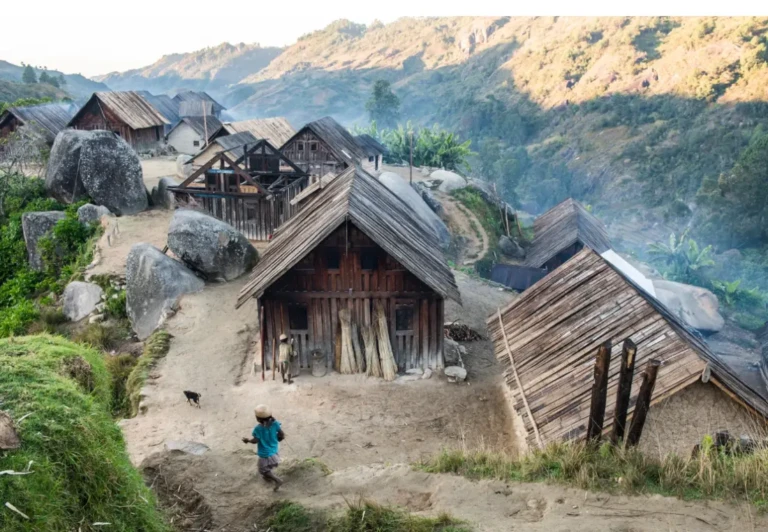
Between each stage, the roads reveal the country’s rich cultural heritage: Antsirabe and its craftsmen, the Zafimaniry villages with their finely carved wooden houses, and the Sahambavy tea plantations.
Combining cycling, hiking and cultural discovery, this journey offers rare immersion into Malagasy daily life — among rice fields, forests, savannas and traditional villages. An intense and authentic experience where every pedal stroke brings you closer to the vibrant heart of Madagascar.
Day 1 – Arrival in Antananarivo
Arrival at Ivato International Airport according to your international flight schedule. After welcome assistance, transfer to the center of Antananarivo, the capital of Madagascar, spread across a series of hills and characterized by a blend of traditional Malagasy architecture and colonial heritage. Depending on arrival time, first impressions include lively streets, colorful markets, and panoramic viewpoints over the city.
Overnight at Hôtel Havana Resort or similar.
Day 2 – Antananarivo → Andasibe
Approx. 140 km – 4 hours by road
After breakfast, departure eastward toward Andasibe, traveling through contrasting landscapes that gradually change from the dry highlands of the central plateau to lush, humid tropical forests. Along the way, rice terraces, small villages, and roadside markets illustrate everyday rural life.
Arrival around midday. In the afternoon, visit the Mitsinjo Community Reserve, an exemplary conservation project managed by the local community. This reserve is one of the best places to observe the iconic Indri indri, the world’s largest living lemur, easily recognized by its haunting calls echoing through the forest. Other wildlife includes bamboo lemurs, chameleons, and endemic bird species.
After dinner, guided night walk along the forest edge to spot nocturnal wildlife such as mouse lemurs, leaf-tailed geckos, and frogs.
Overnight at Hôtel Sahatandra River or similar.
Day 3 – Andasibe → Mantadia National Park (Cycling Loop)
Approx. 50 km cycling – round trip
Early morning departure for the first cycling stage, a scenic 50 km round trip leading to Mantadia National Park, the most pristine and wild section of the Andasibe–Mantadia forest complex. This primary rainforest is renowned for its exceptional biodiversity.
During a guided walk of approximately three hours inside the park, possible sightings include Indri, diademed sifaka, gray bamboo lemur, red-bellied lemur, and the spectacular black-and-white ruffed lemur, along with tree ferns, orchids, and towering hardwoods.
On the return ride, stop at the Vakona Reserve to visit Lemur Island, where several lemur species can be observed at close range. Return to Andasibe in the late afternoon.
Overnight at Hôtel Sahatandra River or similar.
Day 4 – Andasibe → Antsirabe
Approx. 320 km – 10 hours by road
Early morning departure toward Antsirabe, a journey across the central highlands. Stop in Ambatolampy, a town famous for its traditional aluminium foundries, where recycled metal is handcrafted into everyday utensils using age-old techniques.
Arrival in Antsirabe in the afternoon. Founded by Norwegian missionaries, the town is known for its cool climate, colonial buildings, and thermal springs. Visit the main local market, bustling with fresh produce and handicrafts.
Overnight at Hôtel H1 Antsirabe or similar.
Day 5 – Antsirabe → Ambositra → Anjozorozoro
130 km by vehicle + 25 km cycling
Short transfer to Lake Andraikiba, the starting point of a cycling stage leading to Lake Tritriva, a striking volcanic crater lake surrounded by eucalyptus forests and steep cliffs, deeply rooted in local legends.
After the ride, continue by road to Ambositra, the cultural heart of the Zafimaniry people, internationally renowned for their intricate wood carving traditions. Continue to Anjozorozoro, a quiet rural area surrounded by hills and rice fields.
Overnight at Ivato River Lodge.
Day 6 – Anjozorozoro → Antoetra → Sakaivo → Anjozorozoro
Approx. 50 km cycling
Cycling departure toward Antoetra, following a rough track mainly used by bicycles and pedestrians. The route crosses remote countryside and traditional villages. After about one hour, arrival in Antoetra, then continuation to Laibury.
On foot, descent to Sakaivo, a traditional Zafimaniry village, famous for its carved wooden houses and doors, a UNESCO-recognized cultural heritage. After the visit, climb back to Laibury, retrieve the bicycles, and return to the lodge.
Overnight at Ivato River Lodge or similar.
Day 7 – Anjozorozoro → Ambohimahasoa → Ranomafana
110 km by vehicle + 40 km cycling
Drive south to Ambohimahasoa, then begin a cycling stage along RN25 toward Ranomafana, passing rolling hills, rice paddies, and rural settlements.
Arrival at Ranomafana National Park, set within dense rainforest and known for its thermal waters.
Overnight at Karibotel or similar.
Day 8 – Ranomafana → Sahambavy
70 km by vehicle + 15 km cycling
Morning visit of Ranomafana National Park, one of Madagascar’s richest biodiversity hotspots. The park is home to 12 species of lemurs, including Milne-Edwards’ sifaka, the rare golden bamboo lemur, and black-and-white ruffed lemur, as well as countless amphibians, reptiles, and medicinal plants.
After the visit, drive to Sahambavy, surrounded by rolling hills and tea fields. Final 15 km by bicycle through the tea plantations.
Overnight at Lac Hôtel Sahambavy.
Day 9 – Sahambavy → Fianarantsoa → Ambalavao
Approx. 110 km
Visit of the Sahambavy tea plantations and factory, the only tea-producing area in Madagascar. Continue to Fianarantsoa, cultural and intellectual capital of the south, and explore the historic Upper Town, with its old churches and panoramic viewpoints.
Proceed to Ambalavao and visit the Anja Community Reserve, famous for its large population of ring-tailed lemurs (Lemur catta) living among granite outcrops.
Overnight at Tsinimparihy Lodge.
Day 10 – Ambalavao → Tsaranoro Valley
20 km by vehicle + 35 km cycling
Departure toward the spectacular Tsaranoro Valley, dominated by massive granite cliffs and dramatic landscapes. Cycling stage of approximately 35 km through rice fields, rocky plains, and traditional villages.
In the afternoon, hike up Chameleon Peak, offering breathtaking panoramic views over the valley and surrounding mountains.
Overnight at Soa Lodge or similar.
Day 11 – Tsaranoro → Ihosy → Ranohira
150 km by vehicle + 70 km cycling
Departure from Tsaranoro toward Ihosy, then begin a long and scenic cycling stage across the Ihorombe Plateau, one of the most striking sections of RN7, characterized by wide open spaces, savannah landscapes, and distant mountain ranges.
Arrival in Ranohira, gateway to Isalo National Park.
Overnight at ITC Lodge or similar.
Day 12 – Isalo National Park (Cycling & Hiking)
Approx. 50 km cycling
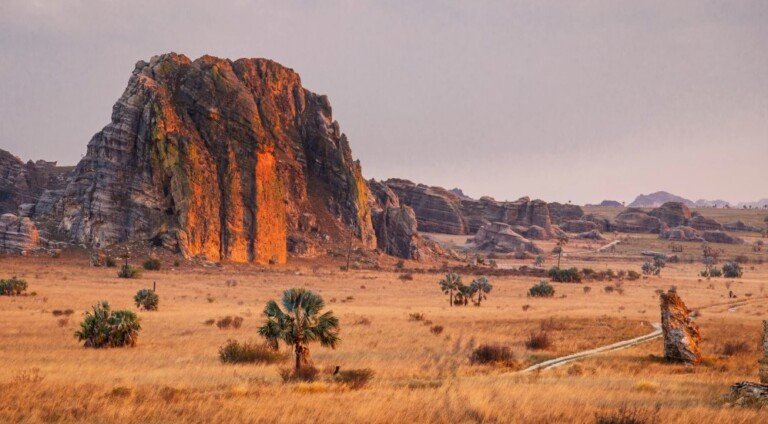
Full day dedicated to exploring Isalo National Park, a spectacular sandstone massif shaped by erosion into deep canyons, natural pools, waterfalls, and palm-lined oases.
Cycling toward the Canyons of Rats and Makis, followed by hikes to natural swimming pools surrounded by Pachypodium, aloes, and endemic palms. Sunset at the iconic Isalo Window, a natural rock formation glowing in the evening light.
Overnight at ITC Lodge or similar.
Day 13 – Ranohira → Toliara → Ifaty
210 km by vehicle + 40 km cycling
Departure toward Toliara, capital of the southwest. From there, continue cycling to Ifaty, a coastal village known for its turquoise lagoon, coral reef, and unique spiny forest ecosystem with baobabs and endemic plants.
Overnight at Bamboo Club or similar.
Day 14 – Ifaty → Toliara → Antananarivo
Approx. 40 km by road
Transfer to Toliara Airport for the domestic flight to Antananarivo. Welcome upon arrival and transfer to the hotel.
Overnight at Hotel San Cristobal or similar.
Day 15 – Antananarivo – Departure
According to your international flight schedule, transfer to Ivato International Airport.
End of our services.
Prices per person
1 traveler: €3,500 – single room
2 travelers: €2,250 – 1 double/twin room
3 travelers: €2,050 – 1 triple room
4 travelers: €1,900 – 2 double/twin rooms
For other options, please contact us.
Best time to travel
April – October
Included
Electric fat bike | Domestic flight | Vehicle with French-speaking driver | Entrance fees and guided visits as mentioned | Accommodation (dinner & breakfast included) | All transfers (airports, boats, crossings) | Manambolo River descent by dugout canoe with full board and camping equipment
Not included
Entry visa (€35 per person) | Lunches | Drinks | Personal expenses | Anything not mentioned under “Included”
Andasibe
The small village of Andasibe serves as much more than just a transit point; it is a captivating destination worth a significant detour for its misty, rainforest atmosphere and charming traditional wooden houses. It acts as the primary gateway to one of Madagascar’s most celebrated protected areas, Andasibe-Mantadia National Park. Here, nature lovers can immerse themselves in lush biodiversity, famously waking up to the haunting, whale-like calls of the Indri Indri, the largest lemur species in existence. The village itself offers a quaint, serene escape where the air is fresh, and the surrounding verdant landscape provides a perfect introduction to the island’s unique eastern ecosystem.
Antsirabe
Located over 1,400 meters above sea level in the Vakinankaratra region, Antsirabe enjoys a refreshingly cool climate that contrasts sharply with the coast. This former colonial spa town has meticulously preserved its historical charm, evident in its wide boulevards and elegant European-style architecture. It is a vibrant hub of activity, famous for its colorful rickshaws, known locally as pousse-pousse. Beyond the city center, the area is perfect for outdoor enthusiasts, offering excellent opportunities for cycling through the highlands, horse riding, and hiking around the mysterious, emerald-green crater lake of Tritriva or the rugged slopes of Mount Ibity.
Ambositra
Often referred to as the art capital of Madagascar, Ambositra is a charming rural town famous globally for its intricate wood carving and traditional Betsileo craftsmanship. The town is surrounded by picturesque artisan villages and scenic hills, making it a cultural treasure trove for visitors. A walk through the town center reveals numerous workshops where skilled artisans transform rosewood and ebony into stunning marquetry and sculptures. The surrounding countryside is equally compelling, featuring terraced rice paddies that showcase the agricultural ingenuity of the Betsileo people, providing a stunning backdrop to a town deeply rooted in artistic heritage.
Zafimaniry Villages
Hidden within the mist-covered highlands, the Zafimaniry people are renowned for their ancestral woodworking traditions, a skill passed down through generations. Their remote villages are true masterpieces of vernacular architecture, constructed entirely without nails, where every beam, shutter, and wall is intricately carved with geometric patterns symbolizing their cosmology. These communities are UNESCO World Heritage candidates, recognized for their unique cultural value. Visiting these villages often requires a trek through eucalyptus forests and rugged terrain, offering an authentic glimpse into a way of life that has remained largely unchanged for centuries, deeply connected to the forest and the land.
Ranomafana
Hidden in a deep, lush valley covered in dense tropical rainforest, Ranomafana is famous not only for its natural hot springs—which gave the town its name—but also for its exceptional national park. This park is a biodiversity hotspot, rich in endemic wildlife that includes the rare golden bamboo lemur, which was discovered here in the 1980s. The region attracts scientists and eco-tourists alike who come to explore its steep, misty trails. The town itself has a relaxed, welcoming atmosphere, intersected by the rushing Namorona River, making it the perfect base for night walks to spot chameleons and days spent exploring the cloud forest.
Sahambavy
Ideally situated in the highlands, Sahambavy is best known for its vast, rolling tea plantations that create a stunning, manicured green landscape unlike anywhere else on the island. It is home to Madagascar’s only tea factory, where visitors can take guided tours to learn about the plucking, drying, and processing of tea leaves. The area is incredibly peaceful, offering a serene environment centered around the picturesque Lake Sahambavy. It is a fantastic spot for a quiet retreat, allowing travelers to walk through the endless rows of tea bushes, enjoy a picnic by the water, and experience a different, quieter side of Malagasy agriculture.
Ambalavao
Nestled amongst giant granite boulders, Ambalavao is a lively and historic Betsileo town known for hosting one of the country’s largest zebu markets, where herders from across the region gather to trade cattle. It is also the center for the production of Antemoro paper, a unique flower-embedded paper made from the bark of the Avoha mulberry bush. Additionally, the town is famous for its wild silk production. As a gateway to the spectacular Andringitra National Park, Ambalavao offers a perfect blend of bustling cultural commerce and access to some of the most dramatic mountain scenery in Madagascar.
Tsaranoro Valley
A spectacular valley dominated by massive, towering granite cliffs, the Tsaranoro Valley is often compared to Yosemite for its sheer rock faces. It is an absolute paradise for rock climbers and hikers, offering routes that range from gentle forest walks to challenging ascents up the “Chameleon” peak. Despite its dramatic geology, the valley floor is peaceful, dotted with small villages that still live to the rhythm of traditional rice cultivation. Here, you can spot ring-tailed lemurs playing near your camp and watch the sunset turn the granite walls a fiery orange, creating a magical and secluded atmosphere far from the tourist crowds.
Ranohira
Sitting on the edge of a vast, grassy plateau, Ranohira serves as the essential gateway to Isalo National Park and its dramatic, Jurassic-era sandstone landscapes. The town has grown to support the influx of visitors who come to marvel at the park’s deep canyons, natural swimming pools, and bizarre rock formations. While the town itself is small and dusty, it offers a variety of lodges and hotels that provide stunning views of the Isalo massif. It is the starting point for trekking adventures that lead through dry deciduous forests to hidden oases, making it a crucial stop for anyone traveling the famous Route Nationale 7.
Toliara
Known affectionately as the “City of the Sun” for its hot, arid climate and bright skies, Toliara is a major coastal hub located in the southwest of Madagascar. It serves as the terminus of the RN7 highway and boasts a vibrant atmosphere filled with music, rickshaws, and bustling markets. The city is rich in cultural heritage, featuring museums dedicated to the tribes of the deep south and the region’s unique marine life. Nearby, visitors can access the beautiful beaches of Ifaty and Anakao, or visit the Arboretum d’Antsokay to see a vast collection of the bizarre spiny forest plants unique to this dry region.