
For decades, the mention of Antananarivo (Tana) conjured images of vibrant markets, historic palaces, and—unfortunately—legendary traffic jams. The embouteillages of the capital were not just a nuisance; they were a way of life, turning a 5-kilometer commute into a two-hour ordeal.
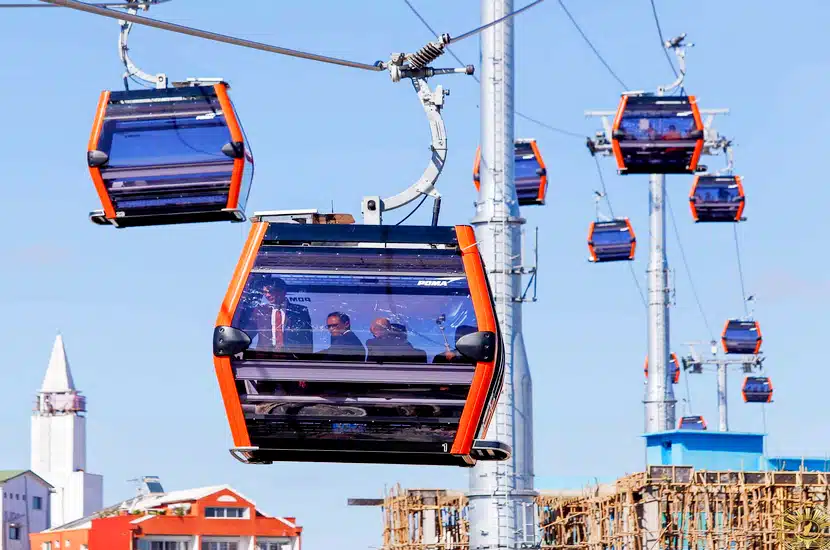
But if you visit Tana today, in late 2025, you will notice a drastic change in the skyline. Gliding silently above the chaotic streets, orange cabins ferry thousands of commuters between the hills.
The Antananarivo Cable Car (TPC) is no longer just a “project” or a CGI rendering. It is a reality. Officially inaugurated in June 2024, it has now been operational for over 18 months.
However, the road to completion was not smooth. Born amidst controversy and completed during a period of intense political instability, the project became a symbol of the country’s divide.
Here is everything you need to know about the Antananarivo Cable Car in 2025: the experience, the controversy, and why you should ride it.
1. From Blueprint to Reality: The Project Status in 2026
Back in 2021, when the project was announced, many locals were skeptical. It seemed like a futuristic dream for a city struggling with basic road infrastructure.
Fast forward to today, and the “Orange Line” is fully functional.
- The Route: It connects Anosy (the administrative heart near the lake) to Ambatobe (the residential hill), with stops at key points like Soarano and Ivandry.
- The Speed: What used to be a 90-minute drive during rush hour now takes approximately 15 to 20 minutes by air.
- Capacity: The system moves thousands of passengers per hour, significantly easing the burden on the congested streets below.
For the traveler, this is a game-changer. It means you can stay in the nicer hotels of the city center and visit the restaurants of Ambatobe without losing half your day in a taxi.
2. Navigating the Political Storm
You asked about the situation following the political upheaval. It is impossible to discuss the cable car without discussing the context in which it opened.
The period surrounding the 2023 elections and the subsequent political tensions was a critical moment for Madagascar. The opposition labeled the government’s actions a “soft coup,” and protests rocked the capital. During this time, the Cable Car became a lightning rod for criticism.
The Controversy
Critics argued that in a country where many live on less than $2 a day, spending nearly €150 million on a “ski lift for the city” was tone-deaf. There were fears that if the government fell or if the political crisis deepened, the project would be abandoned—left as a “white elephant” hanging over the city.
The Survival
Despite the protests and the fragile political landscape, the project pushed through. Why? Because the congestion in Tana had become an economic emergency. The city was suffocating. Since its opening in mid-2024, the narrative has shifted slightly. While the economic disparity remains a valid criticism, the utility of the system is undeniable. It has survived the political turbulence to become a functioning part of the capital’s nervous system.
For tourists, this means the system is stable, secure, and government-backed. The stations are some of the most secure locations in the city, guarded and well-maintained.
![Image Placeholder: A view from inside the cable car looking down at the traffic jams of Analakely.
3. The Rider Experience: What Is It Like?
If you are visiting Madagascar in 2026, riding the TPC is arguably the best “tour” of the capital you can do.
The Boarding Process
The stations (Gare) are modern, clean, and resemble European metro stations. You purchase a card or a QR code ticket at the kiosk.
- Security: There is a rigorous security check at the entrance, making it much safer than walking through crowded markets where pickpockets operate.
The Flight
As the cabin leaves the station, the noise of the city fades away. You are suddenly floating over the rooftops.
- The Views: This is the highlight. You get a bird’s-eye view of the Queen’s Palace (Rova) on the highest hill, the sprawling Analakely Market, and the rice paddies that weave through the urban landscape. It is a photographer’s dream.
- The Comfort: The cabins are designed by Poma (a French company), meaning they are smooth, ventilated, and comfortable.
4. Practical Info: Prices and Schedules (January 2026 Update)
Before the 25th of September, the cable car run from 7AM to 9AM and 4PM to 6PM.
The cable car service is currently suspended due to damages caused by the rioting on September 25th. The government has indicated that service will resume shortly. Fingers crossed!!!
5. Is it Safe for Tourists?
Yes. In fact, it is currently the safest way to cross the city.
Solo travelers are often warned about taking “Taxi-Be” (local vans) due to petty theft and overcrowding. Taxis can be expensive and get stuck in traffic where windows must be kept up. The Cable Car bypasses these risks. The stations are heavily monitored by cameras and security personnel. For a solo female traveler or a family, it offers a stress-free way to move from the city center to the artisanal markets in the suburbs.
![Image Placeholder: A photo of the modern interior of a Cable Car station in Tana, showing turnstiles and security guards.
6. The Verdict: White Elephant or Urban Savior?
A year and a half after its launch, the verdict is mixed but leaning positive.
- The Locals: Many still find it too expensive for daily commuting, preferring the 500 Ariary bus fare. However, for those who can afford it, it has given them back hours of their lives.
- The Tourists: It is a unanimous hit. It turns a transfer that used to be a nightmare into a scenic highlight of the trip.
The “situation after the coup” (or the political crisis) has stabilized into a new normal. The Cable Car stands as a testament to modernization efforts that pushed through despite the political noise.
Conclusion: Don’t Miss the Ride
If you are booking your trip with Travelers of Madagascar, we now recommend adding a “Sky Tour” to your Tana itinerary (when back in service).
Instead of sitting in a hot car for two hours to get to your dinner reservation in Ivandry, hop on the Orange Line at Anosy. Watch the sun set over the hills of Imerina from 50 meters in the air. It is a unique perspective on a complex, beautiful city that is slowly finding its way into the future.
Ready to see Tana from above? Ask us about including a Cable Car experience in your arrival or departure day itinerary