Here is the revised content for **Marojejy National Park**. I have added bold highlighting to key terms and locations, integrated relevant internal links based on your sitemap, and improved the formatting for better readability.
“`html

Marojejy National Park: Trekking the Sacred Mountains of Madagascar
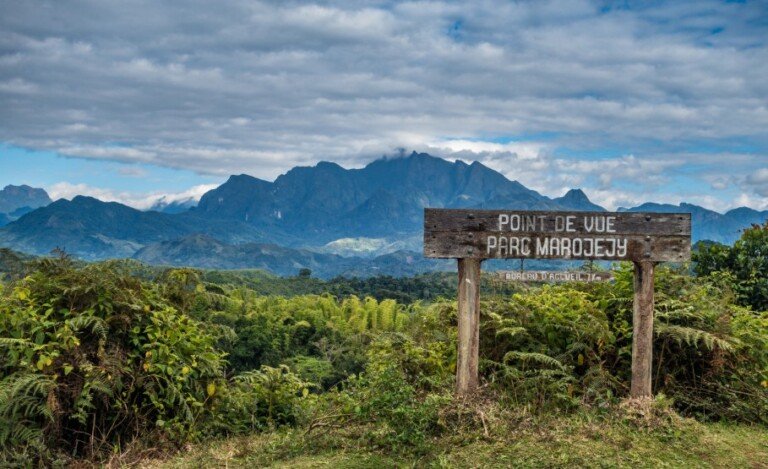
Imagine a place where the mountains rise vertically from the jungle floor, shrouded in perpetual mist. A place where trees are draped in moss so thick it swallows sound, and where one of the world’s rarest primates—a creature entirely white and ghost-like—leaps between the canopies.
This is Marojejy National Park.
Located in the SAVA region of northeastern Madagascar, Marojejy is not just a park; it is a fortress of biodiversity. Part of the Rainforests of the Atsinanana (a UNESCO World Heritage Site), it is widely regarded by biologists and explorers as one of the most pristine, rugged, and spectacular protected areas in the world.
For the casual tourist, Marojejy is a challenge. For the dedicated nature lover, it is the holy grail. This guide explores the secrets of the massif, the hunt for the Silky Sifaka, and the logistical reality of trekking into the clouds.
1. Introduction: The Majesty of Marojejy
Marojejy (pronounced Ma-ro-jay-jee) is an isolated massif that was described as early as 1948 by French botanist Henri Humbert as a “sanctuary of nature.” He was so captivated by its flora that he pushed for its protection, and it became a strict nature reserve in 1952, eventually opening to tourism as a National Park in 1998.
The park covers approximately 55,500 hectares of land. Its topography is violent and dramatic. The massif creates a formidable barrier against the trade winds blowing from the Indian Ocean, resulting in heavy rainfall that feeds a lush, tangled ecosystem.
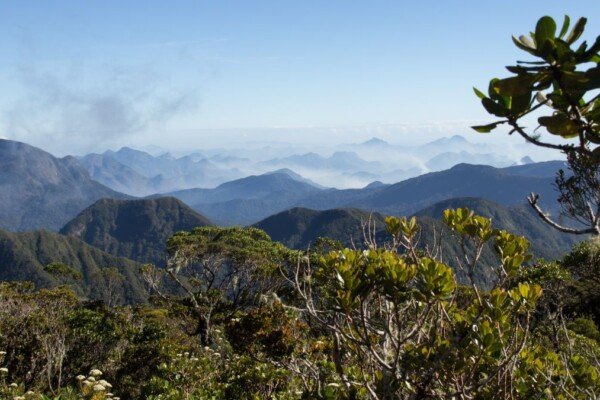
The terrain ranges from low-altitude rainforest (at the base) to high-altitude cloud forest and impenetrable shrubland at the summit (2,132 meters). This sharp vertical gradient creates distinct habitats, allowing an incredible density of species to exist in a relatively small horizontal area.
2. The Ghost of the Forest: The Silky Sifaka
The primary reason most wildlife enthusiasts make the arduous journey to Marojejy is to see the Silky Sifaka (*Propithecus candidus*).
Known locally as the *Simpona*, this lemur is one of the “Top 25 Most Endangered Primates in the World.” There are estimated to be fewer than 1,000 individuals left in the wild, and Marojejy is their primary stronghold.
Appearance and Behavior
The Silky Sifaka is often called the “Angel of the Forest.” It is a large lemur with long, creamy-white fur that has a unique, silky texture (hence the name). Unlike other sifakas that may have brown or black markings, the Silky is pure white (though some have silver tints), with a hairless black face and piercing orange eyes.
Seeing them is a spiritual experience. They move with the characteristic “vertical clinging and leaping” locomotion of the sifaka family, bounding effortlessly from tree trunk to tree trunk. They are highly social, living in small family groups, and their vocalizations—a series of “zzuss” sounds—often echo through the valleys before they are seen.
Where to Find Them
While they move around, they are most frequently spotted around Camp Marojejia (Camp 2). The guides in the park have an uncanny ability to track them, often listening for the sound of falling fruit or distant calls.
3. Beyond the Sifaka: A Biodiversity Fortress
While the Silky Sifaka is the flagship species, Marojejy is a biological treasure chest. The isolation of the mountain has led to high levels of endemism.
The Birds
Marojejy is a birder’s paradise, with 118 bird species recorded, 75 of which are forest-dependent.
- Helmet Vanga (*Euryceros prevostii*): This is the other “star” of the park. With its massive, vibrant blue beak and chestnut body, it looks like a cartoon character come to life.
- Madagascar Serpent Eagle: One of the rarest raptors in the world.
- Velvet Asity: The males, with their neon green wattles, are often found in the lower elevations.
Reptiles and Amphibians
The wet, humid environment is perfect for herpetofauna.
- Frogs: There are over 150 species of amphibians in the massif. You will hear them everywhere. The colorful *Mantella* frogs are iconic here.
- Geckos: The masters of camouflage, the *Uroplatus* (Leaf-tailed geckos), are abundant. Look for the Giant Leaf-tailed Gecko sleeping flat against tree trunks during the day.
- Chameleons: From the tiny Brookesia on the forest floor to the larger Calumma species in the canopy.
The Flora
Botanists consider Marojejy one of the richest sites in Madagascar.
- Ferns and Palms: There are over 50 species of palm trees, some found only on this specific mountain. The tree ferns create a prehistoric canopy.
- Rosewood: Large, ancient hardwoods still stand here, protected from the illegal logging that has plagued other parks.
4. The Trekking Experience: Into the Clouds
Exploring Marojejy is not a walk in the park; it is a true expedition. The park infrastructure consists of a single trail leading up the mountain, punctuated by three camps.
The Approach: Manantenina
The journey starts in the village of Manantenina, located on the main road between Sambava and Andapa. From here, visitors (usually accompanied by a guide and porters) walk about 6km through local villages, rice paddies, and vanilla plantations to reach the park boundary.
Camp 1: Camp Mantella (450m)
- The Hike: From the park entrance, it is a relatively gentle hike through lowland rainforest to reach Camp Mantella.
- The Experience: This camp is situated in a beautiful clearing surrounded by dense jungle. It is the warmest of the camps.
- Wildlife: This is the best area for amphibians, reptiles, and the Bamboo Lemur (*Hapalemur occidentalis*). A nearby waterfall offers a refreshing swim.
Camp 2: Camp Marojejia (775m)
- The Hike: The trail from Camp 1 to Camp 2 gets steeper. It takes about an hour or two of steady climbing.
- The Experience: This is the “heart” of the park. The camp is perched on a mountainside with a dining area that offers a stunning view of a massive rock face across the valley.
- Wildlife: This is Silky Sifaka territory. Most visitors spend two nights here to maximize their chances of seeing the “Angels.”
Camp 3: Camp Simpona (1,250m)
- The Hike: This is where things get tough. The trail becomes steep, root-filled, and often muddy. It takes about 2-3 hours of strenuous hiking.
- The Experience: As you ascend, the vegetation changes. The trees become shorter, gnarled, and covered in thick moss and epiphytes. It is cooler and mistier here. This is the cloud forest.
- Wildlife: This is the home of the rare Marojejy Leaf Chameleon and the higher-altitude birds. It serves as the base camp for the summit push.
The Summit (2,132m)
- The Climb: From Camp Simpona to the summit is the ultimate challenge. It is only about 2km, but it is vertical. You will be scrambling over roots and rocks.
- The Peak: At the top, the vegetation turns to scrubland (ericoid thickets).
- The View: On the rare occasion that the clouds part, the view is unrivaled. You can see the Indian Ocean to the east and the entire jagged spine of the mountains. However, be prepared for zero visibility; the summit is often wrapped in thick clouds.
5. Practical Logistics: How to Visit
Marojejy is remote. Visiting requires planning and patience.
Getting There
The gateway towns are Sambava and Andapa.
- Fly: Take a domestic flight (Tsaradia/Madagascar Airlines) from Antananarivo to Sambava.
- Drive: From Sambava, take a taxi or hired car towards Andapa. The village of Manantenina (park entry) is about 65km from Sambava (1.5 hours).
Guides and Porters
- Guides: It is mandatory to hire a certified guide. They are knowledgeable and essential for safety and spotting wildlife.
- Porters: It is highly recommended (and socially responsible) to hire porters. They carry the food, cooking equipment, and your heavy luggage. This provides vital income to the local villagers, discouraging them from logging or hunting in the park.
- Cooks: Unless you want to eat energy bars for three days, you will hire a cook who prepares meals at the camps (usually rice, chicken, zebu, and vegetables).
Accommodation: The Camps
The camps in Marojejy are basic but comfortable bungalows.
- Facilities: Each camp has wooden bungalows with bunk beds and mattresses. You need to bring a sleeping bag.
- Amenities: There is usually a shared dining area and a “kitchen” building. Toilets are shared outhouses. There is no electricity (bring power banks) and no cell service past Camp 1.
- Water: There is running water (from the stream) for basic washing, but drinking water must be boiled or filtered.
6. Preparation: The Reality of the Rainforest
Marojejy is a rainforest. It rains. A lot. Even in the “dry” season.
The Leeches
Marojejy is famous (or infamous) for its leeches. They are small, terrestrial leeches that live on the leaves and drop onto passersby.
- Are they dangerous? No. They do not carry disease and the bite is painless. They are just annoying and bloody.
- The Solution: Wear long trousers tucked into socks. Many hikers use “leech socks” (calico over-socks). Some use insect repellent or salt, but the best method is just to check your legs periodically and flick them off.
Fitness Level
You do not need to be an Olympic athlete, but you need good cardiovascular fitness. The humidity makes the hiking feel harder than it is. The trail is uneven, slippery, and steep.
- For the Casual Hiker: Go to Camp 1 and maybe Camp 2.
- For the Adventurer: Go to Camp 3.
- For the Hardcore: Summit.
Packing List Essentials
- Rain Gear: A high-quality rain jacket and waterproof trousers. A poncho is also useful.
- Dry Bags: Put your clothes, camera, and sleeping bag inside dry bags within your backpack.
- Headlamp: There is no electricity. It gets dark at 6:00 PM.
- Warm Clothes: Camp 3 gets cold (down to 10°C or lower at night). Bring a fleece and thermal layers.
- Good Grip Shoes: Hiking boots with deep lugs are essential for the mud.
- Power Bank: To charge cameras/phones.
7. Best Time to Visit
Marojejy is open year-round, but the weather dictates the experience.
- April to May: The rains ease off after the cyclone season. The landscape is lush green.
- September to December: This is generally considered the best time. It is the “driest” period (though it will still rain). Lemurs are birthing, birds are active, and orchids are blooming.
- January to March: Cyclone season. Travel can be disrupted, and trails can be dangerous. Avoid if possible.
- June to August: The “winter.” It is cooler, but it rains frequently (fine drizzle known as *erika*).
8. Nearby Attractions: The SAVA Region
The SAVA region (Sambava, Antalaha, Vohemar, Andapa) is the vanilla capital of the world.
- Vanilla Plantations: Combine your trek with a tour of a vanilla plantation in Sambava or Andapa. Seeing the labor-intensive process of pollinating and curing vanilla gives you a new appreciation for the spice.
- Andapa Basin: A beautiful, rice-growing valley surrounded by mountains. It feels like a different world compared to the coast.
- Anjanaharibe-Sud Special Reserve: Located near Andapa, this is a “sister park” to Marojejy. It is even more remote and is the place to hear the haunting song of the Indri (the only place in the north where they exist, distinct from the Andasibe population).
9. Conclusion: The Sanctuary
Marojejy National Park is not a destination for mass tourism. It does not have luxury lodges or air-conditioned buses. It is raw, wet, and physically demanding.
But for those who make the journey, the rewards are immeasurable.
To wake up at Camp Marojejia, surrounded by the vertical cliffs of the massif, sipping coffee while the mist rolls through the valley, is a moment of pure magic. To stand silently in the mud and watch a family of Silky Sifakas groom each other, their white fur glowing against the dark green canopy, is to witness one of nature’s rarest spectacles.
Marojejy is a reminder of what the world once looked like. It is wild, ancient, and undeniably sacred. If you are looking for the ultimate Malagasy adventure, pack your rain jacket, lace up your boots, and head for the mountains of the north. The “Angels of the Forest” are waiting.