Toliara, Madagascar: The Sun-Drenched Gateway to Baobabs, Caves, and Untamed Wilderness
At the end of the legendary Route Nationale 7 (RN7), the red earth of the highlands finally surrenders to the white sands of the Mozambique Channel. Here lies Toliara (often referred to by its colonial name, Tuléar), the capital of the Atsimo-Andrefana region.
Known as the “City of the Sun,” Toliara is a place of stark contrasts. It sits in a semi-arid zone where spiny forests and baobabs grow just miles from one of the world’s largest coral reef systems. It is a city of blinding light, vibrant music, and a laid-back atmosphere that feels entirely different from the cool, reserved highlands.
For many travelers, Toliara is merely a transit point to the beach resorts of Ifaty or Anakao. However, this dusty, energetic port city has a soul of its own. It is the cultural heart of the Vezo (people of the sea) and the Mahafaly (people who make taboos), a place where ancestral traditions clash with the hustle of a modern port.
This guide explores the rich history, the unique ecology, and the cultural vibrancy of the Deep South’s capital.
1. A Deep Dive into History: The Port of the South
Toliara’s history is defined by its geography. Located on a broad bay protected by a massive barrier reef, it has always been a point of contact between the island and the outside world.
The Vezo Origins
Long before European maps were drawn, this coast was the domain of the Vezo. Unlike other Malagasy tribes defined by agriculture or cattle, the Vezo are semi-nomadic fishermen. They are “people of the paddle,” living in symbiosis with the ocean. Their history is not written in stone buildings but in the migration of their outrigger canoes (pirogues) along the coast.
The Age of Pirates and Traders
In the 17th and 18th centuries, the Bay of Saint-Augustin (just south of modern Toliara) became a notorious haven for pirates and a vital stopover for European merchant ships heading to the East Indies.
The Slave Trade: Tragically, the region was also a hub for the slave trade. The port facilitated the export of slaves to the Mascarene Islands (Mauritius and Réunion) and the Americas. This dark chapter has left a complex legacy in the region’s demographics.
The Colonial Foundation (1895)
The modern city of Tuléar was officially founded by a French officer in 1895. The French saw the strategic value of the deep-water port.
Urban Planning: They laid out the city on a grid system with wide avenues lined with tamarind and flamboyant trees to provide shade from the relentless sun.
Colonial Architecture: While much has crumbled, remnants of this era remain. The distinct “colonial verandas” were designed to catch the sea breeze, and the old administrative buildings near the seafront still stand, their paint peeling in the salty air.
The 1971 Uprising
Toliara holds a significant place in Madagascar’s political history. It was the epicenter of the 1971 Peasant Uprising (Rotaka). Led by Monja Jaona, a nationalist from the south, the uprising was a protest against taxation and the neglect of the southern regions by the central government. Though brutally suppressed, this event sparked the eventual fall of the First Republic. Monuments to Monja Jaona can still be found in the city, symbolizing the fierce independence of the southern people.
2. Ecology and Nature: The Spiny Desert
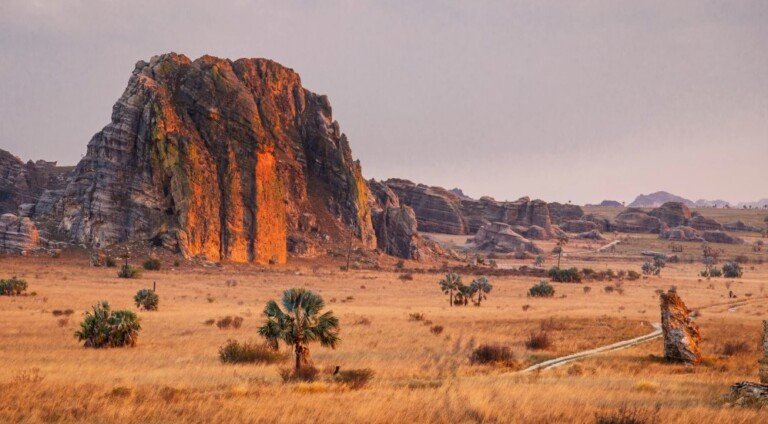
Toliara is the gateway to one of the most unique ecosystems on Earth: the Spiny Forest. This is not a lush tropical jungle; it is a bizarre, alien landscape where plants have evolved thorny armor to survive the drought.
Arboretum d’Antsokay
Located 12km southeast of the city, the Arboretum d’Antsokay is an absolute must-visit. Founded in 1980 by Swiss botanist Hermann Petignat, it is a 40-hectare botanical garden dedicated to preserving the endangered flora of the south.
What you see: It contains over 900 species of plants, 90% of which are endemic to the region.
The Stars: You will see various species of Baobabs, the octopus tree (Didierea madagascariensis), and the medicinal Kalanchoe.
Wildlife: It is also a sanctuary for nocturnal Lemurs (Mouse Lemurs), radiated tortoises, and chameleons. A guided night walk here is magical.
The Sacred Banyan of Miary
Just a short drive from Toliara, in the village of Miary, sits a sacred Banyan tree.
The Legend: Local legend says the tree grew to cover the grave of a young girl sacrificed to prevent a river from flooding the village.
The Tree: The tree is massive, with aerial roots creating a forest-like canopy. It is a pilgrimage site. Visitors must remove their shoes and often wrap themselves in a *lamba* (sarong) to enter the sacred perimeter. It is a powerful place to witness local animist worship.
3. The Cultural Pulse: Music and Art
If Toliara has a heartbeat, it is the rhythm of Tsapiky.
Tsapiky Music
While the highlands have the slow, melancholic Hira Gasy, the south has Tsapiky. This is fast, electric, guitar-driven dance music.
Origins: It originated in the Toliara region in the 1970s, born from traditional ceremonies performed at funerals and circumcisions.
The Atmosphere: You will hear it blasting from taxi-brousses, bars, and street corners. It is the soundtrack of the city—frantic, joyful, and relentless.
Nightlife: Toliara has a vibrant (and somewhat gritty) nightlife. Clubs along the Boulevard Lyautey come alive after dark, where locals dance until dawn. It is raw and energetic.
The Shell Market
On the seafront, you will find the shell market.
The Crafts: Women sell intricate jewelry and decor made from mother-of-pearl and cowrie shells.
Responsible Tourism: Note: Be very careful what you buy. Avoid buying Triton’s Trumpet shells or dried seahorses, as these species are threatened. Stick to the polished cowries and manufactured crafts.
4. The Sea: The Vezo Realm
Toliara is the logistic hub for the Great Reef (Grand Récif), one of the largest coral reef systems in the world.
The Waterfront (Le Bord)
The seaside promenade is the social center of Toliara.
Sunset: In the late afternoon, the heat breaks, and the whole city descends to “Le Bord.” Couples walk hand in hand, kids ride bicycles, and vendors sell *masikita* (zebu kebabs) and coconut punch.
The Pirogues: Looking out to sea, you will see hundreds of square sails returning from the reef. This is the Vezo fleet bringing in the day’s catch. It is a timeless scene.
Ifaty and Mangily
While technically 27km north of the city, these villages are extensions of the Toliara experience.
The Reniala Reserve: Here you can see the “Teapot Baobab” and vast tracts of spiny forest.
The Reef: This is the prime spot for snorkeling and diving. The barrier reef protects the lagoon, creating calm, turquoise waters.
Anakao
To the south of Toliara (accessible by boat transfer from the port), lies Anakao.
Nosy Ve: Off the coast of Anakao is the uninhabited island of Nosy Ve. It is a nesting site for the Red-tailed Tropicbird. It is also a site of historical significance, having served as a French outpost before Toliara was founded.
5. The Museum of Arts and Traditions of the South (Musée Cedratom)
Located near the center of town, this small but fascinating museum is often overlooked. It is essential for understanding the complex tribal culture of the region.
Funerary Art: The south is famous for its elaborate tombs. The Mahafaly and Antandroy tribes build massive stone tombs decorated with *Aloalo* (carved wooden totem poles) and zebu horns.
The Context: Since entering real tombs is often strictly forbidden (fady) for tourists, the museum offers a respectful way to see these carvings and understand their meaning. The *Aloalo* tell the story of the deceased’s life—depicting everything from their number of children to their favorite car.
The Ocean: The museum also houses the fossilized egg of the Aepyornis (the extinct Elephant Bird), which once roamed this region.
6. Practical Guide for the Traveler
The Climate: The Burning Sun
Toliara is hot.
Dry and Arid: It receives very little rain. The sun is intense, and the landscape is dusty.
The Tsiokantimo: This is the strong south wind that blows every afternoon. It clears the air but kicks up dust. Travelers should plan their beach activities for the morning before the wind picks up.
Getting There
The End of the Road: Toliara is the terminus of the RN7. Arriving here feels like an achievement after the long journey from Antananarivo (950km).
By Air: Toliara has an airport with regular flights to Tana and Fort Dauphin.
Getting Around
Pousse-Pousse: Like Antsirabe, Toliara relies on rickshaws. However, the drivers here are known for their banter and distinct personalities.
Bajaj (Tuk-tuks): The motorized three-wheelers are becoming more common and are faster for crossing the city.
Safety
Toliara is a port city with a bit of a “frontier town” vibe.
Precautions: While generally safe during the day, avoid walking alone on the outskirts or dark streets at night. The “Bord” is safe in the early evening when crowded, but caution is advised later at night.
Beggars: Poverty is more visible in the south due to the arid climate and economic struggles. You may be approached by children asking for “Vaza, bonbon?” (Foreigner, candy?).
Cuisine: Seafood Paradise
You cannot visit Toliara without eating seafood.
The Specialties: Lobster (langouste), Camarons (giant prawns), and Cigales de mer (slipper lobsters) are abundant and affordable.
Where to eat: Restaurants like L’Étoile de Mer or Le Jardin offer fresh catches of the day. Try the Romazava with fish, a coastal twist on the national dish.
7. The Symbolism of the Zebu
In Toliara and the surrounding south, the Zebu is not just a cow; it is currency, religion, and status.
Wealth: A man’s wealth is measured by the size of his herd.
Sacrifice: Zebus are sacrificed at every major life event—birth, marriage, and especially death.
The Skulls: When traveling the roads around Toliara, you will see tombs adorned with dozens, sometimes hundreds, of bleached Zebu skulls. This signifies that the deceased was a person of great importance and wealth. The meat is eaten by the community during the funeral feast, but the skulls remain as a testament to glory.
Conclusion: The End of the Road, The Beginning of Adventure
Toliara is often called “the end of the road,” but it feels more like a beginning. It is the threshold between civilization and the wild, untamed south. It is a city that doesn’t try to be pretty in the conventional sense; it is dusty, loud, and unapologetically intense.
But beneath the heat and the dust lies a captivating richness. It is in the smile of the Vezo fisherman mending his net, in the haunting beauty of the spiny forest at sunset, and in the frantic rhythm of the Tsapiky guitar.
To visit Toliara is to experience a different Madagascar—one that is tougher, drier, but incredibly resilient. It is the place to wash the red dust of the highlands off your skin in the turquoise waters of the Mozambique Channel, and to watch the sun dip below the horizon in the City of the Sun.