
Discover the History, Flora, Fauna, and Forest Trails of Andasibe National Park in Madagascar
Andasibe National Park, also known as Andasibe-Mantadia National Park, is one of Madagascar’s most accessible and biologically rich protected areas. Located approximately 140 kilometers east of Antananarivo, the park lies within the island’s eastern rainforest corridor and is world-famous for its dense forests, abundant wildlife, and iconic lemur populations. Its proximity to the capital and well-developed trail system make Andasibe a cornerstone of ecotourism in Madagascar.
Combining exceptional biodiversity, a strong conservation history, and rewarding hiking circuits, Andasibe National Park offers visitors an immersive rainforest experience. This comprehensive article explores the park’s historical development, its diverse flora, remarkable fauna, and the forest trails that allow visitors to engage closely with Madagascar’s natural heritage.
The Historical Background of Andasibe National Park
The history of Andasibe National Park reflects Madagascar’s evolving approach to environmental protection and sustainable tourism. Situated in the Alaotra-Mangoro region, the forest around Andasibe remained relatively intact for centuries due to its rugged terrain and persistent rainfall, which limited large-scale agricultural expansion.
Formal conservation efforts began during the colonial period when parts of the forest were designated as reserves to protect watersheds and valuable timber resources. In 1970, the area now known as Analamazaotra Special Reserve was officially established, primarily to protect the habitat of Madagascar’s largest lemur species.
Building on the success of this reserve, the neighboring Mantadia National Park was created in 1989 to conserve a larger and less disturbed tract of rainforest. In 2001, these protected areas were combined under a single administrative unit, forming what is now Andasibe-Mantadia National Park. Management was entrusted to Madagascar National Parks (MNP), which continues to oversee conservation, research, and tourism activities.
Local communities have long depended on the forest for subsistence farming, medicinal plants, and cultural practices. Modern conservation strategies emphasize community involvement, environmental education, and ecotourism employment, helping balance human needs with biodiversity protection.
Exploring the Flora of Andasibe National Park
The flora of Andasibe National Park is characteristic of Madagascar’s eastern humid rainforests and is among the most studied in the country. High annual rainfall and moderate temperatures create ideal conditions for luxuriant vegetation, resulting in dense forest layers and remarkable plant diversity.
Tall evergreen trees dominate the canopy, reaching heights of more than 35 meters and forming a shaded environment below. Many of these trees are endemic and support epiphytes such as orchids, mosses, and lichens. Notable orchid species include Bulbophyllum varieties, which thrive in the park’s humid microclimate.
The understory is rich in ferns, shrubs, and climbing plants, creating complex habitats for insects, reptiles, and small mammals. One of the most recognizable plant species in the park is the traveler’s palm (Ravenala madagascariensis), which is frequently encountered along forest paths and watercourses.
Andasibe’s flora also includes numerous medicinal plants traditionally used by local populations. Conservation programs encourage sustainable harvesting while promoting scientific research into plant properties and ecosystem services.
Because the park spans a range of elevations, subtle changes in plant communities occur between lower and higher forest zones. This variation contributes to the park’s high biodiversity value and makes it an important site for ecological and climate-related studies.
The Fauna of Andasibe National Park: A Sanctuary for Endemic Wildlife
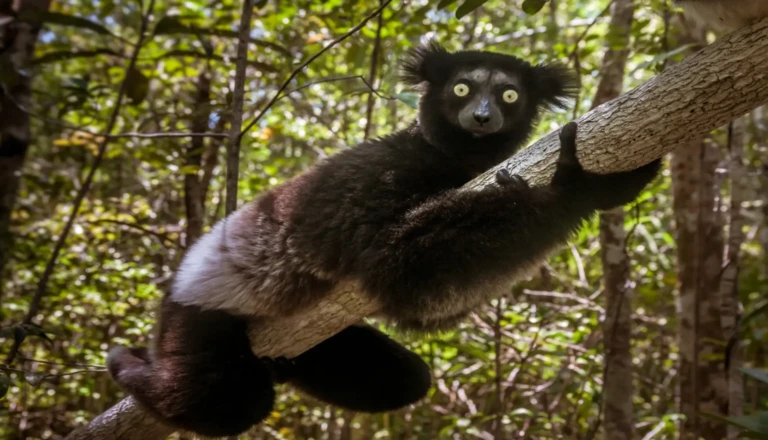
Andasibe National Park is best known for its extraordinary fauna, particularly its lemur diversity. The park is home to at least eleven lemur species, making it one of the top destinations in Madagascar for primate observation.
The park’s most famous resident is the indri (Indri indri), the largest living lemur and one of the most iconic mammals in Madagascar. Known for its haunting vocalizations that echo through the forest, the indri plays a vital role in seed dispersal and forest regeneration. Visitors often hear its calls before seeing it high in the canopy.
Other notable lemur species include the diademed sifaka (Propithecus diadema), the common brown lemur (Eulemur fulvus), and the eastern woolly lemur (Avahi laniger). Night walks reveal nocturnal species such as the gray mouse lemur (Microcebus murinus), offering insight into the park’s hidden wildlife.
Birdlife is abundant, with more than 100 species recorded, including endemics and rainforest specialists. Reptiles and amphibians thrive in the moist environment, with colorful chameleons, leaf-tailed geckos, and numerous frog species commonly observed along trails.
Invertebrates, including butterflies, beetles, and ants, contribute significantly to ecosystem health through pollination and decomposition. The complex food webs of Andasibe highlight the importance of intact rainforest habitats.
Hiking Circuits and Visitor Activities
Andasibe National Park offers one of the most extensive and well-maintained trail networks in Madagascar. The hiking circuits are designed to accommodate a wide range of visitors, from casual walkers to experienced nature enthusiasts.
Within Analamazaotra Special Reserve, clearly marked trails allow for half-day explorations with high chances of wildlife encounters. These circuits are ideal for observing indri groups, birds, and diverse plant life. Trails vary in difficulty, with some involving gentle slopes and others featuring steeper, muddy sections.
Mantadia National Park offers longer and more challenging hikes through less disturbed forest. These circuits reward visitors with a deeper sense of wilderness, fewer crowds, and increased chances of encountering rare species.
Night walks are a highlight of any visit, providing opportunities to observe nocturnal lemurs, chameleons at rest, and amphibians active after rainfall. All guided activities emphasize responsible tourism and environmental awareness.
Beyond hiking, visitors can explore nearby community reserves, participate in conservation education programs, and visit local villages to learn about traditional Malagasy culture.
Conclusion: Why Andasibe National Park Is Essential to Madagascar’s Conservation Story
Andasibe National Park represents one of Madagascar’s greatest conservation successes. Its combination of accessibility, rich biodiversity, and effective management has made it a flagship destination for ecotourism and environmental education.
From the powerful calls of the indri and the lush rainforest flora to the rewarding hiking circuits and strong community involvement, Andasibe offers a comprehensive and inspiring experience. For travelers seeking an authentic introduction to Madagascar’s wildlife and ecosystems, Andasibe National Park remains an essential and unforgettable destination.
Excursion from Antananarivo
Tours that may interest you
No pages found.
No pages found.