Discover the History, Landscapes, Flora, Fauna, and Hiking Circuits of Isalo National Park in Madagascar
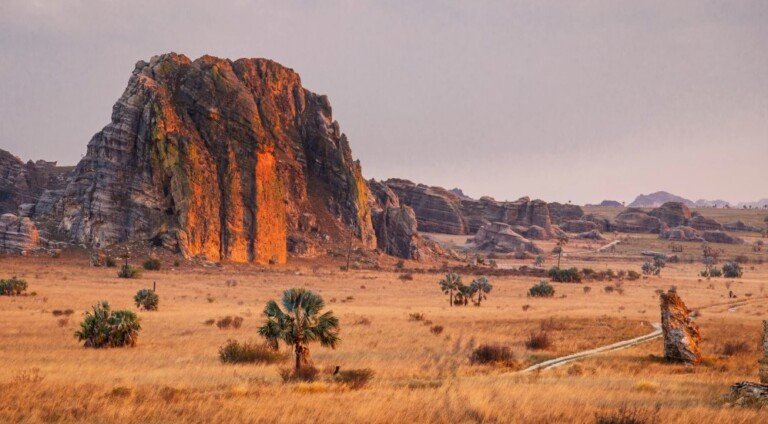
Isalo National Park is one of Madagascar’s most iconic and visually dramatic protected areas. Located in the south-central part of the island, near the town of Ranohira, the park is renowned for its vast sandstone formations, deep canyons, natural swimming pools, and arid-adapted ecosystems. Unlike the dense rainforests of eastern Madagascar, Isalo offers a strikingly different landscape that blends desert-like scenery with pockets of lush vegetation.
Established to protect both natural and cultural heritage, Isalo National Park attracts hikers, photographers, and travelers seeking wide-open spaces and geological wonders. This article explores the park’s historical background, unique flora and fauna, and the hiking circuits that make Isalo one of Madagascar’s premier outdoor destinations.
The Historical and Cultural Significance of Isalo National Park
The history of Isalo National Park is closely tied to the cultural traditions of southern Madagascar. For centuries, the region has been inhabited by the Bara people, a pastoral community known for cattle herding and deep spiritual connections to the land. The sandstone massifs and hidden valleys of Isalo have long served as sacred sites and burial grounds, imbued with ancestral significance.
Traditional customs strictly governed how the land was used, helping preserve the fragile environment. Certain caves and rock shelters were reserved for rituals and tombs, while natural water sources were carefully protected. These cultural practices played a significant role in maintaining ecological balance long before formal conservation measures were introduced.
During the colonial period under French administration, the region gained attention for its geological uniqueness and scenic value. Growing awareness of environmental degradation and increasing tourism pressure led the Malagasy government to designate Isalo as a national park in 1962, making it one of the oldest protected areas in Madagascar.
Today, Isalo National Park is managed by Madagascar National Parks (MNP). Conservation strategies emphasize protecting geological formations, safeguarding water sources, and integrating local communities into tourism activities through guiding, handicrafts, and hospitality services.
Exploring the Unique Flora of Isalo National Park
The flora of Isalo National Park reflects its harsh climatic conditions and varied microhabitats. The park lies within a transition zone between dry western forests and semi-arid southern regions, resulting in plant communities specially adapted to heat, drought, and poor soils.
Most of the landscape is dominated by grasses, low shrubs, and hardy succulents that cling to rocky outcrops. In contrast, deep canyons and shaded valleys shelter pockets of surprisingly lush vegetation, nourished by permanent streams and natural springs. These green corridors create striking contrasts against the surrounding sandstone cliffs.
One of the most emblematic plant species found in the park is Pachypodium rosulatum, a drought-resistant succulent with a swollen trunk that stores water. Various endemic Aloe species and euphorbias are also common, displaying remarkable adaptations to arid environments.
Along watercourses, visitors may encounter palms and fig trees that provide shade and food for wildlife. The iconic traveler’s palm (Ravenala madagascariensis) appears in some sheltered areas, highlighting the ecological diversity contained within the park.
Isalo’s flora is of significant scientific interest due to its high rate of endemism and adaptation. Conservation efforts focus on preventing wildfires, controlling invasive species, and managing visitor impact on fragile plant communities.
The Fauna of Isalo National Park: Wildlife of the Sandstone Massifs
Despite its dry appearance, Isalo National Park supports a diverse range of wildlife specially adapted to its rugged terrain. The park is home to several endemic and threatened species that rely on canyon forests and rocky shelters for survival.
Lemurs are among the most notable mammals found in Isalo. Species such as the ring-tailed lemur (Lemur catta) are commonly seen basking on sunlit rocks or foraging near forest patches. Another key species is the Verreaux’s sifaka (Propithecus verreauxi), known for its distinctive sideways hopping movement across open ground.
Smaller mammals, including tenrecs and rodents, occupy crevices and vegetated areas, while bats roost in caves and rock overhangs. Reptiles are particularly well represented, with geckos, skinks, and snakes adapted to the dry climate. Chameleons, though less numerous than in rainforest parks, can still be found in riparian zones.
Birdlife includes a mix of dry-region specialists and widespread Malagasy species. Raptors soar above the cliffs, while smaller birds inhabit grasslands and canyon forests. Amphibians are limited due to arid conditions but occur near permanent water sources.
The survival of Isalo’s fauna depends heavily on the protection of water pools and canyon vegetation, making conservation management crucial in this environment.
Hiking Circuits and Outdoor Activities in Isalo National Park
Isalo National Park is widely regarded as one of the best hiking destinations in Madagascar. Its network of well-established circuits allows visitors to explore dramatic landscapes, hidden valleys, and natural swimming pools.
One of the most popular routes leads to the Natural Swimming Pool, a palm-lined oasis fed by clear spring water and surrounded by sandstone walls. This circuit is moderately challenging and offers opportunities to observe wildlife and unique plant species along the way.
The Namaza Circuit is another highlight, taking hikers through deep canyons, waterfalls, and sacred sites. Longer and more demanding treks venture into remote sections of the massif, revealing panoramic viewpoints and lesser-visited rock formations.
All hikes in Isalo National Park require a local guide, ensuring visitor safety and respect for cultural traditions. The best times for hiking are early morning and late afternoon, when temperatures are cooler and wildlife activity is higher.
Beyond hiking, visitors can enjoy photography, birdwatching, and cultural interactions with nearby Bara communities. These experiences enrich understanding of how human history and natural landscapes are deeply intertwined in Isalo.
Conclusion: Why Isalo National Park Is One of Madagascar’s Most Striking Destinations
Isalo National Park stands apart from Madagascar’s rainforest reserves, offering a landscape shaped by time, water, and wind. Its towering sandstone formations, hidden oases, and resilient wildlife create an unforgettable environment that captures the island’s geological and ecological diversity.
From its deep cultural roots and ancient burial sites to its endemic flora, distinctive fauna, and rewarding hiking circuits, Isalo National Park delivers a powerful and contrasting perspective on Madagascar’s natural heritage. For travelers seeking adventure, scenery, and cultural depth, Isalo remains one of the country’s most compelling national parks.