Morondava and the Menabe Region: A Journey Through Time, Baobabs, and the Vezo Sea
Nestled on the western coast of Madagascar where the Morondava River meets the Mozambique Channel, the sun-scorched town of Morondava serves as more than a mere transit point—it is the vibrant heart of the Menabe region, a land steeped in history, ecological wonder, and cultural resilience. While most travelers come seeking the iconic Avenue of the Baobabs, they discover a region where every dusty road and fishing pirogue tells a story of ancient kingdoms, colonial struggles, and the enduring spirit of the Sakalava and Vezo peoples. This comprehensive exploration delves into the deep history of Morandava and Menabe, the majestic baobab ecosystems, and the unforgettable excursions—including the remote maritime village of Belo sur Mer—that define this extraordinary corner of Madagascar.
Part 1: The Historical Tapestry of Menabe and Morondava
1.1. Early Settlement and the Rise of the Sakalava Kingdoms
The history of human settlement in the Menabe region dates back over a millennium, with the first communities likely established by Austronesian migrants who navigated the Indian Ocean to Madagascar’s shores. These early inhabitants practiced fishing, rice cultivation, and cattle herding, laying the foundations for the area’s cultural and economic life.
By the 16th century, the Sakalava people emerged as a dominant force in western Madagascar. The term “Sakalava” is believed to derive from *saka lava*, meaning “long valley,” reflecting their origins in the river valleys of the interior. Through a combination of military prowess and strategic alliances, the Sakalava established one of the largest and most powerful kingdoms in pre-colonial Madagascar—the Kingdom of Menabe.
The Sakalava rulers, or *ampanjaka*, wielded authority through a blend of political power and spiritual legitimacy. Central to their rule was the veneration of royal ancestors, whose spirits were believed to mediate between the living and the creator god, *Zanahary*. The *tromba* (spirit possession) ceremony became a cornerstone of Sakalava cultural and religious life, a tradition that persists today.
1.2. Morondava: A Strategic Port and Royal Center
Morondava’s significance grew as a strategic port within the Sakalava kingdom. Its location facilitated trade with Arab, Swahili, and European merchants, who sought slaves, cattle, and rare commodities like tortoiseshell and ambergris. The town became a melting pot of cultures, with influences from East Africa, the Arabian Peninsula, and later, Europe.
The Sakalava kings maintained control over the coastal trade while resisting encroachment by the Merina Kingdom from the highlands. Despite pressure from the expansionist Merina, the Sakalava of Menabe preserved their autonomy through much of the 19th century.
1.3. Colonial Intrusions and French Rule
The late 19th century brought heightened European colonial interest in Madagascar. In 1897, the French formally colonized the island, ending Sakalava sovereignty. Morondava, like other coastal towns, was incorporated into the French colonial administration.
The colonial era introduced new economic activities, including the commercial exploitation of forests and the establishment of rice and peanut plantations. While infrastructure such as roads and administrative buildings was developed, these changes often disrupted traditional ways of life and intensified social stratification.
1.4. Post-Independence and Modern Identity
Following Madagascar’s independence in 1960, Morondava evolved into an administrative and commercial center for the Menabe region. Today, it balances its historical identity with the demands of modernity. The Sakalava monarchy, though no longer politically sovereign, remains a vital cultural and spiritual institution, with royal rituals and *tromba* ceremonies continuing to shape community life.
Part 2: The Avenue of the Baobabs and Beyond: Nature and Conservation
2.1. The Baobabs: Giants of Ecological and Cultural Significance
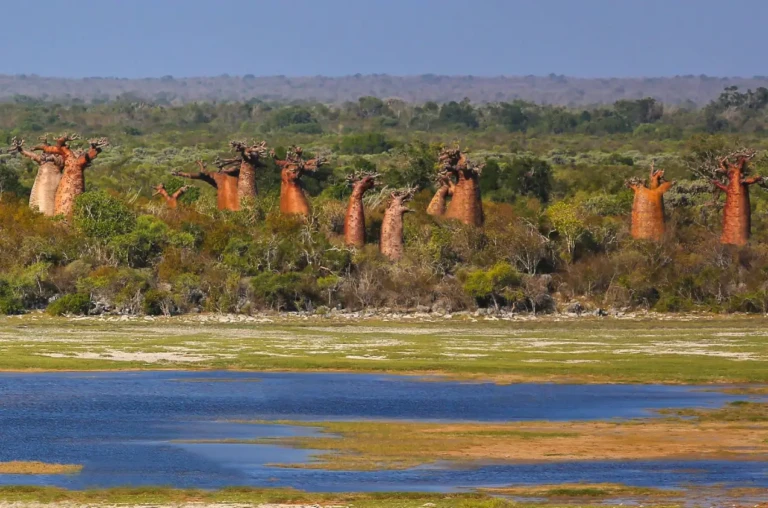
The Avenue of the Baobabs is the region’s crown jewel—a stunning landscape of towering *Adansonia grandidieri* trees, some over 800 years old. These baobabs are endemic to Madagascar and symbolize the island’s unique biodiversity.
For the Sakalava people, baobabs are sacred. They feature in origin myths, serve as burial sites, and are believed to harbor ancestral spirits. The trees’ presence has shaped local traditions, from storytelling to herbal medicine.
2.2. Conservation Challenges and Efforts
Deforestation, climate change, and agricultural expansion threaten the baobabs and their ecosystems. In response, the Avenue of the Baobabs was designated a protected natural monument in 2007. Conservation initiatives focus on reforestation, sustainable tourism, and community-based management to ensure the survival of these iconic trees.
2.3. Kirindy Forest: A Biodiversity Hotspot
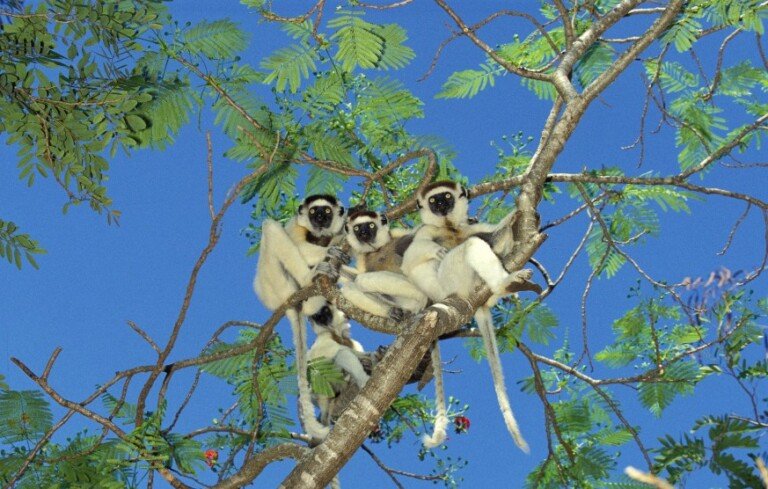
Located about 60 km northeast of Morondava, the **Kirindy Forest** is a dry deciduous forest reserve renowned for its wildlife. It is one of the best places in Madagascar to see the **fossa** (*Cryptoprocta ferox*), the island’s largest predator. Other highlights include:
- Multiple lemur species, such as Verreaux’s sifaka and red-fronted brown lemurs.
- Nocturnal species like the giant jumping rat and dwarf lemurs.
- Over 50 species of reptiles and birds.
Kirindy offers guided day and night walks, providing intimate encounters with Madagascar’s unique fauna.
Part 3: Excursions from Morondava: From Belo sur Mer to Remote Shores
3.1. Belo sur Mer: A Day Trip to a Traditional Vezo Village
Belo sur Mer, located approximately 90 km south of Morondava, is a secluded maritime village where time seems to stand still. The journey there is an adventure—a bumpy 4×4 ride through arid landscapes, baobab-dotted savannas, and traditional Sakalava villages.
Itinerary for a Day Trip:
- 5:00 AM: Departure from Morondava. The early start ensures cooler temperatures and optimal light for photography.
- 7:30 AM: Arrival in Belo sur Mer. The village awakens with the sounds of craftsmen and the scent of salt and wood.
- Activities:
- Boat Building: Observe the Vezo people crafting dugout canoes and sailboats using traditional techniques passed down through generations.
- Salt Farming: Visit the local salt pans, where seawater is evaporated to produce crystalline salt.
- Birdwatching and Beachcombing: Explore the tidal flats and mangrove ecosystems, home to flamingos, herons, and other waterbirds.
- Cultural Interaction: Engage with Vezo families to learn about their daily lives, fishing traditions, and spiritual beliefs.
- 12:00 PM: Enjoy a freshly prepared seafood lunch—grilled fish, lobster, or octopus—sourced directly from the ocean.
- 2:00 PM: Leisure time for swimming, photography, or exploring the village’s scenic surroundings.
- 4:00 PM: Begin the return journey to Morondava.
- 8:00 PM: Arrival in Morondava.
This excursion offers a rare glimpse into the sustainable practices and rich cultural heritage of the Vezo people.
3.2. Baobab Forests and Sacred Sites
Beyond the famous Avenue, the Menabe region is home to other spectacular baobab formations:
- Baobab Amoureux (The Lovers’ Baobabs): Two intertwined baobabs, symbolizing romance and fertility.
- Sacred Baobabs: Sites like the **13 Saints Baobabs**, where local communities perform rituals and offerings.
3.3. Andranomena Special Reserve
Closer to Morondava, this reserve protects a mosaic of dry forest and wetland habitats. It is an excellent spot for birdwatching, with species such as the Madagascar fish eagle and crested coua.
Part 4: Cultural Immersion and Practical Information
4.1. Engaging with Local Communities
Responsible tourism in Menabe involves respecting local customs and supporting community-led initiatives:
- Seek permission before photographing people or sacred sites.
- Purchase handicrafts directly from artisans.
- Hire local guides to gain deeper insights into the region’s ecology and culture.
4.2. Best Time to Visit
The dry season (April to November) is ideal for visiting Morondava and the Menabe region. During these months, roads are more passable, and wildlife viewing is optimal. The rainy season (December to March) brings heavy showers and difficult travel conditions.
4.3. Getting There and Around
- Air: Morondava’s airport receives regular flights from Antananarivo and other major cities.
- Road: Taxi-brousse (shared minibuses) and private 4×4 vehicles connect Morondava to other regions. A 4×4 is essential for exploring remote areas like Belo sur Mer.
- Boat: Pirogues and motorized boats are used for coastal and river travel.
4.4. Accommodation and Dining
Morondava offers accommodations for all budgets, from eco-lodges and beachfront hotels to guesthouses. Dining highlights include fresh seafood, traditional Sakalava dishes like *romazava* (meat and leafy green stew), and French-influenced cuisine.
Conclusion: The Soul of Western Madagascar
Morondava and the Menabe region offer far more than picturesque landscapes; they are a living testament to Madagascar’s historical depth and ecological wealth. From the ancient Sakalava kingdoms to the timeless traditions of the Vezo fishermen, this region invites travelers to connect with stories etched into baobabs, woven into pirogues, and whispered across coastal winds. Whether witnessing the sunset over the Avenue of the Baobabs or journeying to the craft shores of Belo sur Mer, visitors become part of a narrative that continues to evolve—one of resilience, adaptation, and enduring wonder.