
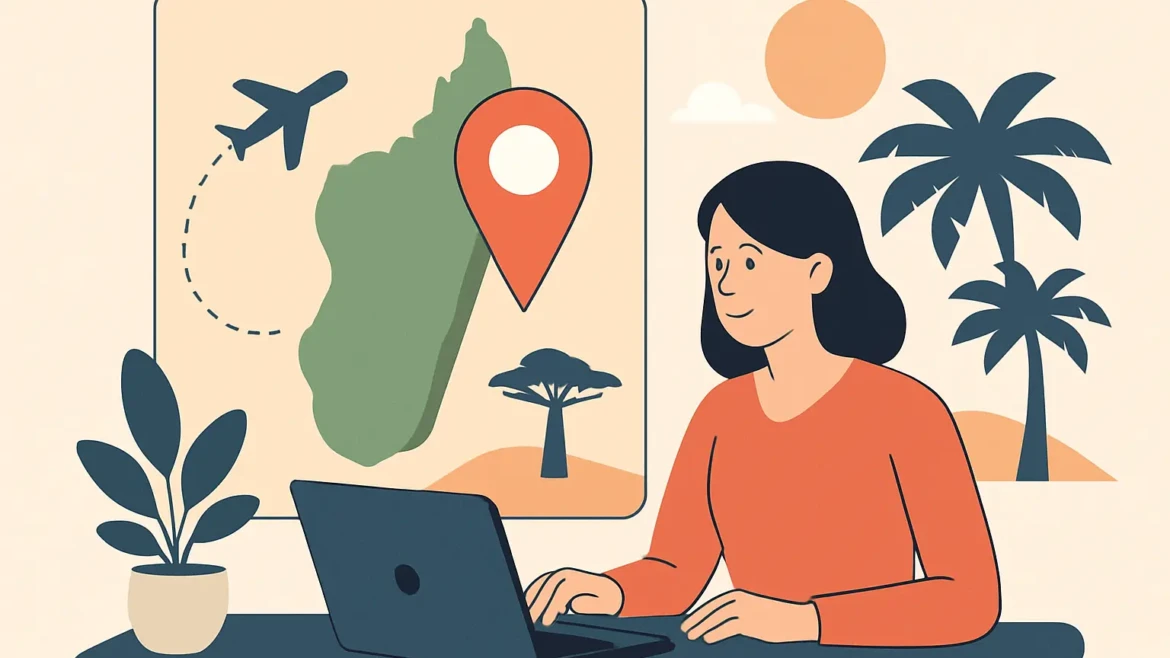
You can build a Madagascar itinerary on a map in 10 minutes. Building one that actually works on the ground – with the right parks in the right season, realistic driving days, dependable logistics, and the experiences you came for – is the part that separates a dream trip from a week of improvising.
A custom Madagascar itinerary planner is less about finding “the best places” (Madagascar has plenty) and more about sequencing. One wrong assumption – like treating road distances as if they were highway miles – can quietly steal two days from your trip. The good news is that with a smart planning approach, you can combine rainforests and lemurs, baobabs and tsingy, village life and beach time in a way that feels smooth, personal, and worth the flight.
What a custom Madagascar itinerary planner really does
Madagascar is not a destination where you simply book hotels and show up. The island is huge, infrastructure varies dramatically by region, and many signature experiences depend on local coordination: park permits, the right local guides, boat transfers, domestic flights, and timing that aligns with tides or weather.
A real custom planning process starts by protecting the non-negotiables: the wildlife habitats you want most, the landscapes you have pictured for years, and the amount of downtime you need to enjoy it all. From there, it shapes the route around feasibility, not wishful thinking. You can absolutely “see a lot” in Madagascar, but it depends on whether you want cross-island variety or deep time in one ecosystem.
The planner’s job is also quality control. In a remote destination, your driver, vehicle, and guide are not just service providers – they are the backbone of safety, pace, and how confident you feel each day. The best itineraries aren’t only beautiful on paper. They’re built for consistency.
The first decisions that shape everything
Before you pick parks, you need three anchor decisions: trip length, travel style, and your tolerance for transit days.
If you have 10-12 days, you’ll usually get the best experience by choosing one main circuit and doing it well, instead of trying to stitch together multiple regions that require flights and long drives. If you have 14-18+ days, cross-island routes open up and you can combine iconic contrasts: rainforest and canyon, baobab and limestone cathedrals, highlands and lagoon.
Next is travel style. Some travelers want early starts, long drives, and maximum terrain changes. Others want fewer hotels, slower mornings, and longer stays in two or three standout places. Neither is “better,” but the route must match the style. Madagascar rewards patience – the wildlife encounters feel richer when you aren’t constantly racing the clock.
Finally, be honest about transit tolerance. Roads can be rough in places, and “short” distances can take time. If you know you don’t enjoy long vehicle days, a planner should prioritize tighter clusters of experiences and build in recovery time.
Choosing regions by experience, not hype
Most first-time visitors say “lemurs” and “baobabs” in the same sentence. That’s a great starting point, because it naturally points toward a route design question: do you want the eastern rainforests, the west’s baobab landscapes, the south’s desert-like scenery, or a little of each?
Eastern rainforest routes are where many travelers meet Madagascar’s biodiversity up close – dense vegetation, waterfalls, and primates calling at dawn. The feeling is immersive and alive, and it pairs well with cultural highland stops.
Western routes are where Madagascar turns cinematic: broad skies, warm light, and those famous baobab silhouettes. Add tsingy formations and you get a very different kind of “wild,” one that feels geological and remote.
Southern routes are for travelers who like open landscapes, spiny forests, canyon hikes, and a sense of expedition. It can be a powerful counterpoint to rainforest days, but it’s also where route planning and timing really matter.
Beach time is its own region decision. Nosy Be and nearby islands can be a perfect finish after inland travel, while other coastal stretches work better as a mid-route breather. The key is not treating the beach as an afterthought. If it matters to you, it should be planned as deliberately as the parks.
The trade-offs most itineraries ignore
A custom plan earns its keep in the trade-offs. Here are the ones we see most often.
More parks vs better park time
It’s tempting to collect national parks like stamps. But if you arrive late, do one quick walk, and leave at sunrise the next morning, you may miss the most memorable hours. Many parks deserve two nights, not one, because morning and night walks reveal different worlds.
Driving circuits vs adding flights
Domestic flights can save time, but they add vulnerability. Schedules can shift, and you may need flexibility. A driving circuit can feel slower, but it’s often more controllable, and it allows for spontaneous stops that become highlights: viewpoints, markets, village scenes, and unexpected wildlife.
Lodges in the wild vs comfort and recovery
Madagascar has magical, remote properties. It also has places where simple comfort makes you feel human again after a long drive. The “right” hotel mix depends on your priorities. A good planner balances wow-factor nights with practical comfort so you keep your energy for the experiences.
Wildlife intensity vs beach reset
If you are wildlife-first, you can design a route that stacks ecosystems and maximizes guided walks. If you know you’ll be tired halfway through, building a coastal reset can actually improve the whole trip. It’s not a compromise. It’s pacing.
How customization works in practice
Customization shouldn’t feel like an endless questionnaire. It should feel like someone is listening to what you actually care about and translating it into a route that holds together.
Start with your top three “must-feel” moments, not just places. For example: “a night walk where we see strange nocturnal wildlife,” “a sunrise in a baobab landscape,” “a day that feels culturally connected, not just a photo stop,” or “three slow beach days with great snorkeling.” Those moments guide the structure.
Then define your deal-breakers. If you don’t want camping, say so. If you need certain comfort standards, say so. If you want private guiding throughout, or you prefer a car hire without a driver and more independence, that changes how the logistics should be built.
Finally, be clear about who you are traveling with. A couple on a honeymoon and a group of friends who want adventure will both love Madagascar, but they will not love the same daily rhythm. Custom means the itinerary fits your people.
A realistic way to think about timing
Madagascar isn’t one season. It’s a country of microclimates.
Some regions are best when trails are dry and driving is easier. Some wildlife viewing peaks at certain times. And beach plans can change depending on wind and sea conditions. This is where a custom planner should give you honest options, not one fixed “best month.” If your dates are set, the route adapts. If your route is set, your planner should recommend the best date windows.
It also helps to plan for flexibility inside the trip. A strong itinerary has structure, but it can absorb small changes. That might mean placing a buffer day in the middle, choosing a hotel that makes early starts easier, or timing a long drive for a day when there’s less need for guided activities.
What to look for in the person planning your trip
Madagascar can be wonderfully straightforward when it’s well-managed, and surprisingly stressful when it isn’t. Your planner should be able to explain not only what you will do, but why the sequence works.
You want someone who talks about road conditions and drive times with confidence, not vague optimism. You want transparency on what’s included, what requires local guides, and what needs advance coordination. And you want evidence of standards: vetted drivers, reliable vehicles, and hotel choices that match the experience you are paying for.
If you’re comparing options, ask how they handle the details that never show up in brochure copy: early starts, park entry timing, rest stops, and what happens if weather changes the plan. The goal isn’t perfection. It’s competence under real conditions.
For travelers who want a private, fully customized route built and operated by a local team, Travelers of Madagascar designs itineraries around wildlife, landscapes, culture, and beach time – then backs the plan with on-the-ground coordination so the days run the way they should.
The planning questions that make your itinerary smarter
If you want your custom Madagascar itinerary planner to produce something you’ll actually love, focus the conversation.
Ask for a day-by-day flow that shows when you arrive, when you explore, and when you rest. Ask where the longest driving days are and what you get in exchange for them. Ask which experiences are sensitive to timing – night walks, boat trips, tidal crossings, or long park hikes – so they are placed on days that support them.
Also ask what can be swapped without breaking the route. A good itinerary has optionality built in. If you fall in love with a place and want an extra night, that should be possible without unraveling the entire trip.
A final note before you commit
Madagascar rewards travelers who plan with intention, not intensity. Choose the experiences you genuinely want, let the route be shaped by reality, and leave room for the moments you can’t schedule – the lemur encounter that runs long, the roadside conversation that turns into a cultural highlight, the sunset that makes everyone go quiet. If your itinerary makes space for those, you’re doing it right.