
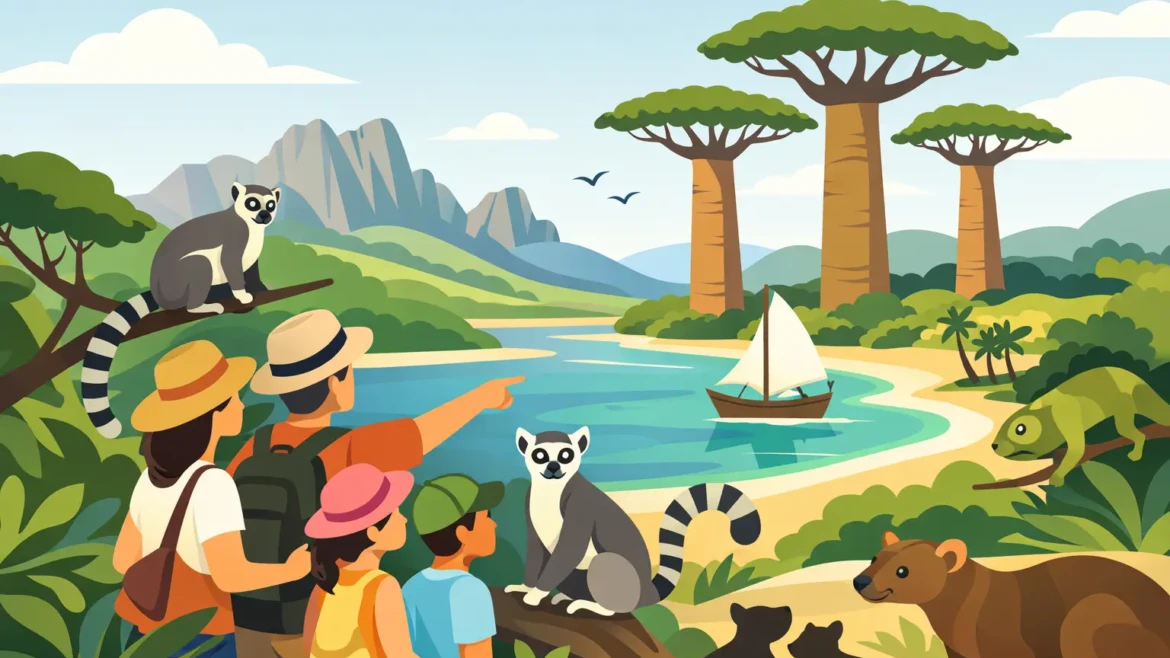
The first time most families look at a Madagascar map, the same question comes up fast – is this really doable with kids? The answer is yes, but only if the trip is built around real driving times, child-friendly pacing, and the right mix of wildlife, downtime, and comfortable stays. That is exactly where madagascar family friendly private tours make the difference.
Madagascar is not a destination where you want to guess your way through logistics. Distances can be long, roads can be rough, and the best experiences are often spread across very different regions. For families, that does not mean saying no to the island. It means planning smarter. A well-designed private tour turns a complex destination into a trip that feels exciting, safe, and manageable.
Why Madagascar works for families
Madagascar has something many family destinations do not – genuine wonder. Children do not have to be convinced to care when a lemur jumps through the trees, a chameleon the size of a leaf appears on a branch, or a line of baobabs lights up at sunset. The island delivers those moments naturally, and that changes the rhythm of travel. Nature becomes the entertainment.
It also helps that Madagascar is varied. A family can move from rainforest walks to wide-open landscapes, then finish with quiet beach time. That range matters because not every child wants the same kind of day, and not every parent wants a trip built entirely around activity. The best itineraries leave room for both curiosity and rest.
Still, family travel here is not one-size-fits-all. A couple traveling with a nature-loving 14-year-old can handle a very different route than parents with a 5-year-old who needs shorter drives and earlier evenings. That is why private planning matters more in Madagascar than in easier, more compact destinations.
What makes Madagascar family friendly private tours different
The biggest advantage of private travel is control. Families are not locked into a group schedule that moves too fast, starts too early, or expects every traveler to enjoy the same pace. In Madagascar, that flexibility is not just a luxury. It is often what makes the trip successful.
A family-friendly private tour starts with timing. Wildlife outings can be arranged when children are most alert. Long drives can be broken with scenic stops, local visits, or overnight breaks in the right places. Beach days can be added after inland travel so the trip does not feel like a constant road journey.
The second difference is support on the ground. A vetted driver who knows the routes, a guide who can read the group’s energy, and hotels chosen for comfort and reliability all matter more when children are traveling. Families usually do not need the most extreme adventure version of Madagascar. They need the version that keeps the magic while removing avoidable friction.
That is where local tour design has real value. Madagascar rewards experience. Knowing which parks work best for younger kids, which roads are worth the effort, and where to slow the itinerary down can save a family from turning a dream trip into a tiring one.
Choosing the right route for your family
Not every famous Madagascar circuit is ideal for every age group. Some routes are spectacular but demanding, with long transfers and limited downtime. Others are much better suited to families because they balance wildlife with comfort.
For younger children
Families with younger kids usually do best with a shorter, more focused itinerary. Eastern rainforest routes can work well if paired with comfortable lodges and manageable transfers. Seeing lemurs, reptiles, and lush forest is high reward for relatively low effort compared with more remote expedition-style travel.
Adding a beach finish is often a smart move. After several days of road travel and park visits, coastal time gives children space to relax and parents a chance to enjoy the trip at a slower pace.
For older kids and teens
Older children and teens can often handle longer classic routes, especially if they are already interested in wildlife, photography, or unusual landscapes. This is where Madagascar really stands apart. Tsingy formations, giant baobabs, river journeys, and remote national parks can feel like real adventure rather than a standard vacation.
The trade-off is energy. A route that looks exciting on paper can still become draining if every day is movement-heavy. The strongest itineraries for teens usually alternate big highlight days with lighter ones.
For mixed-age families
This is the trickiest category, and it is exactly why custom planning matters. If one traveler wants active park walks while another needs gentler days, the route has to compromise without becoming bland. Sometimes that means choosing fewer regions and doing them well. Sometimes it means private guiding that allows shorter and longer activity options within the same stop.
The experiences kids actually remember
Families often begin planning by looking at destinations on a map, but children remember moments, not route logic. Madagascar is strongest when those moments come often enough to keep the trip vivid.
Lemur encounters are the obvious standout. For many children, seeing animals found nowhere else in the world is the moment Madagascar becomes real. Night walks can also be memorable when done at the right pace, especially for spotting tiny nocturnal species, though they are better for some ages than others.
Baobab landscapes are another family favorite because the impact is immediate. You do not need to explain why they are extraordinary. The scale does the work. The same is true of chameleons and geckos, which often become unexpected highlights because they feel so strange and close-up.
Then there is beach time. Families who build in a coastal ending usually appreciate it more than they expected. After inland travel, the chance to swim, slow down, and process everything they have seen gives the trip a better overall shape.
Comfort, safety, and realistic expectations
Madagascar is rewarding, but it is not polished in the way some family destinations are. That is not a negative. It is simply something to plan around honestly.
Road travel takes time. Hotel standards vary by region. Internal flights can help on some routes, but they are not always the best answer if schedules shift. For families, success often comes from realistic pacing rather than trying to cover the entire island in one trip.
Comfort also matters more than many travelers admit. A good family itinerary does not need luxury at every stop, but it does need consistency. Clean rooms, reliable service, thoughtful meal planning, and lodges in the right locations all help children stay settled and parents stay relaxed.
Safety is largely about organization. Private transport, experienced local staff, and sensible route planning reduce stress significantly. Families are not just paying for a vehicle and guide. They are paying for decisions made well before the trip starts and for support if conditions change on the ground.
When private tours are worth it
Some destinations are easy to self-drive or piece together independently. Madagascar can be done that way, but families usually feel the pressure quickly. Booking hotels in the wrong order, underestimating drive times, or choosing an overambitious route can affect every day of the trip.
Private tours are most worth it when your family wants to see multiple regions, include parks and wildlife activities, or travel without spending the whole vacation troubleshooting logistics. They are also valuable if this is your first time in Madagascar and you want confidence rather than guesswork.
For US travelers especially, time is precious. Most families are traveling a long way to get here. Wasting several days on poor sequencing or avoidable fatigue is expensive in every sense. A private itinerary gives you a better chance of using that time well.
A company like Travelers of Madagascar can design around those realities because the planning and execution happen locally, with direct knowledge of routes, hotels, drivers, and seasonal conditions. That local control is often the difference between a trip that looks good online and one that works in real life.
How to tell if an itinerary is truly family-friendly
A family-friendly route is not just a standard tour with the word family added to it. Look closely at how the trip is structured. If there are too many long back-to-back drives, too many hotel changes, or too little downtime, it may not be as child-friendly as it sounds.
The better sign is balance. You want headline experiences, but you also want room to breathe. Ask whether the trip can be adjusted for age, interests, and energy level. Ask who is handling transport, what kind of hotels are used, and how flexible the daily flow really is.
The strongest Madagascar family friendly private tours feel personal from the first draft. They reflect your children’s ages, your preferred travel style, and the kind of memories you want to bring home – not just the places you can say you checked off.
Madagascar is one of those rare destinations that still feels genuinely different. For families, that difference is exactly the appeal. Plan it with care, give the trip enough breathing room, and you can come home with the kind of stories your kids will still be telling years from now.