
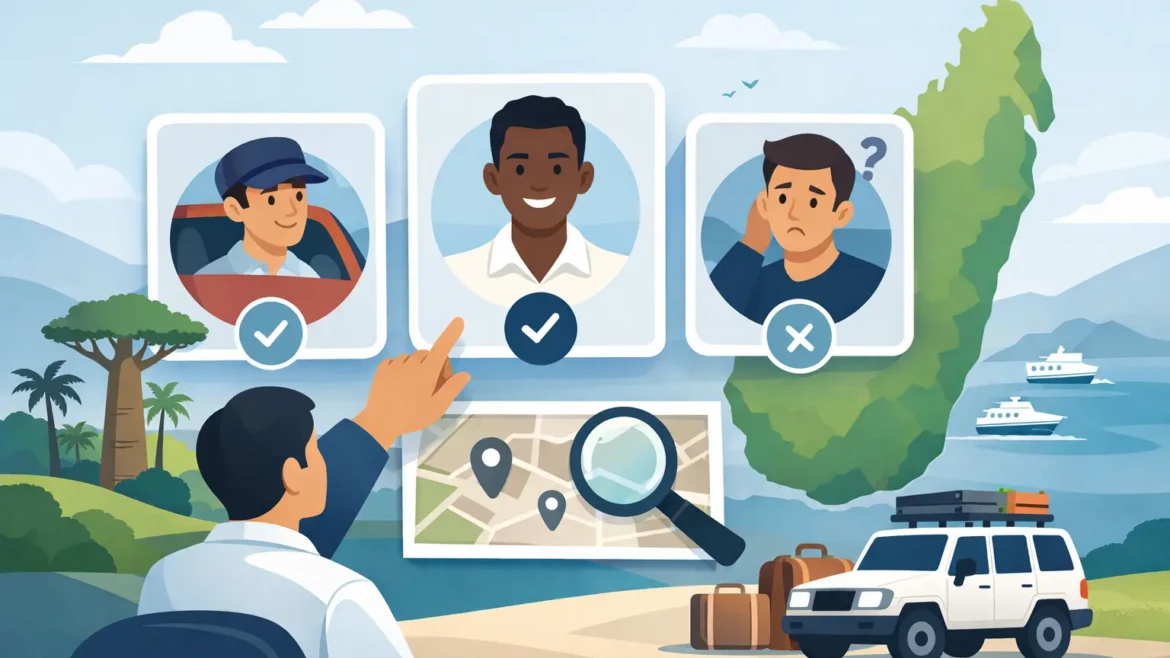
A Madagascar itinerary can look manageable on a map – then the road reminds you who is in charge. Distances that seem short often take a full day, weather can change a route fast, and a good driver is not just transportation but the person who keeps your trip moving. If you are wondering cómo elegir conductor Madagascar, the real question is simpler: who can get you across the island safely, comfortably, and without turning logistics into the main story of your vacation?
For many travelers from the US, this decision matters more in Madagascar than in easier self-drive destinations. The island rewards patience and local knowledge. You may be heading from Antananarivo to Andasibe for rainforest wildlife, crossing toward Morondava for baobabs, or linking parks, highlands, rivers, and coast over 10 to 15 days. In each case, the driver shapes the pace, the stress level, and often the quality of the experience itself.
Cómo elegir conductor Madagascar for the trip you actually want
The first mistake travelers make is choosing a driver as if every route on the island were the same. They are not. A short city transfer, a national park circuit, and a cross-island journey ask for different strengths.
If your trip is built around wildlife parks and long road days, route knowledge is essential. You want a driver who knows where roads deteriorate after rain, where fuel and clean rest stops are realistic, and how to time arrivals so you are not reaching a remote lodge after dark. If your plan includes several regions, the right driver also needs stamina and consistency. A pleasant person with limited experience on major touring routes may be fine for a short transfer but not ideal for a two-week journey.
That is why the best choice usually starts with your itinerary, not with price alone. A cheaper driver can become expensive if delays force hotel changes, missed park entries, or extra overnight stops.
Look for route expertise, not just a license
On paper, many drivers can offer a vehicle and say they know Madagascar. What matters is whether they know your Madagascar.
Ask how often they drive the exact regions on your route. The road to Andasibe is different from western routes toward Morondava, and both are different again from longer southern or cross-island itineraries. A driver who regularly handles tourism circuits will usually understand timing, park access habits, luggage needs, and how to manage the rhythm of travel for international guests.
This also affects your experience in subtle ways. An experienced touring driver knows when to leave early to avoid rough traffic out of the capital, when a road section is tiring enough to justify a better lunch stop, and when flexibility is realistic versus when it creates risk. That kind of judgment is hard to see in an online quote, but you feel it every day on the road.
Safety is more than careful driving
When travelers think about safety, they usually think first about speed. That matters, of course, but it is only one part of the picture.
A strong driver in Madagascar should be conservative in poor road conditions, realistic about night driving, and disciplined about the vehicle itself. Tires, brakes, suspension, lights, and air conditioning are not small details on long journeys. They affect fatigue, comfort, and reliability. On some routes, a 4×4 is not a luxury add-on but the right tool for the road and season.
It is worth asking practical questions. What vehicle will be used? How old is it? Is it maintained for long-distance touring? Is there a spare tire and basic roadside equipment? If you are traveling in the rainy season or shoulder months, ask whether the proposed vehicle is suitable for the exact route.
A careful answer usually tells you a lot. Serious operators explain trade-offs. They do not promise that every road will feel easy. They tell you what vehicle class matches the route and why.
Communication matters more than most travelers expect
The best driver for your trip is not always the one with the most polished sales pitch. But communication still matters because Madagascar travel runs better when expectations are clear.
At a minimum, you want a driver who can communicate basic trip logistics confidently, either directly or through a local operator coordinating the journey. This includes departure times, daily drive length, planned stops, and how changes will be handled if weather, road works, or local conditions interfere.
For US travelers, this is often where working with a local tour operator makes the biggest difference. Instead of relying on one person to be driver, fixer, translator, and planner at the same time, you have local backup if something changes on the ground. That is especially valuable on multi-day routes where hotel coordination, park timing, and road realities need active management.
Reviews help, but context helps more
Traveler reviews are useful, but read them with a specific goal. Do not just look for comments that say a driver was nice or on time. Look for signs that the driver handled a real Madagascar itinerary well.
Useful reviews mention things like road confidence, punctual starts, calm problem-solving, vehicle cleanliness, and how comfortable the travelers felt over several days. They may also mention whether the driver adapted well to long distances, family travel, photography stops, or wildlife-focused pacing.
Be cautious with very general praise if your route is demanding. A driver who impressed guests on a short transfer may not have been tested on a long, mixed-terrain circuit.
Price is important, but value is the real filter
Madagascar is a destination where bargain hunting can backfire quickly. The lowest rate may reflect an older vehicle, weaker maintenance, less route experience, or limited support if plans change.
That does not mean the highest quote is automatically best. It means you should compare what is actually included. Is fuel included? Airport transfers? Driver accommodation and meals on multi-day routes? Vehicle category? Backup support if there is a mechanical issue? If prices are not structured the same way, the comparison is not real.
This is one reason many travelers prefer a planned private itinerary rather than assembling transport piece by piece. The cost may look higher at first glance, but the value is often stronger because the route, hotels, driver standards, and timing are designed together. That reduces expensive friction later.
How to tell if a driver is right for nature travel
Madagascar is not a destination where transportation and experience live in separate boxes. If your trip is built around lemurs, chameleons, baobabs, tsingy landscapes, or coastal extensions, your driver should understand the flow of nature travel.
That means they respect early departures for wildlife activity, know that park visits often do not run on a casual city schedule, and understand that guests may want photo stops, scenic pauses, or unhurried lunches after long walks. A pure transfer mindset can feel rushed on a nature itinerary. On the other hand, a driver who is too relaxed about timing can create problems with check-ins or guided visits. The balance matters.
This is where local curation has real value. At Travelers of Madagascar, trips are typically built with vetted drivers who fit the route, the vehicle needs, and the overall style of the journey. That kind of selection is not glamorous, but it is one of the reasons a Madagascar trip feels smooth instead of improvised.
Questions worth asking before you confirm
If you want a fast way to judge quality, ask a few direct questions and pay attention to how clearly they are answered. Ask who will actually drive the route, what vehicle will be used, whether that vehicle is the best fit for the season, and how delays or breakdowns are handled. Ask how many days the driver expects each leg to take and whether any arrivals after dark are likely.
The goal is not to interrogate people. It is to see whether the answers sound grounded in real operations. Good providers usually answer with calm specifics. Weak ones often stay vague or overly optimistic.
The best choice is usually the one with support behind it
If you are planning Madagascar for the first time, the safest bet is rarely a standalone driver chosen on price alone. It is usually a driver backed by an operator who knows the route, checks vehicle standards, coordinates hotels, and can intervene if conditions shift.
That support becomes even more valuable on classic Madagascar journeys that combine rainforest, highlands, western landscapes, or beach extensions. The farther you travel, the less you want to be solving transport issues yourself.
Choose the driver who understands your route, respects the realities of the road, and is part of a system built to keep your trip on track. In Madagascar, that decision quietly protects everything you came to see.