
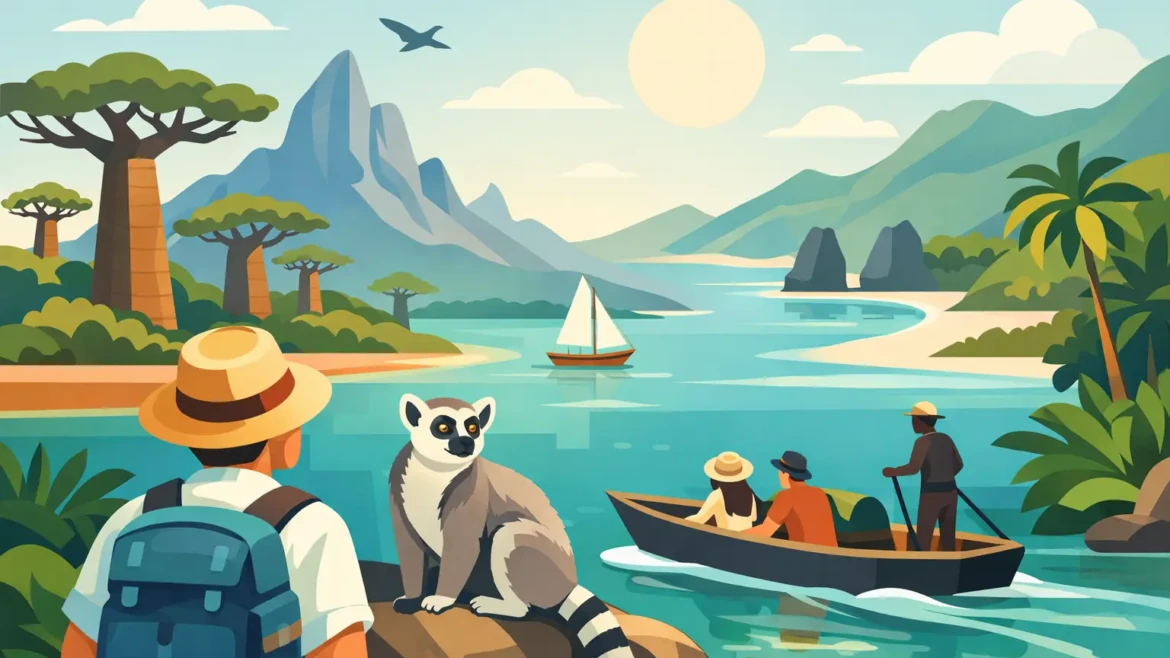
Madagascar is not the kind of destination you book on a whim and figure out after you land. Distances are long, roads can be slow, flight schedules shift, and the best experiences are often far from each other. A great tour Madagascar itinerary is less about checking boxes and more about building the right route around what you care about most – lemurs in the rainforest, baobabs at sunset, tsingy landscapes, quiet beaches, or time with local communities.
That is exactly why travelers who get the most out of Madagascar usually start with the route, not the hotel. This is a country of dramatic contrasts. You can wake up in misty eastern forest listening to indri calls, spend the next days crossing highland towns and rice terraces, and finish by the coast under palm trees. It is inspiring, magnificent, and unlike anywhere else, but it rewards good planning.
What makes a tour Madagascar trip different
Many destinations are easy to improvise. Madagascar is not one of them, and that is part of its appeal. The island feels wild, spacious, and deeply varied. Its signature moments are spread across very different regions, each with its own pace, weather patterns, and logistics.
That creates a trade-off travelers should understand early. The more of Madagascar you want to see, the more time you need on the road or in transit. If you try to pack every headline attraction into ten days, the trip can start to feel rushed. If you focus on one or two regions, you lose some variety but gain a richer experience on the ground.
For first-time visitors, this matters more than almost anything else. A well-designed private itinerary should not simply include famous places. It should connect them in a way that makes sense, with realistic drive times, the right overnight stops, and enough flexibility for weather, wildlife viewing, and the simple fact that Madagascar runs on its own rhythm.
How to choose the right tour Madagascar route
The best route depends on your travel style, your time, and what kind of memories you want to come home with. Some travelers want iconic landscapes. Others care most about wildlife encounters. Some want both, but also need a few slower days by the sea.
If wildlife is your priority
Start with the east and central highlands. This is where many classic trips begin because the route works well and the biodiversity is extraordinary. Andasibe is often the first major wildlife stop for a reason. It offers one of the best chances to see lemurs quickly, including the indri, whose call through the forest is one of Madagascar’s unforgettable sounds.
From there, longer routes may continue south through Ranomafana and Isalo. This gives you a strong contrast – rainforest, then highland scenery, then sandstone canyons and open landscapes. It is a smart choice for travelers who want a broad introduction to the island’s ecosystems without trying to cover the entire country.
If landscapes are your priority
Western Madagascar delivers some of the island’s most striking visuals. The Avenue of the Baobabs has become iconic, but in person it still feels bigger and quieter than most travelers expect, especially in late afternoon light. Add the Tsingy de Bemaraha, and you get one of the most unusual geological environments in Africa.
This route is spectacular, but it is also more demanding. Road conditions and access can be challenging depending on the season. If you are drawn to this side of Madagascar, it helps to be honest about your comfort level with long travel days and more remote conditions.
If you want balance
For many US travelers, the best answer is a cross-island itinerary of 10 to 15 days. That gives you room to combine rainforest wildlife, cultural stops in the highlands, a major landscape region, and some beach time at the end. It is often the sweet spot between ambition and comfort.
This is where custom planning matters. Two travelers can both want a “classic” Madagascar trip and still need very different pacing. A honeymoon couple may want fewer hotel changes and a coastal finish. A wildlife-focused pair may prefer more park time and early starts. The route should reflect that.
Timing matters more than people think
Madagascar is a year-round destination, but not every route works equally well in every season. Rain can affect road access, especially in more remote western areas. Wildlife viewing also changes through the year. Some travelers care about baby lemur season, others want whale sightings, greener landscapes, or drier conditions for overland travel.
There is no single perfect month for everyone. That is why broad advice can only go so far. The right season depends on whether your trip is built around rainforest walks, cross-country driving, beach time, photography, or a mix of all four.
If your dates are fixed, your itinerary should adapt to the season rather than forcing an unsuitable route. That sounds simple, but it saves a lot of disappointment. A smart local operator will tell you when a famous stop is not the best fit for your travel window and suggest an alternative that works better.
Why logistics shape the experience
Madagascar’s distances are deceptive. A route that looks manageable on a map may involve a full day of driving. Internal flights can help, but they should be used carefully, not as a cure for weak itinerary design. The strongest trips balance efficiency with the pleasure of actually seeing the country between major stops.
Transport quality also matters more here than in easier destinations. A skilled driver is not just a transfer provider. In Madagascar, your driver becomes part of the trip’s reliability, safety, and daily comfort. The same goes for guides. Great wildlife guiding can be the difference between walking through a forest and truly understanding what you are seeing.
Hotels deserve the same attention. Madagascar offers everything from simple lodges to high-end retreats, but consistency matters. The right property in the right location improves early park access, reduces tiring transfers, and keeps the pace enjoyable.
This is one reason many travelers prefer private touring with local ground handling instead of trying to stitch everything together themselves. Good execution is not flashy. It shows up in the timing, the backups, the hotel choices, and how calmly problems are handled when conditions change.
What a well-planned Madagascar tour should include
A good itinerary does more than move you from one highlight to the next. It builds momentum. You should feel the country changing around you – from humid forest to highland towns, from dry western plains to the coast. That sense of progression is part of what makes Madagascar feel so special.
The best trips also leave room for texture. That might mean stopping at local markets, seeing craft traditions in the highlands, taking time for village encounters, or ending with a few slower days by the water near Nosy Be or another coastal area. Nature is the headline here, but culture gives the journey depth.
This is also where “value” should be understood correctly. In Madagascar, the cheapest plan is not always the best deal. If a lower quote means weak routing, poor vehicle standards, or unreliable hotel selection, the experience can suffer fast. Better value usually comes from local knowledge, careful coordination, and choosing where to invest so the trip runs smoothly from start to finish.
For travelers who want freedom but still want a trusted local partner, car hire can also make sense in specific cases. It is a better fit for experienced independent travelers who understand the realities of navigation, road conditions, and timing. For most first-time visitors, a fully organized private trip remains the more comfortable and more rewarding option.
The smartest way to tour Madagascar
The smartest approach is not to ask, “How much can I fit in?” It is to ask, “What kind of Madagascar do I want to experience?” Once that is clear, the route becomes easier to shape. You may want the classic wildlife circuit, a west-focused expedition, or a broader journey that ends with the sea. Each can be excellent if it matches your priorities.
At Travelers of Madagascar, that is how we think about trip design – not as a fixed package first, but as a realistic, high-quality journey built around what matters most to you, with local control on the ground and the service standards that help you travel with confidence.
Madagascar gives back most to travelers who let it be itself – wild, varied, and a little unpredictable – while relying on a plan strong enough to hold the whole experience together.