
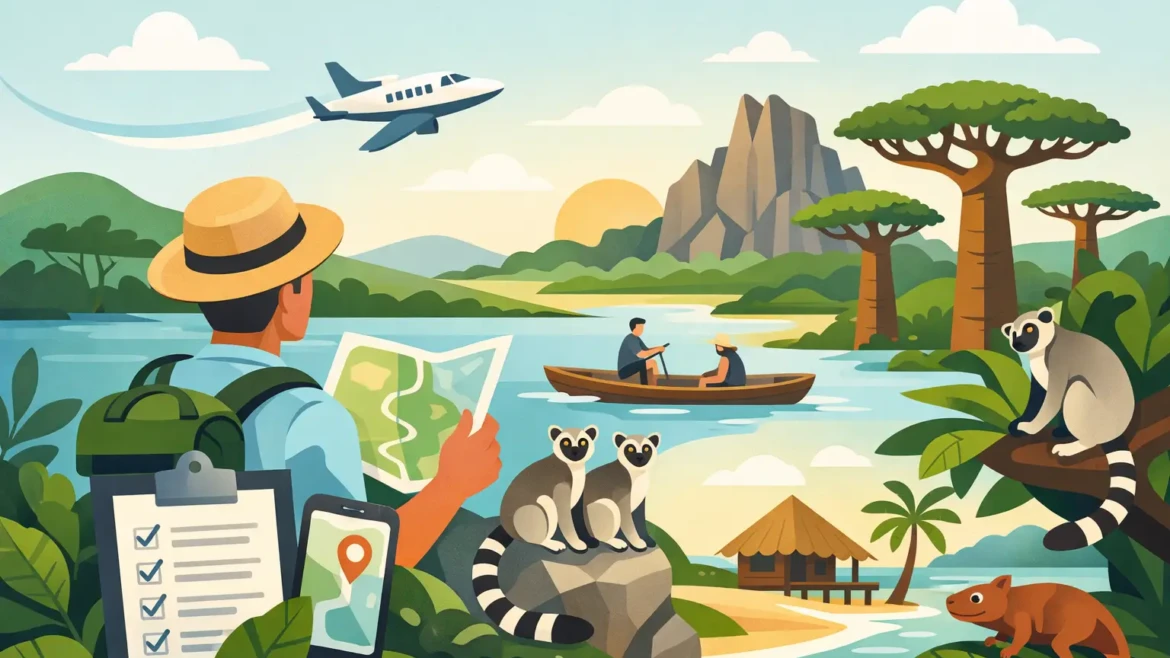
Madagascar is not the kind of destination you want to improvise from the airport parking lot. Distances are long, road conditions can be slow, and the best wildlife experiences depend on being in the right place at the right time. If you are researching cómo organizar viaje privado Madagascar, the real question is not simply where to go. It is how to build a route that fits your interests, pace, and comfort level without losing precious days to bad connections or weak planning.
A private trip works especially well here because Madagascar is not a one-note destination. You can wake up in rainforest searching for indri calls, cross highland villages by road, stand before baobabs at sunset, and finish on a beach with clear water and no schedule pressing on the next hour. That variety is the magic. It is also the challenge.
Cómo organizar viaje privado Madagascar without wasting days
The first decision is not hotel category or even budget. It is the shape of your itinerary. Madagascar looks manageable on a map until you factor in road speeds, domestic flight reliability, park access, and how tiring frequent one-night stops can become. For most US travelers, a successful private itinerary is built around one of three approaches.
The first is a classic east-south or central-south route, usually ideal for first-time visitors who want lemurs, landscapes, and a strong overview. This often combines the capital, Andasibe for rainforest wildlife, the highlands, and a southern or southwestern extension for national parks and dramatic scenery. It gives you a broad experience without trying to conquer the whole island.
The second is a west-focused journey, often chosen by travelers who care most about baobabs, dry forests, tsingy formations, and a more remote atmosphere. This can be spectacular, but it usually demands more patience with logistics. It is worth it if those landscapes are your top priority.
The third is a custom split trip that pairs a nature circuit with a beach finish, often including Nosy Be or another coastal escape. For couples, small private groups, and anyone celebrating something special, this balance can feel exactly right. After several active days of road travel and early wildlife walks, ending by the sea is not a luxury. It is good trip design.
Start with your priorities, not a generic bucket list
Madagascar rewards focus. If you try to fit everything into 10 or 12 days, the trip can become a string of transfers with too little time in the places that matter most. A better way to plan is to rank your priorities early.
If wildlife is the main goal, you should decide what kind of wildlife experience you want. Some travelers want the best chance to see iconic lemurs in rainforest settings. Others are excited by chameleons, birds, nocturnal walks, or rare habitats. Families and first-time visitors often prefer parks with reliable sightings and easier access. More experienced travelers may accept longer travel days in exchange for rarer species or less-visited landscapes.
If scenery matters just as much as wildlife, route selection changes. The Avenue of the Baobabs, the tsingy, the sandstone massifs of the south, and the terraced highlands all deliver very different emotions. Madagascar is not one visual identity. It is several worlds on one island.
Then there is the beach question. Not every Madagascar trip needs beach time, but many benefit from it. A final stay on the coast works well after inland travel, especially for honeymooners, couples, and travelers coming from the US who want the long-haul journey to include both adventure and recovery.
How many days do you really need?
For a private Madagascar trip, 10 days is the lower edge for a meaningful first itinerary. It can work well if you stay disciplined and choose one main route instead of attempting multiple regions. At 12 to 15 days, the island starts to open up. You can spend more time in parks, reduce rushed transitions, and include stronger contrasts between rainforest, highlands, and coast.
Beyond 15 days, you gain flexibility rather than just more stops. That is an important distinction. The best longer trips are not necessarily packed with extra locations. They often include two-night or three-night stays that let you experience a place properly, with time for weather changes, deeper guiding, and moments that do not feel timed to the minute.
A common mistake is underestimating recovery time after international arrival. If you land tired and push immediately into a long road transfer, your first days can blur together. A well-organized private itinerary protects your energy, because energy affects what you actually remember.
The logistics that matter most
When travelers ask how to organize a private Madagascar trip, they often picture hotels and sightseeing first. On the ground, transportation is usually the element that shapes the entire experience.
A good driver changes everything. In Madagascar, this is not a detail. It is a core part of comfort, safety, timing, and mood. Roads can be rough, distances can feel longer than expected, and the difference between a merely functional transfer and a smooth one is enormous over 10 or 14 days. The same is true for local guides. In the parks, wildlife is not displayed on cue. Good guiding turns a walk into a real encounter.
Hotel selection also needs more thought than many travelers expect. In some regions, the best available hotel is best because of location, maintenance, and reliable service, not because it resembles a big international brand. The right room in the right place can give you easier park access, better rest, and less wasted driving. That is often more valuable than chasing a higher category on paper.
Domestic flights can be useful, but they should be treated carefully in itinerary design. They can save major overland time, yet they can also introduce uncertainty. Sometimes the smartest plan uses flights selectively and keeps the structure resilient in case of changes. That is where local ground handling becomes more than convenience. It becomes protection.
Season matters more than many travelers think
Madagascar is a year-round destination, but not every route is ideal in every month. Rain can affect road access, wildlife activity shifts by season, and beach conditions vary by coast. The right trip in July may not be the right trip in January.
This does not mean there is only one good time to visit. It means your route should match your travel window. If your dates are fixed, build around what is strongest at that moment. If your dates are flexible, choose them based on the experiences you care about most.
This is also where private travel has a clear advantage. Instead of forcing yourself into a fixed departure that only partly fits your goals, you can tailor the route to the season and your interests. That usually produces a better trip than simply copying a standard circuit.
Budget: where to spend and where to be smart
Madagascar can deliver strong value, but it is not a destination where the cheapest plan is usually the best plan. Cutting too hard on transport quality, guide quality, or route design often creates false savings. Lost time, tiring transfers, and avoidable mistakes cost more than they seem.
That said, premium does not need to mean extravagant. A smart private itinerary balances comfort and purpose. You might choose very good lodges in wildlife areas where location matters most, then simpler accommodation for one transit night. You might invest in a beach finale because it elevates the whole journey, while keeping the inland route tightly structured.
Travelers of Madagascar, as a local operator, understands this balance well because value here comes from on-the-ground decision-making, not from selling a generic luxury label. In Madagascar, well chosen is often more important than expensive.
The private travel advantage in a remote destination
A private trip is not only about exclusivity. In Madagascar, it is about control. You control pace, route logic, accommodation style, daily rhythm, and the balance between nature, culture, and downtime.
That matters because travelers are different. Some want early starts every day for maximum wildlife activity. Others want long lunches, photography stops, and time to absorb each place. Some are happy with adventurous road days if the reward is a rare landscape. Others want to minimize long drives and keep comfort high throughout.
None of these approaches is wrong. The best one is the one that feels sustainable for your group. A well-planned private itinerary respects that from the first day instead of forcing you to adapt after arrival.
What to decide before you book
Before confirming your trip, be clear about five things: your available number of days, your must-see experiences, your comfort expectations, whether you want a beach extension, and how much flexibility matters to you. Once those are defined, the right route becomes much easier to build.
The strongest Madagascar itineraries are not the ones that cover the most ground. They are the ones that connect the right places in the right order, with enough support on the ground to keep the journey exciting rather than exhausting.
If you give Madagascar the structure it deserves, it gives something rare back – a trip that still feels wild, but never feels uncertain.