
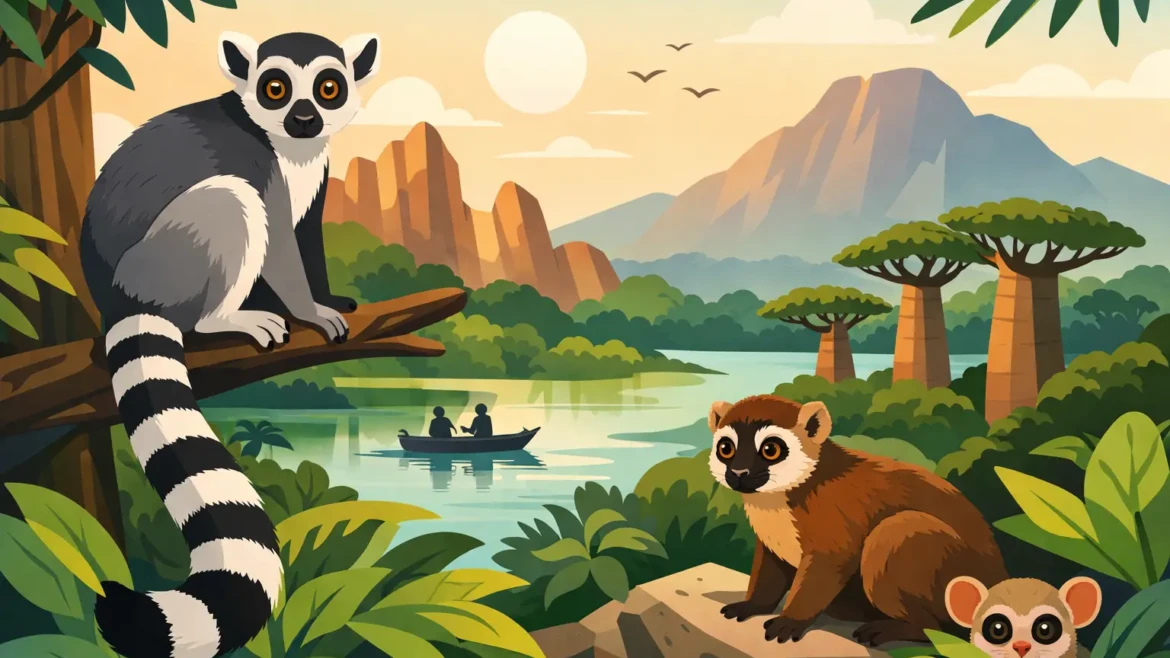
The first time you hear an indri call through the forest, it does not feel like ordinary wildlife watching. It feels ancient, wild, and slightly unreal – the kind of sound that reminds you Madagascar is not just another safari destination. A Madagascar lemur safari is about close encounters with animals found nowhere else on Earth, but it is also about choosing the right route, the right season, and the right pace if you want the experience to feel extraordinary rather than rushed.
That is where many trips are won or lost. Madagascar is not a place where you simply arrive and tick off wildlife highlights in a few easy drives. Distances are long, roads can be demanding, and the best lemur sightings are spread across very different habitats. Rainforest, dry forest, spiny forest, and island reserves each offer a different side of the story.
What makes a Madagascar lemur safari different
A classic African safari is often about big landscapes and game drives. A lemur-focused journey in Madagascar is more intimate. You are usually on foot with a specialist guide, moving quietly along forest trails, listening for calls, scanning branches, and learning to notice movement in the canopy. The reward is not just seeing lemurs, but understanding how each habitat shapes their behavior.
That difference matters when planning. If your goal is to see as many lemur species as possible, your itinerary should combine regions rather than staying in one place. If you care most about photography, a few carefully chosen parks with longer stays will usually deliver more than a fast cross-island dash. If you are traveling as a couple or small private group, comfort, pacing, and road time become just as important as species count.
Best places for a Madagascar lemur safari
No single park shows you all of Madagascar. The strongest itineraries combine two or three ecosystems so the trip feels varied and productive.
Andasibe-Mantadia for classic rainforest lemurs
For many travelers, Andasibe is the essential first stop. It is one of the easiest rainforest regions to reach from Antananarivo, and it gives you a real chance to see the indri, the largest living lemur. Their calls carry across the forest in the early morning, and hearing them is one of Madagascar’s defining wildlife moments.
You may also see diademed sifaka, common brown lemurs, bamboo lemurs, and several nocturnal species on evening walks. Andasibe works especially well for first-time visitors because sightings can be excellent without needing extreme trekking. That said, weather can affect trail conditions, and rainforest photography is not always easy. Dense vegetation and low light are part of the experience.
Ranomafana for biodiversity and depth
Ranomafana is a richer, more layered rainforest experience. It often appeals to travelers who want serious wildlife time rather than a quick introduction. The park is known for golden bamboo lemurs, Milne-Edwards’ sifaka, and a long list of reptiles, frogs, birds, and insects that make each walk feel alive from the forest floor to the canopy.
This is a place where patience pays off. Trails can be steeper and more humid than in Andasibe, so it suits travelers who do not mind active walking. If your trip has room for only one rainforest park, the choice depends on your priorities. Andasibe is easier and iconic. Ranomafana can feel more immersive and biologically dense.
Anja and Isalo for ring-tailed lemurs and dramatic scenery
If your picture of a lemur includes a striped tail and a rocky backdrop, southern Madagascar delivers that image beautifully. Anja Community Reserve is one of the best places to see ring-tailed lemurs reliably, often at close range. It is not a vast national park, but that is part of its strength. Sightings are usually rewarding, and the community-managed model adds another layer to the visit.
Pairing Anja with Isalo creates a broader southern experience. Isalo is more about sandstone canyons, natural pools, and open landscapes than dense lemur habitat, but it gives your route visual contrast. A trip that combines rainforest with the south feels more complete because it shows how different Madagascar can be from one region to the next.
Kirindy and western forests for sifaka and nocturnal species
Western Madagascar offers dry forest and a completely different rhythm. Kirindy is well known for Verreaux’s sifaka and excellent nocturnal walks. Depending on season and luck, you may encounter mouse lemurs, sportive lemurs, and other night-active species that many travelers miss if they stay only in the east.
This region pairs naturally with the Avenue of the Baobabs and, for some routes, a continuation toward the Tsingy. It is rewarding, but road logistics are more demanding. For travelers with 10 to 15 days, the west can be outstanding. For shorter trips, it may require sacrificing too much time in transit.
How long should your lemur safari be?
This depends less on ambition than on realism. Madagascar looks manageable on a map until you factor in driving conditions, domestic flight schedules, and the fact that wildlife viewing works best when you are not hurrying.
A short trip of 5 to 7 days can support a focused Madagascar lemur safari around Andasibe, with perhaps one additional stop. That works well for travelers who want a strong wildlife experience without trying to cover the whole country.
With 10 to 14 days, the options improve dramatically. You can combine eastern rainforest with the highlands and the south, or build a west-focused route with baobabs, dry forest, and lemurs. This is often the sweet spot for US travelers who want variety without turning the trip into a constant transfer.
At 15 days or more, the safari can become a full Madagascar journey. That is when lemur tracking, cultural stops, major landscapes, and beach time start to fit together naturally rather than competing for space.
When to go for the best lemur sightings
Lemurs can be seen year-round, but conditions change the feel of the trip. The dry season, especially from roughly May through October, is often the easiest for travel. Roads are more manageable, trails are drier, and cooler conditions make walking more comfortable.
The greener months can be beautiful, especially in the rainforest, and photography can be lush and dramatic. But heavy rain may affect access in some regions, and travel times can become less predictable. If you want the broadest itinerary with the least logistical friction, the drier months usually make more sense.
Wildlife priorities matter too. Some species are easier to spot in certain seasons, and activity patterns shift with weather and food availability. That is one reason a custom route often outperforms a generic one. A good plan should reflect what you most want to see, not just what looks neat on paper.
What travelers often underestimate
The biggest mistake is trying to do too much. A Madagascar lemur safari sounds niche, but it quickly expands into bigger decisions about comfort, travel style, and what kind of trip you actually want. Do you want a species checklist, a photographic journey, a honeymoon with wildlife at its heart, or a broader island adventure with lemurs as the headline?
The second mistake is underestimating logistics. A route may look exciting online, but if it relies on brittle connections or unrealistic road days, it can turn a once-in-a-lifetime trip into a tiring one. In Madagascar, execution matters. The quality of your driver, your guides, your lodge selection, and your day-by-day pacing has a direct effect on how much you enjoy the wildlife.
That is why private, locally managed planning has real value here. When a route is built around actual road conditions, trusted guides, and realistic transfer times, you spend more of your trip listening for indri calls, watching sifakas leap, and spotting ring-tailed lemurs in the morning light – not worrying about how the next step will work.
Building the right itinerary around lemurs
The best routes usually start with one honest question: what matters most to you? If it is iconic lemur moments, Andasibe is hard to ignore. If it is biodiversity and deeper rainforest time, Ranomafana deserves a serious place in the plan. If you want visual variety, the south or west can transform the trip.
For many travelers, a balanced itinerary works best. Rainforest for indri and canopy species. Highlands or community reserves for cultural texture and easier pacing. Then either the south for ring-tailed lemurs and dramatic landforms, or the west for dry forest and baobabs. If time allows, finishing with a few nights by the coast can make the whole journey feel complete.
This is where a local operator can make a meaningful difference, and Travelers of Madagascar is built around exactly that kind of planning – custom routes, strong guides, reliable drivers, and hotels chosen for consistency rather than guesswork. In a destination as rewarding and logistically complex as Madagascar, those details are not background. They shape the trip.
A great lemur safari is not about chasing every possible sighting. It is about being in the right forest at the right hour, with the right guide, and enough time to let Madagascar reveal itself properly.