
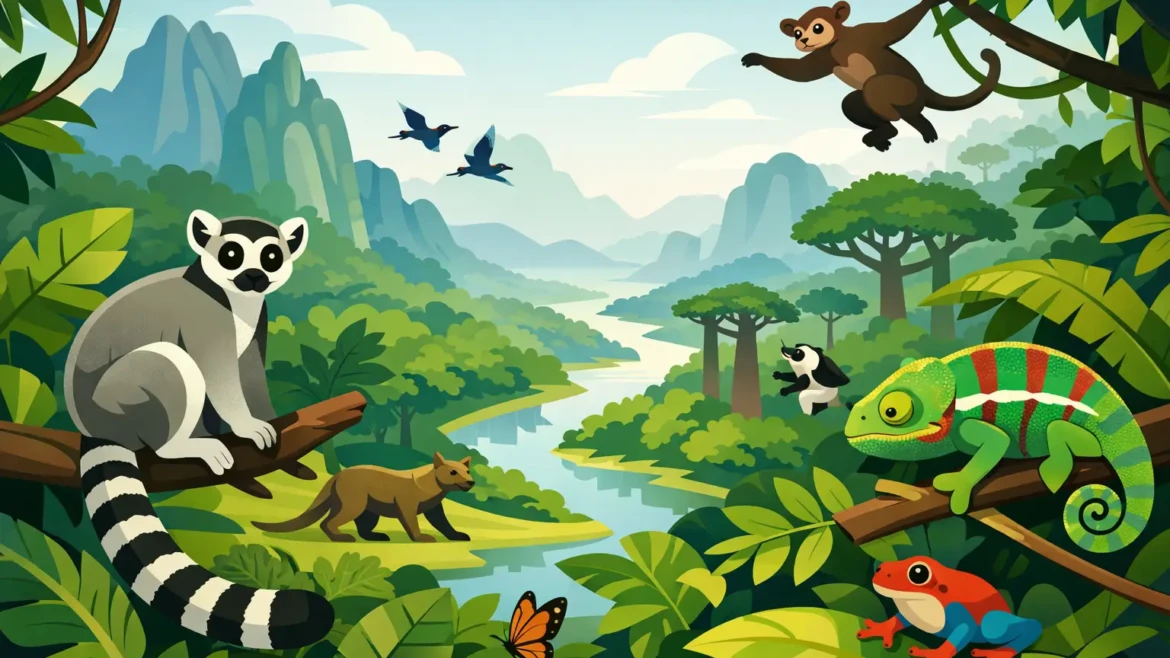
Mist hangs low over the road to Andasibe at dawn, and before you even reach the forest edge, the first calls begin. That is the real appeal of a Madagascar rainforest wildlife route – not just seeing animals, but moving through a living sequence of habitats where each stop changes the soundtrack, species list, and pace of the trip.
For most first-time visitors, the smartest rainforest circuit is on the east and southeast side of the island. This is where travel time and wildlife rewards line up best. You get classic rainforest landscapes, high lemur density, excellent guiding opportunities, and a route that can be shaped around your time, comfort level, and wider plans for beaches or western landscapes.
Why this Madagascar rainforest wildlife route works
Madagascar is huge, and distances can be deceptive. A route may look simple on a map, then turn into a full travel day because of road conditions, mountain sections, or ferry timing. That is why the best rainforest plan is rarely the one with the most pins on the map. It is the one that balances wildlife quality with realistic ground logistics.
The eastern rainforest corridor does that well. It gives you accessible flagship parks, strong chances to see multiple lemur species, chameleons, frogs, orchids, and birds, and enough variation that the journey never feels repetitive. Andasibe is the easiest starting point from Antananarivo. Ranomafana brings denser, deeper rainforest and more challenging terrain. Palmarium adds a different feel, with canal and lakeside access and memorable nocturnal encounters. When linked well, these areas create a route that feels immersive rather than rushed.
The classic Madagascar rainforest wildlife route
For many travelers, the most effective route begins in Antananarivo, continues to Andasibe, then moves south through the highlands toward Ranomafana, with the option to continue to the coast or connect onward to another region.
Stop 1: Andasibe for your first rainforest immersion
Andasibe is often the best first wildlife stop in Madagascar because it delivers quickly. After arrival in the capital, you can reach the area by road and be in good forest the next morning without losing too much time to transit. That matters on a long-haul trip.
This is where many travelers first hear the indri, the largest living lemur, whose haunting call carries through the canopy. The area is also excellent for diademed sifaka, common brown lemurs, chameleons, leaf-tailed geckos, and a wide range of birds and frogs. Day walks and night walks complement each other well here. In daylight, the focus is often lemurs and forest trails. After dark, the forest edge shifts to smaller nocturnal species and reptiles that are almost impossible to spot alone.
Andasibe suits travelers who want strong wildlife returns without strenuous trekking. Some trails are muddy and uneven, especially in the wet season, but this is still one of the most approachable rainforest experiences in the country.
Stop 2: Ranomafana for deeper forest and greater variety
If Andasibe is the welcoming introduction, Ranomafana is where the rainforest feels bigger, steeper, and more layered. Reaching it takes commitment, but the payoff is real. This national park is one of Madagascar’s major biodiversity strongholds and rewards travelers who are willing to spend time on the trail.
Golden bamboo lemurs are a major draw, and the park can also produce Milne-Edwards’ sifaka, red-bellied lemurs, and a remarkable range of reptiles, amphibians, and birds. The forest itself feels different from Andasibe. It is more mountainous, often more humid, and generally more demanding on foot.
This is where route planning matters. Ranomafana is best for travelers who genuinely want wildlife-focused hiking rather than just scenic stops. If you are traveling with younger children, have mobility concerns, or prefer shorter walks, you may want to limit your stay or pair it with easier-access wildlife areas elsewhere.
Optional stop: Palmarium for a softer, more atmospheric extension
Palmarium is a very different experience from a national park. Reached via the east by water and road combinations, it offers a private-reserve feel with close wildlife encounters and a strong sense of isolation. It is especially attractive for travelers who want rainforest ambiance without constant long hikes.
This stop works well for couples, photographers, and travelers building a broader itinerary that includes the Pangalanes Canal or east-coast scenery. Wildlife viewing can feel more intimate here, and nocturnal visits can be especially memorable. The trade-off is that it is less of a classic wild-park trekking experience than Andasibe or Ranomafana. Whether that is a plus or a minus depends on what kind of trip you want.
How many days you need
A good Madagascar rainforest wildlife route needs enough time to breathe. If you only have a week in Madagascar total, trying to combine too many rainforest regions usually weakens the experience. In that case, Antananarivo and Andasibe may be the best choice, possibly with one more carefully chosen stop.
With 10 to 12 days, the route becomes much stronger. You can include Andasibe and Ranomafana with sensible overland pacing and still leave room for cultural stops in the highlands or a beach finish. With 14 days or more, you can shape a more complete cross-island journey, blending rainforest wildlife with baobabs, tsingy, or coastal downtime.
The right answer depends on your priorities. If lemurs and rainforest are the core goal, spend longer in fewer parks. If Madagascar is a once-in-a-lifetime trip and you want contrasts, a rainforest route can be the spine of a broader itinerary rather than the whole story.
What wildlife you can realistically expect
A rainforest route in Madagascar is about quality, not checklist volume. You may not see dozens of large animals in a single drive, because this is forest wildlife, often hidden in canopy layers or active at very specific times. What makes it extraordinary is endemism. Much of what you see exists nowhere else.
Lemurs are the headline, of course, but the route also rewards patient travelers with chameleons the size of a finger, bright poison-colored frogs, strange leaf mimic insects, elegant couas, and geckos that look almost prehistoric. Some sightings happen in seconds and disappear. Others come after a guide quietly studies a branch that most visitors would walk past.
That is one reason guided rainforest travel matters so much here. Madagascar wildlife is not always obvious. The difference between a good walk and an unforgettable one often comes down to local eyes and route timing.
When to travel this route
The rainforest is possible year-round, but conditions shift. The wetter months bring lush vegetation, active amphibians, and dramatic forest atmosphere, though trails can be slick and travel can be slower. The drier period often makes road travel easier and hiking more comfortable, but wildlife patterns change and some landscapes feel less vibrant.
There is no perfect month for every traveler. Birders, photographers, hikers, and first-time visitors may each prefer a different window. What matters most is matching season to expectations. If you want easier logistics, lean toward drier periods. If you love rich forest mood and do not mind mud, greener months can be very rewarding.
Route planning trade-offs most travelers miss
The biggest mistake is underestimating transfer days. Madagascar does not reward overpacked itineraries. Two excellent parks with enough time in each will often outperform four rushed stops.
Another common issue is treating every rainforest area as interchangeable. They are not. Andasibe is convenient and iconic. Ranomafana is richer in challenge and depth. Palmarium is softer, scenic, and more intimate. The best route is the one that fits your style of travel, not the one with the longest species list on paper.
Accommodation quality also varies by region, and that affects the whole experience more than many travelers expect. After wet hikes and early starts, a well-chosen lodge, reliable vehicle, and guide who knows the trails well are not luxuries. They shape how much energy you have for the wildlife itself.
For that reason, many US travelers prefer a private itinerary with local coordination rather than trying to piece together roads, park entries, guides, and hotels independently. In a destination this logistically complex, good planning protects both your time and your experience. That is where a locally managed operator like Travelers of Madagascar can make the route feel smooth without making it feel packaged.
Building the route around your wider trip
A rainforest itinerary does not have to end in the forest. One of Madagascar’s strengths is contrast. After several days of misty trails and indri calls, many travelers want either dry western scenery or time by the water.
That is why this route often works best as the opening or middle section of a larger journey. You can start with rainforest wildlife while energy is high, then continue toward the south for landscapes and culture, or finish with coastal relaxation. The exact shape depends on your flight plan, trip length, and tolerance for overland travel.
The smartest route is rarely the most ambitious one. It is the one that gives you enough time to hear the forest wake up, enough guidance to actually find what lives there, and enough flexibility to make Madagascar feel personal rather than prewritten. If you build your Madagascar rainforest wildlife route around that idea, the trip tends to stay with you long after the red dirt has washed off your boots.