Ambalavao: The Gateway to Andringitra, the Soul of Antaimoro Paper, and the Home of Silk
Nestled at the southern edge of the Madagascar highlands, where the paved road of the RN7 begins to yield to the vast, open landscapes of the south, lies the bustling town of Ambalavao. More than just a scenic stop, Ambalavao is a town of profound cultural significance, acting as a gateway to both untamed wilderness and ancient traditions. It is the last major hub before the remote Andringitra Massif and the Tsaranoro Valley, a place where the air is scented with the sweet ferment of local wine and the earthy aroma of handmade paper. This is a region where the industrious Betsileo people’s terraced rice fields meet the vast cattle herds of the Bara people, creating a cultural and economic crossroads. This article explores Ambalavao’s unique heritage as the home of Antaimoro paper and wild silk weaving, its role as the essential gateway for trekking in one of Madagascar’s most spectacular national parks, and the dramatic, sacred geography that defines its spirit.
Ambalavao: A Crossroads of Culture and Commerce
The name Ambalavao translates to “At the new village,” but its roots are deep and its cultural fabric is rich and layered. Situated at an altitude of over 1,000 meters, the town enjoys a cool, pleasant climate. It is famously known as the “wine town” for its local vineyards that produce a unique, often sweet, grape wine as well as a stronger brandy-like spirit known as betsabetsa, made from fermented sugar cane.
The Livestock Market: A Weekly Spectacle A key to understanding Ambalavao’s role as a crossroads is its legendary Zebu market, the largest and most famous in Madagascar. Every Wednesday and Thursday, the town transforms into a pulsating hub of activity. Thousands of Zebu cattle, the humped-backed bovine integral to Malagasy culture, are brought here from across the region by Bara herders. The Bara are a semi-nomadic people from the arid south for whom cattle represent wealth, status, and identity.
The market is a fascinating, intense sensory experience: a sea of zebu horns and dust, the sound of lowing and negotiation, and the sight of skilled handlers assessing the animals. It is also a major social event, a place for news and trade beyond cattle. For travelers, it offers an unvarnished look at a traditional economic practice that remains vital to the south. It is a powerful display of the meeting between the highland Betsileo culture and the pastoralist Bara culture.
The Artisan Soul: Antaimoro Paper and Landibe Silk
Beyond its agricultural and commercial life, Ambalavao is renowned as a center of two exquisite and ancient artisan crafts.
The Paper of the Antaimoro: A Fragrant History The Antaimoro people are an ethnic group of Arab-Shirazi descent who settled on the southeast coast of Madagascar centuries ago. They brought with them knowledge of papermaking, which they used for transcribing the Quran and their sacred texts, known as sorabe. This tradition found a home in Ambalavao.
The Papier Antaimoro is not mere paper; it is a work of art. The process is mesmerizing to witness. The bark of the avoha bush (a local mulberry tree) is harvested, boiled, and beaten into a pulp. This pulp is then mixed with water and poured through a screen to form sheets. While still wet, the artisans press delicate, fragrant flowers and leaves (like jacaranda, bougainvillea, and eucalyptus) directly into the pulp. The sheets are then dried in the sun, resulting in beautiful, textured, and aromatic stationery, lampshades, and artwork. Visiting one of the small family-run workshops in Ambalavao, such as the Paper Factory, is a must. You can see the entire process and purchase unique, ethically-made souvenirs that directly support this centuries-old craft.
Landibe: The Silk of the Wild Moths Alongside paper, Ambalavao is one of the best places to see the production of wild silk, known as landibe. This silk is not from the domesticated mulberry silkworm but from the endemic Borocera madagascariensis moth, which lives on tapia trees. The process is entirely traditional and sustainable. The silk cocoons are harvested from the trees, boiled to soften the sericin (the gum binding the silk threads), and then spun by hand using simple, ancient-looking spindle wheels.
The resulting thread is coarser and more textured than conventional silk, making it incredibly durable. It is then dyed using natural pigments from roots, leaves, and clay before being woven on traditional wooden looms into beautiful, sturdy lambas (traditional shawls), scarves, and textiles. The craft is primarily practiced by women’s cooperatives, making it a vital source of income and a proud preservation of intangible cultural heritage.
The Gateway to Wilderness: Andringitra and Tsaranoro
While Ambalavao itself is captivating, its true magic lies in what it provides access to: the unparalleled wilderness of the Andringitra Massif.
Andringitra National Park: The Trekking Capital of Madagascar Designated a UNESCO World Heritage site as part of the Rainforests of the Atsinanana, Andringitra National Park is a masterpiece of natural diversity. The park is renowned for its dramatic granite peaks, deep valleys, high-altitude moorlands, and sacred forests. It is a premier destination for serious trekkers and climbers from around the world. Ambalavao is the essential logistical and administrative gateway for all expeditions into the park.
- Flora and Fauna: The park’s extreme range in altitude (from 650m to 2,658m) creates multiple ecosystems. It is a biodiversity hotspot, home to over 1,000 species of plants, dozens of mammal species (including 13 species of lemur, such as the charismatic ring-tailed lemur), and more than 100 species of birds. The vegetation shifts from lowland rainforest to ericoid thickets and high-altitude prairies.
- Pic Boby (Imarivolanitra): The primary challenge for many trekkers is the ascent of Pic Boby, at 2,658m, the highest accessible peak in Madagascar and the second-highest overall. The two to three-day circuit to the summit is demanding but offers some of the most spectacular and rewarding panoramic views on the island.
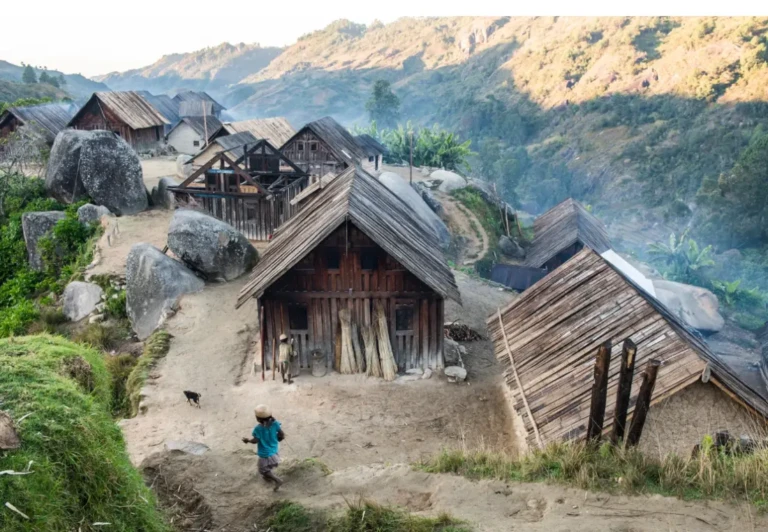
The Tsaranoro Valley: The Climber’s Paradise Adjacent to Andringitra lies the Tsaranoro Valley, a separate but equally stunning destination often accessed via Ambalavao. This vast, sacred plain is dominated by the sheer, 800-meter-high granite face of the Tsaranoro Massif. This valley has become a world-renowned rock climbing destination, attracting elite climbers to challenge its numerous established routes. But you don’t need to be a climber to appreciate its majesty. The valley is also a fantastic destination for hiking, bird watching, and cultural visits to the local Betsileo villages that dot its base. The sheer scale of the rock walls against the open grassland creates a feeling of profound awe and humility.
Embarking on a Trek: Logistics and Itineraries from Ambalavao
Organizing a trek into Andringitra or Tsaranoro is a structured process that begins in Ambalavao.
The Role of Ambalavao: All visitors to Andringitra National Park must register and pay park fees at the Madagascar National Parks (MNP) office in Ambalavao. This is non-negotiable. Furthermore, Ambalavao is where you will:
- Hire Official Guides and Porters: Hiring a local guide is mandatory for both safety and enriching the experience. Porters are also highly recommended and provide crucial income to the local community.
- Secure Provisions: Stock up on any last-minute snacks, water purification tablets, or supplies.
- Arrange Transport: Organize a 4×4 vehicle for the rough 45km drive from Ambalavao to the park entrance at Namoly Valley.
Sample 3-Day Trekking Itinerary (Andringitra Circuit):
- Day 1: Drive from Ambalavao to the park entrance. Begin trekking to the base camp, often located near the Asaramasana Valley. This first day involves a challenging but beautiful hike through lowland forests and across rivers (4-6 hours). Overnight in a basic campsite.
- Day 2: Summit day. An early start for the ascent of Pic Boby. The climb is strenuous, involving scrambling over rocks, but is achievable for anyone in good physical condition. The summit views over the entire massif are the ultimate reward. Descend back to camp (7-9 hours total).
- Day 3: Trek out from the base camp via a different route, perhaps passing the sacred Imaitso waterfall, back to the park entrance where your transport awaits for the return journey to Ambalavao.
For those seeking less strenuous options, shorter day hikes and cultural tours to nearby villages and sacred sites are also available and can be arranged in town.
Preservation and Responsible Tourism
The unique ecosystems of Andringitra and the cultural traditions of Ambalavao are fragile. Responsible tourism is paramount.
- Hire Local: Using local guides, porters, and drivers ensures your money benefits the community directly.
- Respect the Culture: Always ask permission before taking photos of people. Dress modestly, especially when visiting villages or sacred sites.
- Leave No Trace: This is critical in the national park. Pack out all your trash. Respect the wildlife by observing from a distance and not feeding the animals.
- Buy Direct: Purchasing authentic Antaimoro paper and Landibe silk from the artisan cooperatives in Ambalavao ensures your souvenir budget supports the craftspeople and helps keep these traditions alive.
Conclusion: Where Tradition Meets the Trail
Ambalavao is a town of beautiful contrasts: the pungent, lively chaos of the zebu market versus the delicate, fragrant artistry of papermaking; the cool, cultivated highland air versus the call of the raw, granite wilderness. It is a place that demands you pause and engage.
It is not merely a stop on the RN7 but a threshold. It is the last outpost of comfortable civilization before committing to the physical challenge of Andringitra’s peaks or the spiritual vastness of the Tsaranoro Valley. It is where you prepare, not just with supplies, but with context—learning about the cultures and crafts that have shaped this region for generations. A journey through Ambalavao and into the mountains it guards offers more than scenery; it offers a deeper understanding of the resilience, artistry, and profound connection to the land that defines the spirit of southern Madagascar.
Tour that may interest you
No pages found.
No pages found.