
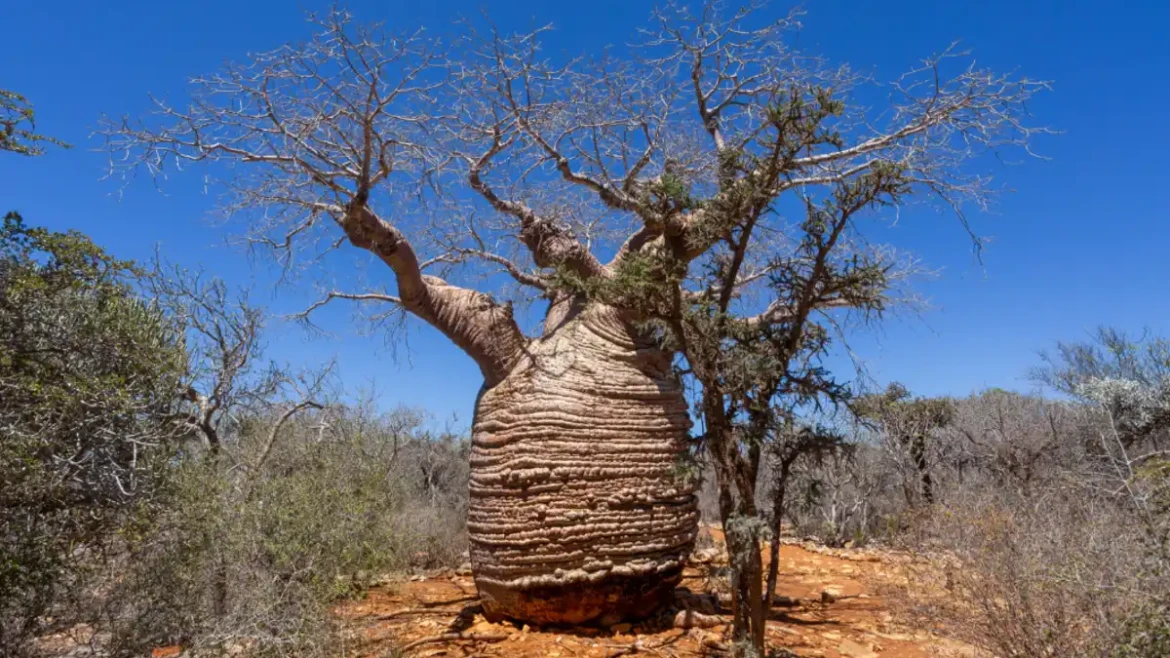
The Baobabs of Madagascar are among the most extraordinary trees on Earth. Rising like ancient guardians above dry savannas, lining dusty tracks, and standing silhouetted against fiery sunsets, these monumental trees are more than just botanical curiosities. They are symbols of the island itself. Madagascar is home to six of the world’s eight baobab species, making it the global epicenter for baobab diversity. Nowhere else on the planet can travelers encounter such a concentration of these majestic giants.
From the legendary Avenue of the Baobabs near Morondava to the remote spiny forests of the southwest, Madagascar’s baobabs offer an unforgettable experience. Whether you are a nature lover, photographer, conservationist, or traveler planning a once-in-a-lifetime adventure, understanding the baobabs of Madagascar will deepen your appreciation for this unique island.
This comprehensive guide explores their history, species, ecology, cultural significance, conservation challenges, and the best places to see them.
Why Madagascar Is the Kingdom of Baobabs
Baobabs belong to the genus Adansonia, named after the French naturalist Michel Adanson. Of the eight recognized species worldwide, six are endemic to Madagascar. The other two species grow in mainland Africa and Australia. This concentration of endemic species is a result of Madagascar’s long isolation from the African continent, which began around 88 million years ago.
Madagascar’s varied climates—ranging from humid rainforests in the east to arid spiny forests in the west and south—created ideal evolutionary conditions. Baobabs adapted to these dry environments by developing their iconic swollen trunks, capable of storing thousands of liters of water.
The baobabs of Madagascar are not only biological marvels but also visual icons that define the landscapes of regions like Menabe, Atsimo-Andrefana, and Boeny.
The Six Species of Baobabs of Madagascar
1. Grandidier’s Baobab (Adansonia grandidieri)
The most famous of all the baobabs of Madagascar, Grandidier’s baobab is tall, slender, and elegant. It can reach heights of 30 meters and live for over 800 years.
This species is best seen along the iconic Avenue of the Baobabs near Morondava. The trees stand like columns against the sky, particularly breathtaking at sunrise and sunset.
Grandidier’s baobab is classified as endangered due to habitat loss and agricultural expansion.
2. Fony Baobab (Adansonia rubrostipa)
Known locally as “Fony,” meaning “big belly,” this species is shorter and more rounded. Its reddish bark and bottle-shaped trunk distinguish it from other species.
Fony baobabs are common in the dry forests of western Madagascar, especially near Morondava and Toliara.
3. Za Baobab (Adansonia za)
The most widespread baobab species in Madagascar, the Za baobab is extremely adaptable and found across western and southern regions.
It can grow up to 30 meters tall, with massive trunks and irregular shapes. Its fruit is widely used by local communities for food and medicinal purposes.
4. Madagascar Baobab (Adansonia madagascariensis)
This species is mainly found in the north of Madagascar, particularly around Mahajanga and in dry forests near the Ankarafantsika National Park.
It is recognizable by its orange-brown bark and relatively smaller stature.
5. Perrier’s Baobab (Adansonia perrieri)
One of the rarest baobabs in the world, Perrier’s baobab is critically endangered. It survives in small populations in northern Madagascar.
Conservation efforts are ongoing to protect this species from extinction.
6. Suarez Baobab (Adansonia suarezensis)
Native to the far north of Madagascar, particularly around Antsiranana (also known as Diego Suarez), this species grows in dry deciduous forests and limestone areas.
Like Perrier’s baobab, it faces threats from deforestation.
The Avenue of the Baobabs: Madagascar’s Most Iconic Landscape
No discussion of the baobabs of Madagascar is complete without mentioning the legendary Avenue of the Baobabs.
Located about 45 minutes from Morondava, this dirt road is lined with towering Grandidier’s baobabs, some over 800 years old. It is one of the most photographed sites in Africa.
During sunset, the silhouettes of the baobabs against the crimson sky create a dreamlike scene. The area is protected as a natural monument, but continued conservation is essential due to surrounding agricultural pressures.
Ecological Importance of Baobabs in Madagascar
The baobabs of Madagascar are keystone species. Their ecological role includes:
• Water storage during dry seasons
• Providing nesting sites for birds
• Supplying fruit for lemurs and other wildlife
• Supporting pollinators like bats and insects
Many species of lemurs feed on baobab fruit, linking these trees directly to Madagascar’s broader biodiversity.
Cultural Significance of the Baobabs of Madagascar
Baobabs are deeply woven into Malagasy culture. Local communities consider them sacred in many regions. They are often associated with ancestral spirits.
The fruit pulp is consumed as food, rich in vitamin C. The bark is used for rope and textiles. Leaves can be eaten as vegetables or used medicinally.
Traditional beliefs say the baobab was planted upside down by the gods, explaining its root-like branches.
Best Places to See Baobabs in Madagascar
Morondava and the Avenue of the Baobabs
The most accessible and famous site is near Morondava.
Kirindy Forest
Near Morondava, Kirindy offers wildlife and baobab landscapes.
Ankarafantsika National Park
Ankarafantsika National Park is home to Madagascar baobabs and rich birdlife.
Northern Madagascar
Around Antsiranana, Suarez baobabs can be seen.
Southwest Madagascar
Near Toliara and Ifaty, spiny forests showcase unique baobab species.
When to Visit the Baobabs of Madagascar
The best time to visit is during the dry season from May to October. Skies are clear, and road conditions are better.
Sunrise and sunset offer the most dramatic photography opportunities, especially at the Avenue of the Baobabs.
Conservation Challenges Facing the Baobabs of Madagascar
Deforestation, slash-and-burn agriculture, charcoal production, and climate change threaten these iconic trees.
Organizations are working to protect habitats, promote sustainable agriculture, and encourage eco-tourism.
Community involvement is essential for long-term conservation success.
Photography Tips for Capturing the Baobabs of Madagascar
• Visit at golden hour
• Use silhouettes for dramatic effect
• Include local people or zebu carts for scale
• Shoot during rainy season for reflections
The baobabs of Madagascar provide endless creative possibilities for photographers.
Baobabs and Sustainable Tourism
Responsible tourism plays a crucial role in preserving the baobabs of Madagascar. Visitors are encouraged to:
• Stay in locally owned lodges
• Hire local guides
• Respect sacred sites
• Avoid climbing trees
Eco-tourism initiatives around Morondava and Toliara help generate income for conservation.
The Future of the Baobabs of Madagascar
The future of the baobabs depends on conservation efforts, community awareness, and sustainable development. Climate change adds uncertainty, but increased global recognition provides hope.
Madagascar’s baobabs are not just trees. They are living monuments, storytellers of centuries, and pillars of ecological balance.
Final Thoughts
The Baobabs of Madagascar represent the soul of the island. Towering, resilient, and timeless, they embody Madagascar’s extraordinary natural heritage.
From the majestic silhouettes of the Avenue of the Baobabs to the hidden forests of the north and south, these iconic giants invite travelers into a landscape unlike any other on Earth.
Exploring the baobabs of Madagascar is more than sightseeing—it is a journey into deep time, biodiversity, culture, and wonder.
If you are planning your next adventure, let the baobabs guide you to the heart of Madagascar.