
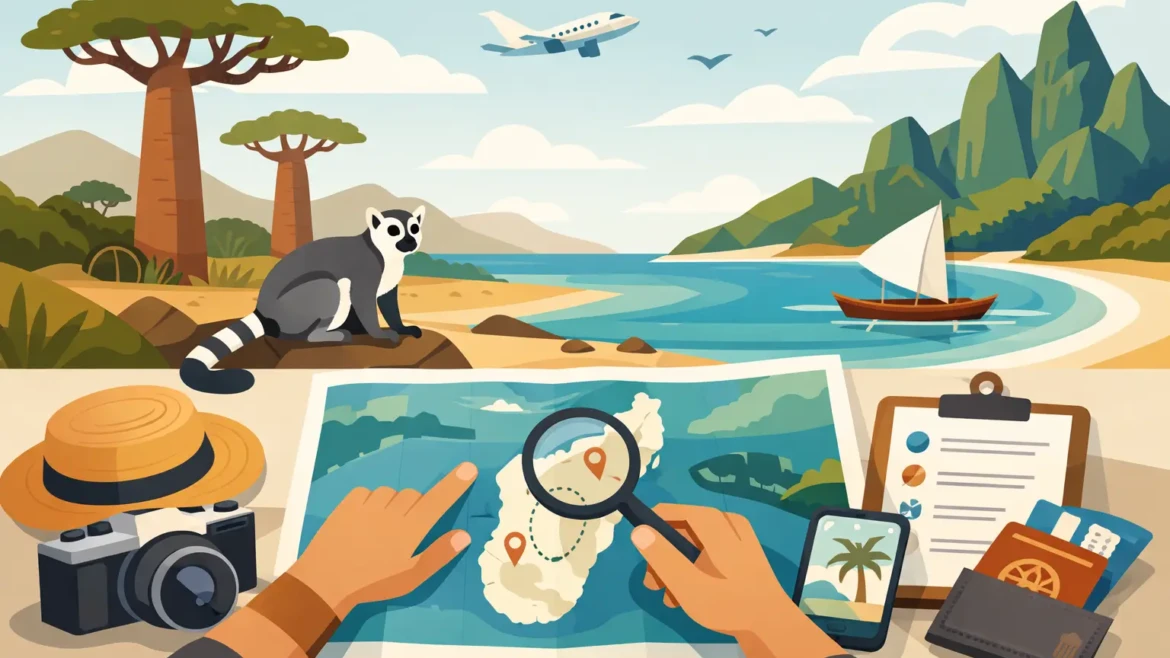
Madagascar rewards travelers who plan with intention. This is not the kind of destination where you book a few hotels, rent a car on impulse, and expect the trip to fall neatly into place. Distances are long, roads can be slow, internal connections do not always behave as expected, and the biggest highlights are spread across very different regions. That is exactly why a private tour works so well here.
If you are wondering how to plan Madagascar private tour experiences that feel exciting rather than exhausting, start by accepting one truth: you will not see everything in one trip. The best itineraries are not the ones with the most pins on a map. They are the ones with a clear rhythm, realistic drive times, and enough room to actually enjoy Madagascar’s wildlife, landscapes, and culture.
Start with the kind of Madagascar you want to see
Madagascar is not one single experience. It is rainforests full of indri calls at dawn, giant baobabs lit by late afternoon sun, limestone tsingy formations that feel almost surreal, river journeys through remote scenery, and quiet beach days on the coast or islands. A strong private tour begins by deciding which version of the country matters most to you.
Some travelers want classic wildlife and an introduction to the island’s biodiversity. Others want a cross-island route with dramatic scenery changes. Some care most about lemurs, chameleons, and birdlife. Others want a trip that balances national parks with beach time and comfortable lodges. There is no single right answer, but there is usually a right answer for your travel style.
If this is your first visit, it often makes sense to focus on two or three regions instead of trying to connect five or six. Madagascar looks manageable on a map until you factor in road conditions and transfer days. A private itinerary should protect your energy, not just fill your calendar.
How to plan Madagascar private tour routes that actually work
A smart route is the backbone of the trip. Most private tours are built around one of three patterns: an eastern rainforest circuit, a southern or western overland route, or a more ambitious cross-island journey.
The eastern side is ideal if your priority is lush forest, close wildlife viewing, and a shorter introduction to the country. Parks in this region are often easier to combine, and the scenery feels immediately distinct. It is a good fit for travelers who want classic lemur experiences without spending every day on the road.
The south and west offer a very different feeling. Here, Madagascar becomes drier, wider, and more cinematic. You get baobabs, sandstone massifs, spiny forests, and long overland stretches that can be deeply rewarding if you enjoy road travel and changing landscapes. This is often where travelers feel the full scale of the island.
Cross-island itineraries are the most ambitious and often the most memorable, but they require careful pacing. On paper, they can look like the perfect way to maximize a once-in-a-lifetime trip. In reality, they only work when transfers, hotel quality, and guide support are handled well. A private operator can shape these routes around your pace, which matters more in Madagascar than in many destinations.
Choose your trip length before you choose every stop
One of the most common planning mistakes is building from a wish list instead of a time frame. In Madagascar, the number of days you have changes everything.
With 7 to 9 days, you should stay focused. Pick one main route and do it properly. You can absolutely have a rich experience in that window, but it will be selective rather than comprehensive.
With 10 to 15 days, your options open up. This is often the sweet spot for a private tour because you can combine signature wildlife, major landscapes, and a beach finish without making the trip feel rushed. Many travelers find this range gives them enough time to settle into the country and enjoy the journey between highlights.
With more than two weeks, you can start thinking about deeper combinations – perhaps rainforest plus west, or a broad overland route with a coastal ending. More time does not automatically mean more stops, though. Sometimes it means slower travel, better lodge choices, or extra nights in the places that deserve them.
Match the season to your priorities
Season matters in Madagascar, and not just for weather. It affects road conditions, wildlife activity, comfort levels, and how easily certain routes can be operated.
If your main goal is general wildlife, comfortable touring, and broad route flexibility, the dry season is often the easiest time to travel. Roads are typically more manageable, and it is simpler to combine multiple regions. This is why many first-time visitors prefer it.
The green season can be beautiful, especially for lush scenery, reptiles, and dramatic landscapes, but it comes with trade-offs. Some roads become harder, travel times can stretch, and certain areas may be less practical depending on rainfall. For the right traveler, that can still be worth it. If you want fewer visitors and do not mind adapting to conditions, it can be a fascinating time to visit.
This is where private planning has real value. The ideal month depends on whether you care most about baby lemurs, hiking comfort, photography, beach weather, or route reliability.
Build around logistics, not just highlights
When people ask how to plan Madagascar private tour itineraries, what they usually mean is how to fit in all the places they have seen in photos. The real answer is less glamorous: you need to build around logistics.
Driving times in Madagascar are often longer than expected. A route that looks simple can take a full day. Hotel standards also vary by region, so the right overnight stop is not always the most obvious one on the map. Then there are local guides, park access, domestic transfers, and the simple fact that travel here works best when someone is actively managing the details.
That does not mean the trip needs to feel rigid. In fact, a well-designed private tour should feel the opposite. When the structure is strong, you have more freedom to enjoy a forest walk, stop for village scenes, linger at a viewpoint, or take a slower morning when needed.
This is also why vehicle choice matters. Some routes call for a strong 4×4 and a driver who knows the terrain well. Others are more straightforward but still benefit from local road knowledge and careful timing. Good logistics are not the boring part of Madagascar. They are what make the extraordinary parts possible.
Decide how private you want the experience to feel
A private tour is not one-size-fits-all. For some travelers, it means a dedicated vehicle, driver, and fixed itinerary with private guiding throughout. For others, it means a personalized route with local specialist guides in each park and flexible support from a trusted ground team.
The right setup depends on your priorities. If you care most about comfort and continuity, having the same driver across a long route can make a huge difference. If wildlife interpretation is your top priority, high-quality local park guides are essential. If you are celebrating a honeymoon or milestone trip, hotel selection and pacing may matter just as much as the route itself.
The strongest private tours combine both sides well: personalized design and dependable execution on the ground. That is especially important in a destination where changes can happen and local problem-solving matters.
Set a realistic budget for value, not just price
Madagascar often surprises travelers here. It can be affordable in some respects, but a well-run private tour is not cheap in the way people sometimes expect. Long distances, vehicle costs, fuel, driver accommodation, domestic coordination, and good hotels all shape the final price.
That said, value is where private travel in Madagascar really stands out. A carefully planned route can save wasted days, reduce tiring transfers, and improve the quality of wildlife viewing and lodging. Paying less upfront can sometimes mean paying more in time, stress, and missed experiences.
A good planning conversation should make the trade-offs clear. If you want to lower cost, maybe you simplify the route, shorten the trip, or adjust hotel level. If you want the full signature experience, you may invest more in logistics and stronger accommodations. The goal is not to chase the lowest number. It is to build the best trip for your budget.
Work with a local specialist early
Madagascar is one of those destinations where local knowledge changes the trip immediately. The right specialist can tell you whether your route is realistic, where to add a night, which parks pair well together, and when a domestic connection is worth it versus when overland travel is part of the experience.
This is also where trust matters. You want a team that knows the country firsthand, curates drivers and guides carefully, and can support you if conditions change. Travelers of Madagascar is built around exactly that local, on-the-ground planning model, which is why private trips here can feel both adventurous and well controlled.
The best time to start planning is earlier than you think, especially if you are traveling in a busy season or want specific lodges. Madagascar is a place for bold landscapes and rare wildlife, but the real luxury is arriving with a route that makes sense for you. Plan for depth, not just distance, and the island opens up in all the right ways.