
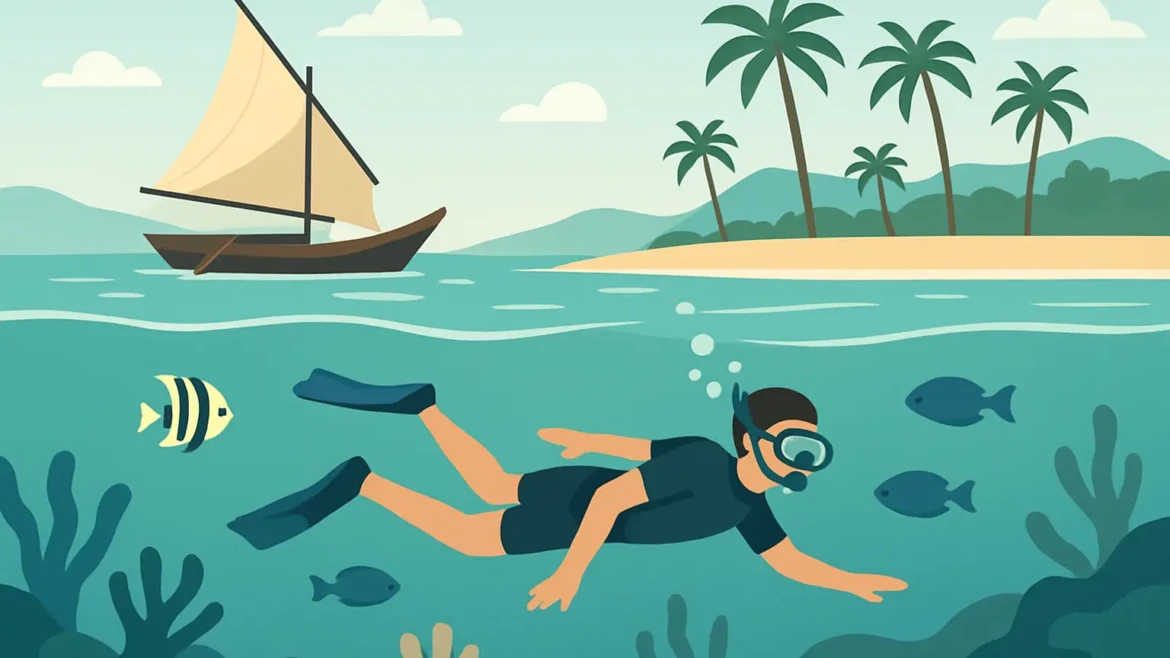
If you’re in southwest Madagascar and you’ve been staring at the turquoise band beyond Ifaty’s beach – that glassy, shallow water that looks almost unreal – you’re already halfway to the best decision of your week: getting out into the lagoon while the light is high and the tide is right.
An Ifaty Lagoon snorkeling day trip is not a “maybe, if we have time” add-on. It’s the kind of half-day-to-full-day experience that changes the texture of your whole coastal stay. You go from watching the ocean to being inside it – drifting over coral gardens, spotting reef fish you won’t see from shore, and coming back salty and sun-warm with the relaxed glow that only a good snorkel day delivers.
What makes Ifaty Lagoon special
Ifaty sits on the edge of a broad, protected lagoon backed by one of the largest barrier reef systems in this part of Madagascar. The reef buffers the coastline, which is why the water often stays calmer inside the lagoon than you’d expect from the open Mozambique Channel.
That protection matters for first-time snorkelers and families, but it’s also what creates the classic Ifaty experience: clear shallows, patches of coral heads, sandy channels, and bursts of color where fish cluster around structure. Visibility depends on wind, tide, and season, but on a good morning you can see the reef contours clearly and pick out movement from a distance.
It’s also a place where Madagascar’s “different world” feeling shows up in small ways. The pirogues (traditional outrigger canoes) sliding across the lagoon are part of daily life here, not a staged attraction. The rhythm of fishermen, tides, and weather is real, and visitors simply step into it for a few hours.
The day trip shape: what a great outing looks like
Most trips follow a simple arc: a beach departure, a short boat ride out across the lagoon, time snorkeling on one or more reef spots, then an easy return with time to rinse off and slow down.
If you want the experience to feel smooth instead of improvised, the details matter. The best operators time departures to avoid low-tide scraping and to maximize visibility. They also choose sites based on the day’s wind and current rather than insisting on a single “best spot” regardless of conditions.
A typical pace looks like this: you leave mid-morning when the sun is high enough to light the reef, snorkel in calm water with a guide keeping an eye on the group, take a break on the boat or in shallow water, then head back before the afternoon wind picks up. Some days support a longer, more exploratory outing. Other days are better kept short and clean.
Timing is everything: tides, wind, and seasons
If you only remember one planning rule, make it this: your Ifaty Lagoon snorkeling day trip should be scheduled around the tide.
At very low tide, large sections of the lagoon can become too shallow for easy boat access, and you risk damaging coral if you’re forced to walk or fin in extremely thin water. At very high tide, you’ll have more water over the reef, which can be comfortable, but sometimes the best visibility and the easiest “drift-and-look” snorkeling happen on a rising or mid tide when currents are manageable.
Wind is the second major factor. Mornings are often calmer. Later in the day, the sea breeze can roughen the surface, making it harder to see and more tiring to snorkel. This doesn’t mean afternoons are always bad – it depends – but if you have just one shot, take the morning.
Seasonally, Ifaty is a year-round coastal escape, but conditions shift. The dry season generally brings steadier weather. Warmer, wetter months can still deliver great snorkeling, but you’re more exposed to short-lived storms and chop. If snorkeling is a “must,” build flexibility into your itinerary so your guide can pick the best day instead of forcing a fixed date.
What you’ll actually see underwater
People often ask for a species checklist. The honest answer is that reef life is dynamic – what you see depends on the site, the tide, and how calm the water is.
Expect a mix of colorful reef fish moving in and out of coral heads, with occasional larger visitors passing through the sandy channels. You’ll notice how quickly the scene changes: one moment a quiet patch of sand, the next a sudden cluster of fish where the coral rises.
The coral itself is part of the draw. Even if you’ve snorkeled elsewhere, the combination of light, shallow water, and the scale of the lagoon makes the reef feel close and immediate. When visibility is good, you can hover above coral structure and watch the small dramas of reef life play out without chasing anything.
Safety and comfort: the non-negotiables
Snorkeling is simple, but it isn’t casual. A professional day trip should feel relaxed precisely because someone is paying attention to the variables you don’t want to manage on vacation.
First, insist on properly fitting masks and functional snorkels. A leaky mask can ruin the whole day. If you wear contact lenses, bring spares. If you’re not a confident swimmer, say so upfront – there are calm, shallow areas that still deliver great viewing, and flotation support can make the experience enjoyable instead of stressful.
Second, sun exposure on the lagoon is intense. The reflection off the water can surprise even experienced travelers. A long-sleeve rash guard is the easiest win. Reef-safe sunscreen is smart, but remember that you’ll be in the water – clothing is more reliable than reapplying.
Third, ask about currents. Most lagoon days are gentle, but “gentle” can still move you. The right guide will brief you clearly: where to enter, where not to drift, and how to regroup. If the briefing is vague, that’s a red flag.
What to bring (and what to skip)
You don’t need to overpack, but a few items make a big difference.
Bring a rash guard or sun shirt, a hat for the boat ride, and a dry bag or waterproof pouch for phone and valuables. Water shoes are helpful for coral rubble or beach entry points. If you get motion sick, take something before you leave shore – the ride is often short, but it only takes one bouncy crossing to spoil your appetite.
Skip heavy jewelry and anything you’ll worry about losing. Also skip touching or standing on coral, even if it looks like rock. Besides protecting the reef, you’ll protect yourself – coral cuts are no joke in remote places.
How to fit the snorkeling day trip into a bigger Madagascar itinerary
Ifaty works beautifully as the “exhale” portion of a longer route. Many travelers arrive after inland parks and long drives. The lagoon day trip is one of the easiest ways to get a high-reward nature experience without another early start or a full-day transfer.
For wildlife-focused travelers, pairing snorkeling with the spiny forest is the magic combo here. You can snorkel in the morning and visit the forest later in the afternoon when the light softens and temperatures ease, or reverse it depending on heat and tides. The contrast is classic Madagascar: bright reef life in the morning, then baobabs, octopus trees, and endemic birds and reptiles on land.
If you’re building a private, driver-supported route through the south and west, we can also time Ifaty so you’re not rushed by transfers. That’s often the difference between “we squeezed it in” and “we actually enjoyed it.” If you want help stitching Ifaty into a wider plan with reliable logistics on the ground, Travelers of Madagascar can design the itinerary and handle the practical execution.
Trade-offs: pirogue charm vs motorboat efficiency
Some lagoon outings use traditional pirogues, others use motorboats. Neither is automatically better.
A pirogue can feel beautifully local and quiet, and in calm conditions it’s a memorable way to cross the lagoon. The trade-off is speed and, sometimes, comfort if the water gets choppy. Motorboats get you to sites faster and can be easier for carrying gear and supporting mixed-ability groups, but they can feel less intimate.
If you’re traveling with kids, non-swimmers, or anyone who wants a predictable setup, ask for the option that matches your group. If you’re chasing atmosphere and you have flexibility, the slower choice can be the point.
Respecting the reef and the community
A great snorkeling day should leave no trace except your memories and your photos. That means no collecting shells or coral, no feeding fish, and no standing on living reef.
It also means being thoughtful with people. If you take photos of fishermen or boats close-up, ask first. Most visitors find that a little courtesy opens doors – a wave, a short conversation, a smile – and turns a simple excursion into a real human moment.
What a “good” day looks like, realistically
Even well-planned trips have variability. Some days the water is crystal and the fish are everywhere. Other days, visibility is just decent, or the wind comes up earlier than expected. That doesn’t mean the trip failed – it means you’re traveling in a real coastal system.
The goal is not perfection. The goal is a well-timed, well-guided experience where you feel safe, see the reef at its best for that day, and return with enough energy to enjoy the rest of Ifaty instead of collapsing in your room.
If you treat the lagoon like a living place with its own schedule – and let local knowledge set the timing – you’ll get what you came for: a few hours inside Madagascar’s coastal wonder, simple and unforced, the kind of day you’ll keep talking about long after the sand is out of your bag.