
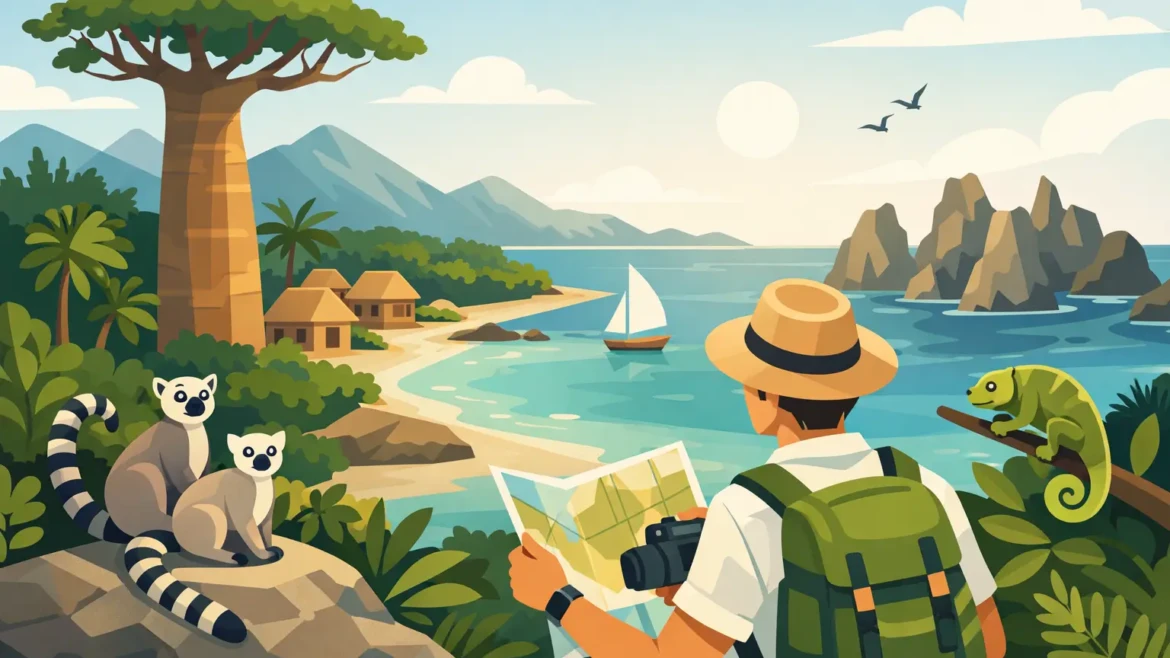
Madagascar is not the kind of trip you book on a whim and figure out later. Distances are long, roads can be slow, domestic connections shift, and the best wildlife experiences are often far from each other. That is exactly why first-time visitors who plan well usually fall in love with the island – and why poorly planned trips can feel rushed, tiring, and full of missed opportunities.
For most travelers, Madagascar is a once-in-a-lifetime journey. You come for lemurs, baobabs, rainforests, surreal stone landscapes, and beaches that still feel far from the mainstream. What makes the trip extraordinary is not trying to see everything. It is choosing the right route, the right pace, and the right combination of nature, culture, and downtime.
A Madagascar travel guide for first timers starts with one truth
Madagascar is huge. On a map it can look manageable, but on the ground it travels differently than many destinations Americans are used to. A short-looking stretch can take hours. A famous park may be best paired with one region but unrealistic with another unless you add a flight. If you treat Madagascar like a country where you can improvise every transfer, you may spend more time in transit than in the places you came to see.
That does not mean travel here is difficult in a bad way. It means route design matters. Your first trip should be built around two or three strong experiences, not six disconnected highlights. A rainforest circuit, a west coast baobab route, or a classic nature-and-beach itinerary will almost always feel better than trying to stitch together every headline destination in one trip.
How many days do you really need?
If you have fewer than seven days, Madagascar will feel tight unless you focus on one area only. Ten to fifteen days is the sweet spot for a first visit. That gives you enough time to see wildlife, enjoy the landscapes, and still leave room for the realities of travel days.
Around ten days works well for a classic route that combines Antananarivo with Andasibe for lemurs and rainforest, then continues south or east depending on your priorities. Closer to two weeks gives you more freedom to combine inland parks with beach time or to take on a more ambitious cross-island route.
If your dream trip includes baobabs, tsingy, rainforest, and the coast, it can be done, but not comfortably in a rushed schedule. This is where local planning pays off. The best itineraries do not just list destinations. They connect them in a way that protects your energy and makes the trip feel exciting rather than logistical.
When should you go?
A practical Madagascar travel guide for first timers has to be honest here – there is no perfect month for every region. Weather changes by area, and your best travel window depends on what you want most.
For wildlife and road travel, many first-time visitors do best in the drier months, generally from April through November. These months often bring more reliable conditions for moving between parks and a more comfortable travel rhythm. September through November can be especially rewarding for nature lovers, with active wildlife and good overall conditions in many parts of the country.
That said, it depends on your route. Some areas are greener and more dramatic after rain. Beach conditions also vary by coast. If your priorities are very specific, such as photographing baby lemurs, hiking the tsingy, or ending in Nosy Be, your itinerary should be built around those goals rather than a generic calendar recommendation.
Where should first-time visitors go?
The best first trip is usually not the most extreme one. It is the one that gives you Madagascar’s signature contrasts without turning every day into a marathon.
Andasibe for an easy and rewarding wildlife start
If you want a strong first wildlife experience, Andasibe is one of the smartest choices. It is one of the more accessible parks from Antananarivo and offers a real chance to see indri, the island’s largest lemur, along with chameleons, frogs, and lush rainforest scenery. For first timers, this is often where Madagascar feels real for the first time.
It is also a good place to settle into the rhythm of guided nature travel here. Walks are most rewarding with a knowledgeable local guide who can spot what most travelers would miss completely.
The south for classic road-trip variety
Southern routes appeal to travelers who want a broader landscape story. Rice fields, highlands, towns, rock formations, dry forest, and then coast – this arc gives you a real sense of how diverse Madagascar is. Parks such as Ranomafana and Isalo are often key parts of this journey.
This is one of the most satisfying first-timer routes because it balances wildlife with scenery and culture. The trade-off is drive time. If you enjoy road journeys and changing landscapes, it is worth it. If you want shorter transfers, a different route may suit you better.
The west for baobabs and dramatic scenery
If the image in your mind is the Avenue of the Baobabs at golden hour, the west may be your priority. This side of the island feels more remote and often more logistically demanding, but the reward is a landscape that feels almost otherworldly. Pairing the west with Tsingy de Bemaraha creates one of Madagascar’s most dramatic trips.
For a first visit, this works best if you are comfortable with a more adventurous pace and understand that road conditions can shape the experience.
Nosy Be and coastal escapes for a softer landing
Not every first-time traveler wants a park-to-park schedule. If you want wildlife and then a gentler finish, adding beach time can be the perfect choice. Nosy Be and nearby islands offer a very different side of Madagascar – warm water, marine life, slower days, and a chance to exhale after inland travel.
For honeymooners, couples, or anyone wanting balance, this combination often feels just right.
What surprises first-time travelers most?
The scale of the country is one surprise. The second is how much the quality of your trip depends on ground handling. Madagascar is not a place where transportation is just transportation. A strong driver, realistic timing, and well-chosen hotels can change the entire experience.
Guiding matters just as much. In Madagascar, wildlife is not always obvious from the trail. A trained guide can pick out a leaf-tailed gecko against bark, hear an indri before you see it, and adjust your walk around weather and park conditions. That expertise turns a walk into a real encounter.
Accommodation also requires expectation-setting. There are excellent properties in key destinations, but this is not a country where every stop will match the same standard or style. In remote areas, character and location may matter more than luxury. The right itinerary accounts for that and places comfort where it matters most.
How to plan your first trip without overcomplicating it
Start with your non-negotiables. Maybe it is lemurs and rainforest. Maybe it is baobabs and tsingy. Maybe it is wildlife plus a few beach days. Once those priorities are clear, build around them instead of adding destinations because they look famous on a map.
Then be honest about your travel style. Some travelers are happy with long drives if the route tells a great story. Others want fewer hotel changes and more time in each place. Neither approach is wrong. Madagascar simply rewards clarity.
For many first-time visitors, private trip planning makes sense because it removes the hardest part of the destination: stitching together transport, park timing, accommodations, and local support. A locally managed operator can also adapt quickly if road conditions, flights, or weather force a change. That matters more here than in easier point-to-point destinations. Travelers of Madagascar, for example, builds custom routes around exactly these realities, which is often the difference between a trip that feels complicated and one that feels confident from start to finish.
A few practical expectations before you go
Pack with flexibility in mind. Even on a polished itinerary, Madagascar includes dust, uneven trails, early wildlife walks, and variable temperatures depending on altitude and region. Good walking shoes, light layers, sun protection, and patience are more useful than overpacking.
You should also expect travel days to be part of the experience, not just dead time between highlights. Some of the most memorable moments happen on the road – village scenes, changing landscapes, market stops, and that growing sense that you are moving through a place unlike anywhere else.
Most of all, leave room for wonder. Your first lemur call in the forest, your first sunset through the baobabs, your first quiet stretch of coast after days inland – those are the moments that stay with people. Plan carefully, yes. But once you are here, let Madagascar surprise you a little.