
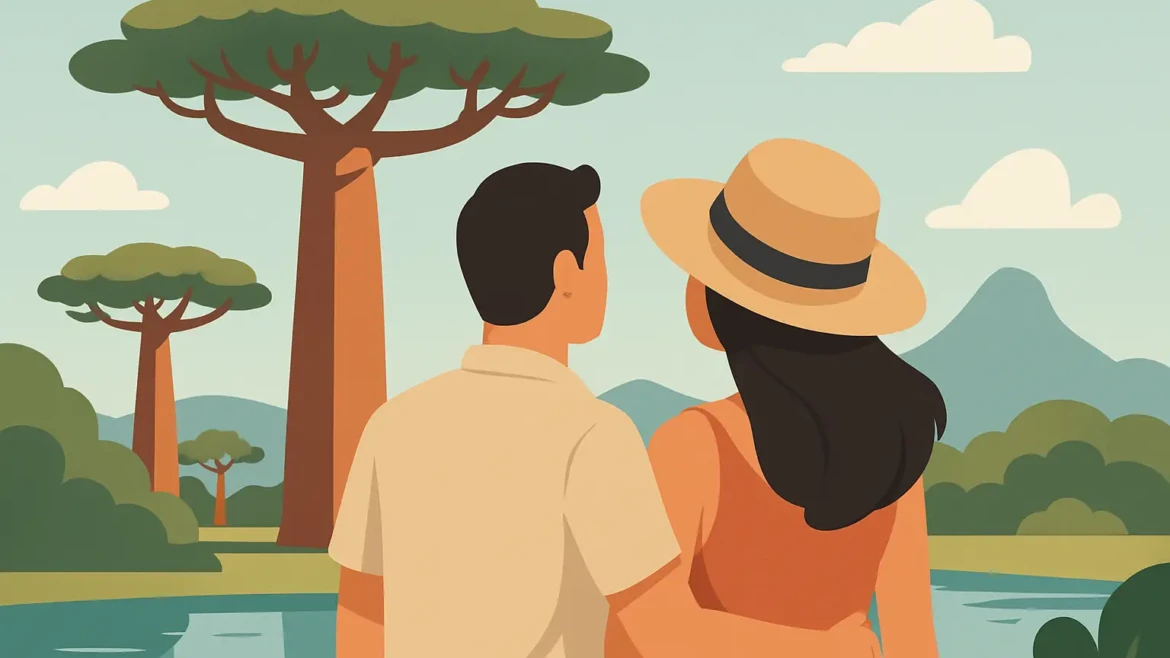
You land on an island where lemurs exist nowhere else on Earth, baobabs look like they were sketched by a surrealist, and a single day can move from rainforest mist to warm lagoon air. A honeymoon in Madagascar isn’t about ticking landmarks off a list. It’s about choosing a pace that feels like the two of you – and letting the country’s wildness and warmth do the rest.
A madagascar honeymoon private tour is the easiest way to make that happen. Madagascar rewards planning, but it punishes over-planning. Roads can be slow, distances are real, and the best moments are often the ones you don’t schedule – like stopping for fresh lychees on the roadside or hearing indri calls echo through the canopy at dawn. Private touring gives you structure without turning your honeymoon into a logistical project.
Why a Madagascar honeymoon private tour just works
Madagascar is remote in the best way, but that remoteness comes with trade-offs. You can absolutely travel independently, yet for a honeymoon most couples want fewer decisions in the moment and more time actually being together.
With a private tour, you’re not negotiating every transfer, hoping a hotel has your room ready, or wondering whether today’s drive is realistic. You’re moving with a vetted driver, the right local guides in each park, and an itinerary designed around what you want to feel: adventurous, relaxed, wildlife-rich, beach-forward, or all of the above.
There’s also a quieter honeymoon benefit people don’t mention enough – privacy. Madagascar’s best experiences are often intimate by nature: a night walk for chameleons, a canoe glide on a river, a quiet beach at low tide. When the plan is built for two, it stays that way.
The honeymoon question that changes everything: “Wildlife, beach, or both?”
Most US couples arrive thinking they have to choose between lemurs and the ocean. You don’t – but you do have to choose a route that makes sense.
If you want classic Madagascar biodiversity, you’re looking at rainforest national parks and highland forests. If you want a castaway finish, you’re looking at the northwest islands or the west coast. The best honeymoons usually put wildlife first, then end with the beach, because the beach feels even better when you’ve earned it after early hikes and forest nights.
It depends on your travel style. If you’re the kind of couple who’s happiest on the move, a cross-island itinerary will feel like an epic shared story. If you want long mornings and slower afternoons, a more compact loop with a beach extension is the sweet spot.
A few Madagascar honeymoon private tour routes that couples love
Madagascar is not a one-route destination. What works is the arc – where you start, how you move, and what you save for last.
The Classic Rainforest + Beach finish (10-14 days)
This is the honeymoon pattern that consistently lands well for first-time visitors: a wildlife-heavy start in the east, then a coastal exhale.
In the eastern rainforests, you’re in prime lemur territory, with opportunities for day hikes and night walks that feel genuinely cinematic. You’ll hear the forest before you see it. The mornings can be cool, the air can be damp, and then you’ll step into a clearing and realize you’re watching a species that exists only here.
After the rainforest, you shift gears toward the coast for a few days of warm water, seafood, and quiet. The point isn’t to pack the beach days with activities. It’s to give yourselves permission to do nothing – together – in a place that still feels far from the usual honeymoon circuit.
West Coast icons: Baobabs + tsingy drama (10-12 days)
If you want landscapes that feel like another planet, the west delivers. This route is about big sky sunsets, baobab silhouettes, and the kind of geology that makes you stop mid-sentence.
The trade-off is comfort in transit. Some drives are long, and roads can be rough depending on season. For adventurous couples, that’s part of the story. For couples who want a softer honeymoon, you can still do the west – you just plan fewer stops and choose lodges strategically.
The payoff is huge: golden-hour baobabs that don’t need filters, and tsingy formations that look like a stone forest. It’s a honeymoon for couples who want to come home with photos that make friends ask, “Where is that?”
The Cross-Island “we did it” journey (14-18 days)
This is for couples who see a honeymoon as a once-in-a-lifetime expedition. You connect multiple ecosystems: rainforest, highlands, dry forest, and coast. You get the full range of Madagascar – the biodiversity, the people, the markets, the shifting landscapes.
The trade-off is pace. Even with smart planning, it’s a lot of movement. Some days are about getting from A to B. If that sounds draining, it probably will be. If it sounds energizing, it can be the best shared adventure you’ll ever take.
The “short on time, big on impact” escape (7-9 days)
If you can only spare a week, don’t try to do everything. Choose one strong wildlife area and one strong relaxation area, and let the trip breathe.
A shorter private tour works best when you minimize internal flights and avoid stacking too many parks. Madagascar isn’t the place to plan four major regions in eight days and hope it all clicks.
What romantic actually looks like in Madagascar
Madagascar romance isn’t staged. It’s real, and it’s often simple.
It’s sharing a thermos of coffee before an early forest walk. It’s being the only two people on a stretch of sand while fishermen pull in nets in the distance. It’s watching a gecko hunt moths above your dinner table and realizing you’ve never been anywhere like this.
The best honeymoon hotels here lean into atmosphere, not flash. You can absolutely choose higher-end comfort, but even then the charm is in the setting: bungalow-style rooms, ocean air, gardens alive with bird calls, and staff who remember your names.
When to go – and what season means for your honeymoon
Timing matters because Madagascar’s regions behave differently.
Dry season generally makes overland travel easier and reduces weather disruptions. It’s also popular, which can mean less flexibility with certain hotels if you book late.
Wet season can be greener and quieter, and in some places the landscapes feel extra alive. The trade-off is that heavy rains can slow travel, affect road conditions, and occasionally force plan adjustments. If you’re choosing a wet-season honeymoon, it’s smart to build in buffer time and keep the itinerary less aggressive.
Shoulder months can be the sweet spot for couples who want good conditions without the peak-season rush. The right answer depends on your route, your tolerance for rain, and how much you want to prioritize beach weather versus forest hikes.
The private-tour details that make or break the experience
A honeymoon tour can look beautiful on paper and still feel stressful if the execution isn’t right. In Madagascar, these details matter.
Driver quality is everything. Roads can be demanding, and your driver sets the tone for the entire trip – not just safety, but comfort, pacing, and the ability to adapt when conditions change.
Local guides in each park change what you see. Madagascar’s wildlife is easy to miss without trained eyes. The difference between “we walked in the forest” and “we saw a leaf-tailed gecko and three lemur species” is often the guide.
Hotel selection should match your honeymoon style. Some couples want boutique, quiet, and scenic. Others want practical and central because they plan to be out all day. There’s no universal best – only what fits.
Pacing is the romance factor. Too many one-night stops can feel like a work trip. The best honeymoons usually include a few two-night stays so you can wake up without immediately repacking.
If you want a locally managed private itinerary that’s built around wildlife, culture, and a beach finish – with vetted drivers, guides, and hotel standards handled on the ground – you can plan with Travelers of Madagascar.
How to personalize your Madagascar honeymoon (without overcomplicating it)
Customization is where private touring shines, but it helps to decide what you care about most before you start adjusting the route.
Think in experiences, not checkboxes. Do you want more rainforest hikes or more water time? Are you excited by night walks and early mornings, or do you want later starts and long dinners? Do you want cultural immersion through villages and markets, or would you rather keep days focused on nature and keep towns more minimal?
Also decide what “comfort” means to you. For some couples, comfort is a higher-end room and fewer long drives. For others, it’s having the right logistics so the adventurous parts feel fun instead of chaotic.
If you share those priorities early, the itinerary design becomes simple: you’re not adding random stops, you’re shaping the same route to fit your honeymoon rhythm.
A closing thought to keep your honeymoon truly yours
Madagascar rewards couples who leave space in the plan – space to stop when the light turns perfect on the baobabs, space to linger when a guide finds a tiny chameleon, space to take the long way to dinner because the sunset is doing something unreal. Build the structure you need, then let the island surprise you.