
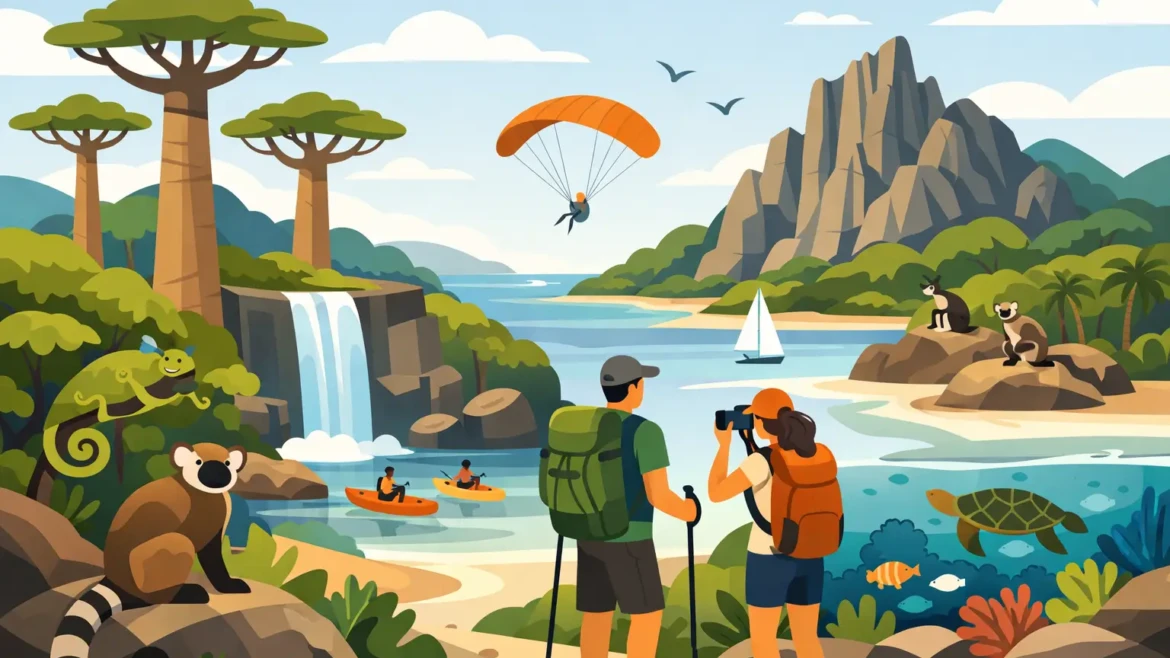
You do not come to Madagascar to sit still. This is a place where the road itself feels like part of the expedition, where one day starts in rainforest full of calling indri and ends with red dust on your shoes, and where “beach time” might still include snorkeling, kayaking, or a boat ride to a quiet island. A strong Madagascar itinerary for active travelers needs more than a list of famous places. It needs the right pace, smart routing, and enough flexibility to keep the trip exciting without turning it into a logistical grind.
For most active travelers, the sweet spot is 14 to 16 days. Shorter than that, and you spend too much energy in transit for too little reward. Longer works beautifully too, especially if you want both the classic landscapes and a few harder-to-reach regions. The key is accepting one truth early: Madagascar is huge, roads can be slow, and the best trips are built around a realistic geographic arc rather than a checklist.
What makes a good Madagascar itinerary for active travelers?
An active trip in Madagascar is not just about intense physical effort. It is about variety. You want days on foot in national parks, wildlife walks with excellent local guides, maybe a river descent or a sharp limestone hike, and enough recovery time that each landscape still feels fresh when you arrive.
That balance matters here more than in easier destinations. A four-hour drive on the map may take much longer on the ground. A park visit may involve early starts, uneven trails, heat, humidity, or all three. If every day is built at maximum effort, the trip can feel harder than it needs to. The best itineraries mix demanding days with lighter transfers, scenic stops, and a final coastal stretch.
For first-time visitors, the strongest route usually combines the east or central highlands with one major western or southern highlight. Trying to add everything – rainforest, baobabs, tsingy, deep south, and offshore islands – often creates a trip that looks impressive on paper but feels rushed in real life.
A 15-day Madagascar itinerary for active travelers
If you want wildlife, hiking, big scenery, and a rewarding finish by the sea, this is one of the most effective trip designs.
Days 1-2: Antananarivo and the central highlands
After arriving in Antananarivo, keep the first day light. Even very experienced travelers underestimate how valuable a soft landing is before long road days and early park starts. Depending on arrival time, you can visit cultural sites in the highlands or simply rest and prepare for the journey ahead.
On day two, head east toward Andasibe. The drive introduces you to the highland landscapes and roadside life that many visitors miss when they focus only on the parks. It is also your first reminder that Madagascar rewards patience. Distances are not the challenge. Road rhythm is.
Days 3-4: Andasibe for rainforest hiking and lemurs
Andasibe is one of the best openings for an active itinerary because it delivers quickly. You get forest walks, excellent wildlife density, and the unforgettable call of the indri, Madagascar’s largest lemur. Trails here are manageable for most fit travelers, though they can be muddy and humid.
Spend at least one full day in Analamazaotra or Mantadia, depending on your interests and fitness level. Mantadia is often the better choice for travelers who want a more physically engaging hike and a stronger sense of wild forest. Night walks add another layer, with chances to see mouse lemurs, chameleons, and nocturnal species that completely change the mood of the trip.
Days 5-6: South to Ranomafana
This is where route planning starts to matter. Moving south from the highlands toward Ranomafana creates a natural progression into a bigger cross-section of Madagascar. The travel day is long, but the scenery changes constantly – rice terraces, villages, forested hills, and a strong sense of the island’s human geography.
Ranomafana National Park is one of Madagascar’s most rewarding parks for active travelers. Trails can be steep, wet, and slippery, especially after rain, but that is part of the appeal. This is not a quick boardwalk stop. It is a real forest experience with a strong chance of seeing several lemur species, birds, reptiles, and remarkable plant life.
Days 7-8: Ambalavao and Isalo approach
Continue south through the highlands with a stop around Ambalavao. This break helps split the drive and brings in cultural texture, from local markets to the transition from greener uplands into drier landscapes. It also sets up one of the best contrasts in the country.
By the time you approach Isalo, Madagascar feels different again. The terrain opens up, colors sharpen, and the trip starts to shift from rainforest immersion to canyon and sandstone country. For many travelers, this change is exactly what makes the route work so well.
Days 9-10: Isalo National Park for hiking
If your Madagascar itinerary for active travelers includes only one major hiking area, Isalo deserves serious consideration. This is where you trade dense forest for sculpted rock formations, deep canyons, natural pools, and long walks through exposed terrain.
You can tailor the hiking here. Some routes are moderate and scenic, with swimming stops that break up the day. Others are longer and more demanding, especially in the heat. Start early, carry plenty of water, and treat Isalo as a place to move steadily rather than rush. It is a landscape that gets better when you give it time.
Days 11-12: West to the coast
From Isalo, continue toward the southwest coast, often via Tulear and onward to a beach extension such as Ifaty. This is not just downtime added at the end. It is a strategic reset. After multiple inland parks and long drives, the coast gives your body a break without ending the sense of adventure.
Depending on your style, this phase can stay active with snorkeling, pirogue outings, reef excursions, or spiny forest visits. If you want total rest, it can do that too. The point is choice.
Days 13-15: Beach and departure logistics
A final beach stay works best when it includes a domestic flight back toward Antananarivo rather than a full overland return. This saves time and protects the overall quality of the trip. Active travelers often think more movement is always better, but unnecessary repeat transit is rarely the highlight.
Use your last full day for the sea, a light excursion, or simply space to absorb the trip before departure. Madagascar is intense in the best way. Ending calmly often makes the whole itinerary feel stronger.
When to swap in Tsingy or a river descent
Not every active traveler wants the same kind of challenge. Some want wildlife-rich hiking. Others want technical terrain, river time, or a route that feels more remote.
If dramatic geology is your priority, the Tsingy region in western Madagascar is one of the island’s most exciting adventure zones. The mix of suspension bridges, sharp limestone formations, and physically engaging trails is unforgettable. The trade-off is access. Reaching Tsingy takes more time and usually works best when the trip is built specifically around western Madagascar, often paired with the Avenue of the Baobabs.
If you prefer movement on the water, a river descent on the Tsiribihina can be a great fit. It is active, scenic, and immersive without being nonstop strain. It also pairs naturally with western routes toward Bekopaka and the tsingy. This style of trip feels more expedition-like and less park-to-park.
Common planning mistakes active travelers make
The biggest mistake is overestimating how much ground you can cover comfortably. Madagascar is not a destination where adding one more region is always worth it. A sharper itinerary with fewer stops usually delivers more wildlife sightings, better hikes, and a more relaxed state of mind.
The second mistake is treating every park as interchangeable. They are not. Andasibe gives you accessible rainforest and famous lemurs. Ranomafana feels more physically demanding and more layered. Isalo is about open-space hiking and geology. Tsingy is dramatic, technical, and logistically heavier. Choose based on your energy and interests, not just name recognition.
The third mistake is trying to self-manage every detail in a destination where conditions can shift quickly. Madagascar rewards local coordination. Good drivers, tested hotel choices, realistic transfer timing, and guides who know both the wildlife and the trail conditions make a visible difference on the ground.
The best way to personalize this route
A couple who wants wildlife and comfort may keep the same backbone but upgrade lodges and shorten the harder walks. A group of friends may push for longer treks, add a river segment, or spend less time at the beach. A repeat visitor might skip the classic east and build entirely around Tsingy, baobabs, and the west.
That is why custom design matters here more than almost anywhere. Madagascar has too many variables for a one-size-fits-all plan to work well. At Travelers of Madagascar, we see the difference every day between itineraries that simply look adventurous and itineraries that actually travel well.
If you want this trip to feel active, not exhausting, build around rhythm as much as highlights. Madagascar gives its best to travelers who leave room for the road, the forest, the unexpected sighting, and the extra hour that turns a good day into one you will talk about for years.