Zahamena National Park: The Mist-Shrouded Sanctuary of Eastern Madagascar
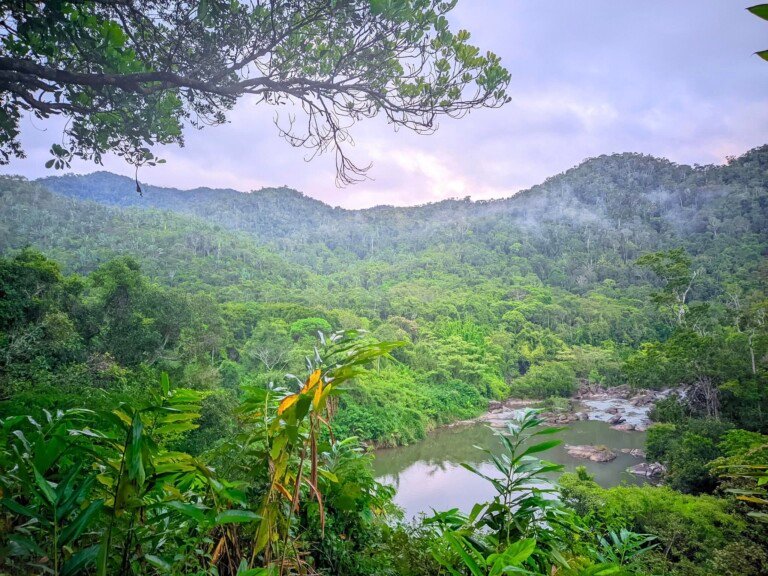
Deep in the rugged, rain-drenched highlands of eastern Madagascar, where clouds cling to forested peaks and the air hums with the calls of unseen life, lies Zahamena National Park. A place of profound beauty and even greater fragility, Zahamena is one of the island’s most important biodiversity sanctuaries, yet it remains one of its least visited. It is a core part of the Atsinanana Rainforests, a UNESCO World Heritage site recognized as a critical repository of endemic species and evolutionary history. This is not a destination for casual tourism; it is a challenging, immersive expedition into a primordial world where lush rainforests, cascading waterfalls, and remote crater lakes create a landscape of breathtaking intensity. This article explores the complex history of Zahamena’s protection, the incredible flora and fauna that call it home, and the demanding trekking circuits that offer a true wilderness experience.
Part 1: A History of Conflict and Conservation
The story of Zahamena is a microcosm of the broader struggle for conservation in Madagascar—a tense and often heartbreaking negotiation between preserving irreplaceable natural heritage and supporting the immediate needs of local communities.
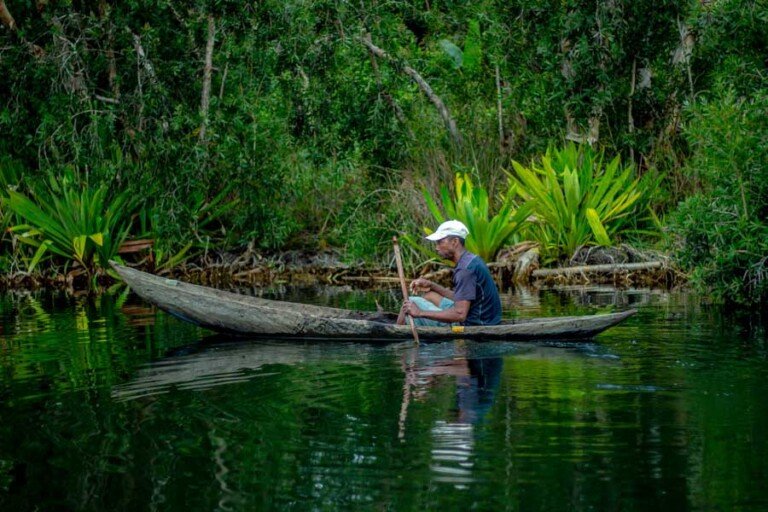
An Ancient Landscape and Its People: Long before it was a park, the Zahamena forest was home to indigenous communities, primarily from the Betsimisaraka and Sihanaka ethnic groups. Their traditional practices, including tavy (slash-and-burn agriculture) and artisanal logging, were in a delicate, centuries-old balance with the forest. The land was also considered sacred, or fady, by many, with certain areas protected by ancestral taboos.
Colonial Recognition and Early Protection: The unique biological value of the region was first formally recognized during the French colonial era. In 1927, the French colonial administration established the Réserve Naturelle Intégrale de Zahamena, a strict nature reserve designed to protect the watershed of the Maningory River. This early designation was crucial, but it was imposed with a top-down, colonial approach that often disregarded the land-use rights and knowledge of local inhabitants, sowing seeds of future conflict.
Post-Independence Pressures and Park Creation: After Madagascar’s independence in 1960, population growth and economic pressures increased dramatically. The buffer zones around the reserve were progressively cleared for agriculture, isolating the forest and creating intense pressure on its resources. Recognizing the escalating threat, the Malagasy government, with support from international conservation organizations, began a long process to re-categorize and better protect the area.
This culminated in 1997 with the official creation of Zahamena National Park. The park was designed with a two-zone system:
- A Strict Conservation Core (Parc National): An area of over 40,000 hectares where all exploitation is forbidden.
- A Contiguous Buffer Zone (Zone Péripherique): An additional 22,000 hectares where sustainable use by local communities is permitted under strict management plans.
This model aimed to balance absolute protection of the most critical ecosystems with providing tangible benefits and access to surrounding villages, a concept known as integrated conservation and development.
Ongoing Challenges: The establishment of the park remains a source of tension. For the local communities, the restrictions can be seen as an imposition that limits their ability to feed their families. Illegal logging of precious woods like rosewood and ebony, as well as tavy and hunting, persist as significant threats. Effective conservation in Zahamena is an ongoing, daily effort that requires constant dialogue, community engagement, and the difficult work of park rangers who patrol this vast, challenging terrain.
Part 2: A Biodiversity Hotspot Within a Hotspot – The Flora of Zahamena
Madagascar is already a global biodiversity hotspot, but Zahamena represents a concentrated epicenter of endemism. Its flora is a stunning testament to millions of years of isolation and adaptation.
A Mosaic of Ecosystems: Zahamena is not a monolithic forest. Its varying altitudes (from 250 to 1,560 meters) create a patchwork of distinct ecosystems:
- Lowland Dense Humid Forest: Dominates the lower elevations.
- Montane Dense Humid Forest: Covers the higher altitudes, often shrouded in mist.
- Cloud Forest: At the highest peaks, where trees are stunted and draped in mosses, orchids, and other epiphytes.
- Scattered Pandanus Marshlands: Found in saturated soils along watercourses.
- Sacred Lakes: Several stunning crater lakes, like Lakabe and Lakamaloty, are nestled within the park, holding cultural and ecological significance.
Botanical Wonders: The park is a haven for botanists. Over 90% of its plant species are endemic to Madagascar, and a high percentage are found only in the eastern rainforests.
- Canopy Giants: The forest canopy is dominated by towering trees from families like Fabaceae, Myrtaceae, and Sapotaceae. These giants create the high, closed canopy that defines the rainforest.
- Precious Hardwoods: Zahamena has been a target for illegal loggers because of the presence of valuable hardwoods, most notably several species of *ebony (Diospyros spp.)* and **rosewood (Dalbergia spp.)**.
- Orchids and Epiphytes: The moist, humid environment is perfect for a breathtaking diversity of orchids (over 50 species), ferns, mosses, and lichens. These plants grow as epiphytes on the branches and trunks of trees, creating a vertical garden.
- Medicinal Plants: The local communities possess an extensive knowledge of the forest’s pharmacopoeia, using numerous plants for traditional medicine. This knowledge is a vital cultural resource but is at risk of being lost.
- Carnivorous Plants: The nutrient-poor marshlands are home to several species of carnivorous plants, including pitcher plants (Nepenthes madagascariensis), which have evolved to supplement their diet by trapping and digesting insects.
This immense floral diversity creates a complex architecture of life, providing endless niches for the park’s fauna to evolve and thrive.
Part 3: A Refuge for Rare and Elusive Fauna
Zahamena’s true magic lies in its animal inhabitants, many of which are rare, endangered, and exquisitely adapted to the dense rainforest environment.
Lemurs: The Flagship Species: The park is a critical refuge for 11 species of lemurs, all of which are endemic to Madagascar.
- Indri (Indri indri): The largest living lemur. Zahamena is one of the few places on earth to see and hear the unforgettable, haunting cry of the Indri, which echoes through the forest canopy at dawn.
- Diademed Sifaka (Propithecus diadema): This strikingly beautiful lemur, with its silky grey, white, and golden fur, is critically endangered. Zahamena holds one of its most significant remaining populations.
- Red-Bellied Lemur (Eulemur rubriventer): Easily identified by the rust-colored fur on its underside, this lemur lives in small family groups.
- Rare Nocturnal Species: The park is also home to more elusive nocturnal lemurs, including the Aye-aye (Daubentonia madagascariensis), the Woolly Lemur (Avahi laniger), and the Weasel Sportive Lemur (Lepilemur mustelinus).
Birds: A Paradise for Birdwatchers: With over 110 bird species, 67 of which are endemic, Zahamena is a premier birding destination.
- Rare Endemics: Key sightings include the Helmet Vanga (Euryceros prevostii), a bizarre and beautiful bird with a massive blue bill; the Short-legged Ground-Roller (Brachypteracias leptosomus), a terrestrial bird of the deep undergrowth; and the Red-tailed Newtonia (Newtonia fanovanae), a vulnerable warbler-like bird.
- Raptors and Others: The park is also home to the Madagascar Serpent-Eagle (Eutriorchis astur) and the Henst’s Goshawk (Accipiter henstii), both formidable forest predators.
Reptiles and Amphibians: The park is exceptionally rich in herpetofauna, though much of it remains understudied.
- Chameleons: Numerous species are present, from the large Parson’s Chameleon (Calumma parsonii) to smaller, leaf-like Brookesia pygmy chameleons.
- Frogs: The streams and moist forest floor are alive with a stunning diversity of frogs, almost all of which are endemic. The genus Boophis is particularly well-represented with many treefrog species.
Other Mammals: The park also protects tenrecs, rodents like the Malagasy Giant Rat (Hypogeomys antimena), and the fossa’s smaller relative, the Fanaloka (Fossa fossan).
Part 4: Trekking the Wild Circuits of Zahamena
Visiting Zahamena is a serious commitment. There is no luxury tourism here. Access is difficult, the terrain is challenging, and the climate is wet and humid. The reward is an authentic, uncrowded, and profoundly rewarding wilderness experience.
Essential Logistics:
- Access: The journey begins in the capital, Antananarivo. From there, a long and rough 4×4 drive is required to reach the park’s western entrance near the village of Antanandava or the eastern entrance near Ambatondrazaka. The final approach can involve river crossings and is often impassable during the rainy season.
- Mandatory Guidance: It is illegal and highly dangerous to enter the park without an official guide from Madagascar National Parks (MNP) and a local porter. Their knowledge is essential for navigation, safety, finding wildlife, and facilitating respectful interaction with local communities. Porters also provide crucial income to the villages.
- Best Time to Visit: The dry(er) season from April to November is the only feasible time for trekking. The park is essentially closed during the rainy season (Dec-Mar) due to impassable roads and trails.
Trekking Circuits: Treks typically range from 2 to 5 days and involve camping in basic tents at designated sites. Fitness and preparedness are key.
- Circuit Lakazé (2-3 days): This is a classic introductory trek. It involves hiking through dense primary forest to reach the stunning Lac Vert (Green Lake) and Lac Rouge (Red Lake), two crater lakes named for their algal coloration. The trail offers good chances of seeing Diademed Sifakas and hearing the Indri.
- Circuit Soamazava (3-4 days): A more demanding trek that delves deeper into the park’s wilderness. It traverses a wider range of altitudes and habitats, increasing the chances of encountering a greater diversity of wildlife, including the elusive Aye-aye on a night walk. This circuit provides a more comprehensive experience of Zahamena’s ecosystem complexity.
- Circuit Ambohitsitendrona (4-5 days): The most challenging and comprehensive trek, designed for serious hikers and naturalists. It reaches the most remote sections of the park, offering the greatest sense of isolation and the potential to see rare species. This is an expedition that demands excellent physical condition.
What to Expect and Pack:
- Terrain: Be prepared for steep, muddy, and slippery trails. River crossings are common.
- Climate: It rains frequently. Humidity is constantly high. It can be cool at night at higher elevations.
- Packing Essentials: Waterproof, high-quality hiking boots and rain gear are absolutely essential. Also pack: quick-dry clothing, a headlamp, a sleeping bag rated for cool temperatures, water purification tablets, high-energy snacks, and a comprehensive first-aid kit. All gear must be carried in waterproof bags.
Conclusion: A Testament to Resilience
Zahamena National Park is not an easy destination, but it is a necessary one. It represents the stark reality and fragile hope of conservation in the 21st century. It is a place of breathtaking beauty and heartbreaking challenge, where the primordial calls of Indri are a constant reminder of what we stand to lose.
A journey to Zahamena is more than a trek; it is a pilgrimage to the front lines of conservation. It is a physically demanding, emotionally intense, and ultimately transformative experience that will leave you with a deep appreciation for the complexity of the natural world and the immense, ongoing effort required to protect its last remaining wild places. For those who answer its call, Zahamena offers the rarest of gifts: the chance to witness a world that time, and humanity, have very nearly forgotten.