
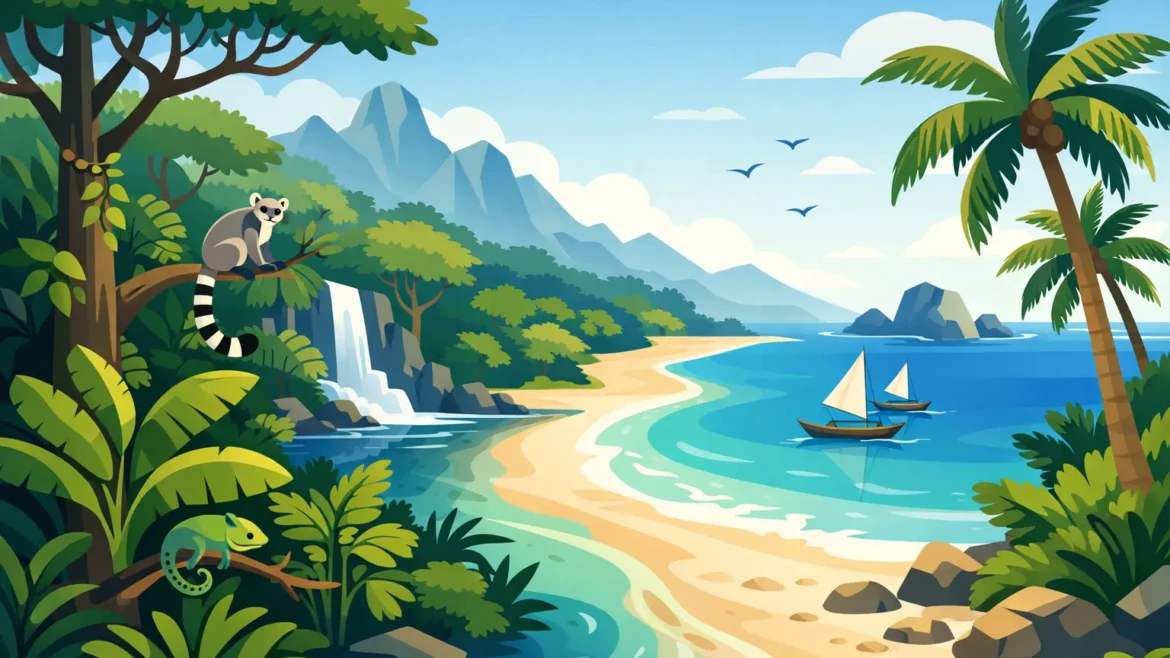
Some trips ask you to choose. Madagascar rewards you for refusing.
If you are wondering cómo combinar selva y playa, this is one of the best places on earth to do it well. You can spend your morning in rainforest listening for indri calls, then a few days later trade hiking shoes for warm sand, calm water, and a completely different rhythm. The key is not trying to cram everything in. It is building a route that lets the island’s contrasts work in your favor.
Madagascar is not a destination where you casually hop from one region to another without planning. Distances are real, road conditions vary, and the most memorable itineraries depend on smart sequencing. When the route is right, the trip feels rich rather than rushed. You get lemurs, chameleons, forest trails, village life, and beach time that actually feels restorative instead of squeezed in as an afterthought.
Cómo combinar selva y playa without wasting days
The biggest mistake travelers make is treating jungle and beach as separate vacations. In Madagascar, the best trips connect them through geography, pacing, and energy.
A strong itinerary usually begins with your priority. If wildlife is the main event, start inland while your energy is high. Early wake-ups, forest walks, long drives, and activity-heavy days are easier at the front of the trip. Then move toward the coast for a softer finish. If your main goal is a romantic escape with some nature, you can reverse the balance and make the forest section shorter but highly focused.
The other key decision is whether you want east coast rainforest, western dry forest, or a cross-island route that combines several ecosystems. Each option creates a different version of the same promise.
The east gives you lush rainforest, strong lemur encounters, and a natural pairing with island or beach extensions. The west feels more dramatic and dry, with baobabs, tsingy landscapes, and a more cinematic transition into coastal downtime. A longer cross-island journey gives you the full Madagascar effect, but only if you have enough days to do it properly.
The best route styles for jungle and beach
Rainforest first, beach second
For many first-time visitors, this is the most natural answer to cómo combinar selva y playa. You start with the forest zones – places where humidity, wildlife activity, and guided walks shape the day – then finish by the ocean.
This works especially well for travelers who want classic Madagascar biodiversity without overcomplicating logistics. Rainforest sections often bring your most active days. You may be walking in national parks, searching for nocturnal species after dark, and covering some meaningful overland distance. By ending at the coast, the trip gains a sense of release. You have earned the slower mornings.
The beach portion can be as quiet or as active as you want. Some travelers want snorkeling, boat trips, and island hopping. Others want a few nights with sea views, fresh seafood, and no alarm clock. Both fit. What matters is that the coast comes after the inland adventure, not in the middle of it.
Cross-island adventure with a coastal finish
If you have 12 to 15 days or more, Madagascar can deliver something rare: a journey that changes character several times without losing coherence. You might move through highlands, rainforest, dry landscapes, river scenery, and then finish at the beach.
This version is ideal for travelers who do not want a single-note experience. It is less about checking boxes and more about understanding how varied the island really is. The contrast is what makes it unforgettable. One day you are in thick vegetation listening to forest sounds. A few days later you are looking at baobabs at sunset. Then you are barefoot by the sea.
That said, this style only works if timing is realistic. Madagascar is generous, but it does not reward overpacked plans. If every day is a transit day, you lose the magic.
Shorter trips with one forest anchor and one beach base
If you have around 10 days, keep the structure simple. Pick one major nature region and one beach destination rather than trying to sample everything.
This is often the best choice for couples and first-time visitors who want confidence, comfort, and depth. A single rainforest or wildlife area gives you meaningful encounters rather than quick glimpses. A single beach base gives you time to absorb the coast rather than just arrive and leave.
In practical terms, fewer hotel changes usually mean a better trip. Less packing, less waiting, and more time in the places you came to see.
What “balanced” really looks like
A balanced trip is not 50 percent jungle and 50 percent beach. It is the right amount of each for your travel style.
Nature-focused travelers often do best with roughly two-thirds inland exploration and one-third coast. That gives enough time for wildlife, landscapes, and cultural stops without making the beach feel like a token add-on. Honeymooners or travelers celebrating something special may prefer the opposite ratio, with a concentrated nature section followed by a longer coastal stay.
Age, fitness, and season matter too. Forest travel can mean early departures, uneven trails, humidity, and long driving days between regions. Beach time becomes more than a luxury when it helps pace the whole trip. For many travelers, it is what turns a great itinerary into one that actually feels comfortable.
How to choose the right jungle experience
Not all jungle time in Madagascar feels the same. Some regions are about dense rainforest and iconic lemur calls. Others are better for mixed habitats, unusual reptiles, or striking scenery around the forest itself.
If you love photography and active wildlife walks, prioritize parks where guiding quality makes a major difference. A skilled local guide does not just point out animals. They help you read the forest. You notice movement sooner, hear patterns in the soundscape, and understand what you are seeing.
If you are traveling as a couple or with friends who have different priorities, choose a forest section that offers variety beyond the trail. Scenic lodges, village interactions, night walks, and cultural stops help the trip feel layered. Madagascar is at its best when wildlife and human landscape sit side by side, not when one is edited out.
How to make the beach portion worth it
The coast should not feel like recovery from the “real trip.” It is part of the real trip.
Madagascar’s beach time works best when it matches the mood you want at the end. Some coastal areas are better for calm, polished downtime. Others are more connected to marine activity, local life, and boat-based excursions. There is no universal best option – only the best fit for your pace and expectations.
If you want a true exhale, stay at least three nights. Two nights often disappears into arrival and departure. Three to four nights gives you enough time for a slow morning, a half-day on the water, and one day with no plan at all.
It also helps to be honest about your energy by that stage of the journey. After several inland days, many travelers think they want nonstop beach activities, then realize what they actually want is space. The right itinerary leaves room for both.
Logistics decide whether the trip feels easy or hard
This is where Madagascar separates casual planning from expert planning. On a map, combining forest and coast can look straightforward. On the ground, flight schedules, road conditions, transfer times, and hotel placement shape the experience far more than travelers expect.
That is why custom design matters here. A good itinerary is not just a list of places. It is a chain of realistic transitions. The driver quality matters. The guide quality matters. The hotel choice matters. Even where you overnight between major regions can change the whole feel of the trip.
For US travelers especially, this is often the difference between a once-in-a-lifetime journey that feels exciting and one that feels tiring for the wrong reasons. Travelers of Madagascar builds around this reality because local coordination is not a small detail on this island. It is the backbone of the experience.
When less is actually more
There is always the temptation to add one more park, one more island, one more landmark. Usually, the better choice is restraint.
If you are trying to figure out cómo combinar selva y playa, think in arcs, not in checklists. Start with a strong inland chapter. Let it unfold. Then transition clearly into the coast. Give each part enough room to leave an impression.
Madagascar does not need to be overcrowded to feel extraordinary. A well-built route can give you misty forest mornings, close wildlife encounters, red-earth roads, fishing villages, and warm Indian Ocean light in one trip without ever feeling fragmented.
The best version is not the one that includes the most. It is the one that lets you feel the island changing around you, from canopy to shoreline, at exactly the right pace.
When that rhythm is right, you do not feel like you combined two vacations. You feel like you finally understood what makes Madagascar different.