
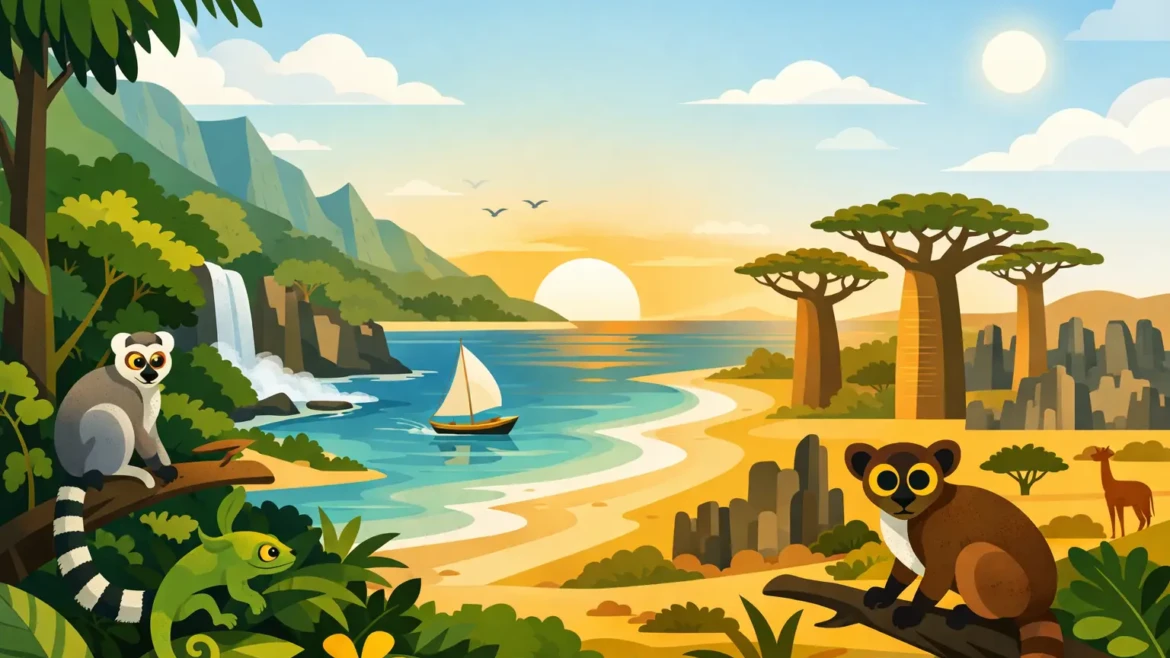
You can visit Madagascar in July and feel like you chose perfectly. Dry trails, cool mornings, excellent wildlife viewing. Come in November and you may say exactly the same thing – greener landscapes, baby lemurs, dramatic light, fewer of the mid-summer crowds. So when travelers ask cuál es la mejor época for Madagascar, the honest local answer is this: it depends on the experience you want, the regions you plan to cover, and how much flexibility you want built into the route.
That is not a vague answer. In Madagascar, timing shapes everything. It affects road conditions, the comfort of long drives, the visibility of wildlife, the state of the sea, and even whether a cross-island itinerary feels smooth or rushed. This is a destination where seasonality matters more than in many classic safari or beach destinations, because distances are long and landscapes change dramatically from one region to the next.
Cuál es la mejor época for a Madagascar trip?
For most first-time visitors, the best overall window is from April to November. These months usually bring drier weather, easier overland travel, and stronger conditions for combining rainforests, baobabs, national parks, and beaches in one well-paced itinerary.
If you want the simplest planning answer, target May through October. This is the core travel season for a reason. Roads are generally more reliable, many parks are easier to explore on foot, and the air is often clearer for those iconic views of the highlands, western baobabs, and limestone tsingy landscapes.
But the best month is not the same for every traveler. A wildlife photographer may favor the early wet-season shoulder for richer colors and breeding activity. A couple looking for a classic private trip with beach time may prefer September or October. A family focused on ease and comfort may be happiest in July or August, when conditions are typically stable in many key regions.
Madagascar seasons at a glance
Madagascar does not behave like a one-climate destination. The east is wetter, the west is drier, the central highlands can be cool, and the north and offshore islands often follow their own rhythm. That is why broad advice only goes so far.
In general, December through March is the rainy season, and also the cyclone season. This does not mean constant rain everywhere every day. It does mean a higher chance of disrupted roads, wetter trails, and itinerary changes, especially for travelers trying to cover long distances on the mainland.
April and May are excellent transition months. The landscapes are still lush after the rains, but access usually starts improving. For many travelers, this is one of the smartest times to come because Madagascar feels vivid and alive without carrying the same level of weather risk as January or February.
June through August is cooler and drier. This is one of the most comfortable periods for longer overland routes, especially if your trip includes parks, highland scenery, and western Madagascar. The trade-off is that evenings and mornings can feel surprisingly cool in some areas, especially inland.
September through November is a favorite among many experienced planners. Wildlife activity is strong, temperatures begin to rise, and the country often feels balanced – dry enough for logistics, warm enough for beaches, and dynamic enough for photographers and naturalists.
Best time by travel style
If your priority is wildlife, September to November is hard to beat. Many species are active, reptiles begin to reappear as temperatures warm, and this is an exciting time for lemur viewing in several regions. Birders also find real rewards in the shoulder months, when breeding activity and movement can create excellent sightings.
If you are planning a classic first trip with rainforest, baobabs, and a beach extension, May to October is usually the safest recommendation. This window supports broad routing across different parts of the island without adding unnecessary pressure to the schedule.
If beaches and island time matter most, the dry season and shoulder months are generally best, especially from May to November. Sea conditions can still vary, but this period often works well for adding Nosy Be or another coastal finish after inland exploration.
If you love dramatic green scenery and do not mind some weather uncertainty, April, May, and November deserve serious attention. These months can be beautiful. The island feels fresh, vegetation is rich, and the landscapes often have more softness and contrast than in the driest part of the year.
Wildlife timing matters more than many travelers expect
Madagascar is not just about seeing lemurs. It is about seeing different habitats working at full intensity. In the rainforests, timing influences how active species are and how comfortable forest walks feel. In drier forests and spiny landscapes, seasonality affects visibility, color, and even how easy it is to spend long periods outdoors.
Whale watching is another factor. Humpback whales are typically seen off Sainte Marie from around July to September, sometimes stretching into October. If that experience is high on your list, your route should be built around it early in the planning stage rather than added as an afterthought.
For chameleons, frogs, and some smaller rainforest species, the wetter shoulder periods can be especially rewarding. For travelers who want broad wildlife variety with easier logistics, September and October often strike an excellent balance.
When not to travel – and when that rule has exceptions
January and February are the months that require the most caution. Cyclones are possible, some roads become difficult or temporarily impassable, and certain routes lose the predictability that private travelers usually want. If you are flying in for a once-in-a-lifetime trip and want to cover multiple regions with confidence, these are generally not the best months.
That said, Madagascar is large, and not every area is equally affected at the same time. Some shorter, carefully designed trips can still work in the wet season, especially if expectations are realistic and the itinerary is built with flexibility. But this is not usually the best choice for first-time visitors hoping to see the island’s major highlights in one smooth journey.
March can be a transition month, but it is still less reliable than April onward. For travelers investing in a complex trip with internal connections, private transfers, national park visits, and beach time, reliability matters.
Which months work best for key regions?
For the classic southern and western circuit – including Andasibe, the central highlands, Isalo, and the Avenue of the Baobabs – April to November is generally the strongest range. This route depends heavily on overland movement, so drier conditions make a real difference.
For northern Madagascar, including Diego Suarez, Amber Mountain, and the Tsingy Rouge, the best period is often from May to November. The region can be wonderfully varied, but it benefits from thoughtful timing and smart route design.
For eastern rainforests such as Andasibe, travel is possible much of the year, but the drier months often make walks more comfortable and planning more straightforward. If your focus is on lush forest atmosphere and nocturnal wildlife, shoulder periods can also be excellent.
For Nosy Be and coastal add-ons, many travelers do well from May through November. September and October are particularly attractive for combining warm beach time with mainland wildlife circuits.
The real answer to cuál es la mejor época
The best time is the one that matches your route, not just the weather chart. Madagascar rewards travelers who plan by region and experience rather than by a single national forecast. A trip focused on whale watching, rainforest walks, and an island stay has a different ideal timing than a cross-island overland journey built around baobabs, tsingy, and southern landscapes.
This is where local trip design matters. A good Madagascar itinerary is not just a list of places. It is a sequence that respects road realities, seasonal wildlife patterns, and the pace needed to enjoy the country rather than simply move through it. That is why many travelers work with on-the-ground specialists such as Travelers of Madagascar – not just to choose dates, but to match those dates to the right route, guides, hotels, and transport plan.
If you want one practical recommendation, choose September or October for a first trip. Those months offer one of the strongest all-around combinations of wildlife, road access, comfortable temperatures, and beach potential. If your schedule points elsewhere, do not assume the trip will be compromised. It may simply need a different design.
Madagascar is never a one-season destination. It is a destination of windows, rhythms, and regional contrasts. Pick the right one, and the island does not just look beautiful – it works beautifully too.