
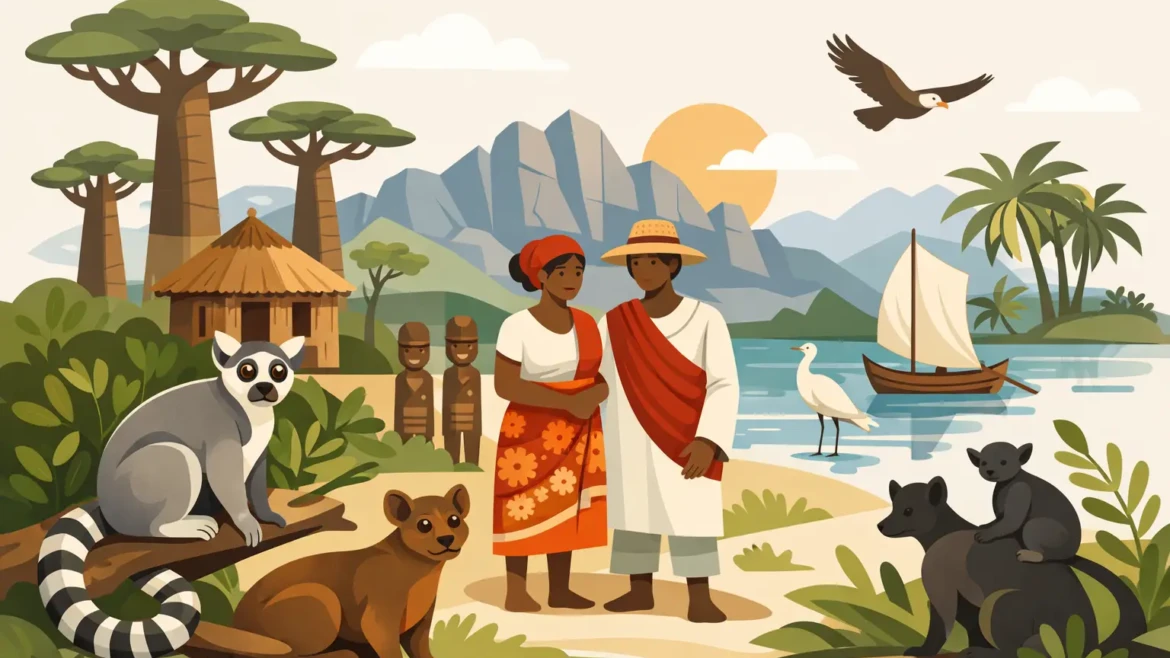
A sunrise walk in the forest can start with the call of an indri and end with the smell of rice cooking in a nearby village. That is what makes Madagascar culture and wildlife so compelling to travelers who want more than a checklist of sights. Here, nature and daily life are not separate experiences. They sit side by side, often in the same landscape, and the trip feels richer because of it.
For many first-time visitors, Madagascar begins with wildlife. Lemurs, chameleons, baobabs, and strange stone forests are what bring people across the world. But the island stays with you for another reason too – the warmth of village welcomes, the rhythm of local markets, the blend of African and Asian influences, and the way each region feels distinct. If you are planning a Madagascar trip from the US, understanding both sides of the destination helps you choose an itinerary that feels complete rather than rushed.
Why Madagascar culture and wildlife belong together
Madagascar is often marketed as a wildlife destination, and that is fair. Around 90 percent of its wildlife is endemic, which means you will find species here that exist nowhere else. Seeing ring-tailed lemurs in the south, sifakas in dry forest, or tiny leaf-tailed geckos in rainforest feels like stepping into another world.
Still, the landscapes are lived-in. Rice terraces, zebu carts, fishing villages, and hill towns are part of the same journey. A day that includes rainforest tracking may also include roadside fruit stands, schoolchildren waving from the edge of a village, and a conversation with a local guide whose knowledge comes from a lifetime in that environment. That mix is one of Madagascar’s great strengths.
It also shapes how you should travel. If your itinerary only focuses on animals, you may miss the human story that gives each region its character. On the other hand, if you focus only on towns and beaches, you miss the rare biodiversity that makes the island globally significant. The best trips balance both.
Wildlife that defines the island
Lemurs are the headline, and rightly so. There is no other place on earth where they live in the wild. But not all lemur experiences are the same. In Andasibe, the draw is the haunting call of the indri and excellent rainforest access from the capital. In Ranomafana, the forest is denser, the biodiversity feels layered, and night walks can reveal frogs, insects, and mouse lemurs. In Anjajavy or Kirindy, the atmosphere shifts toward dry forest species and different behavior patterns.
That variety matters when building a trip. Travelers sometimes assume one national park is enough, but Madagascar’s ecosystems change dramatically across the island. Rainforest east, highlands center, dry deciduous forest west, spiny forest south, and coral-fringed coastlines all tell different ecological stories. If time allows, combining at least two contrasting habitats usually gives a much fuller picture.
Then there are the species beyond lemurs. Chameleons range from tiny stump-tailed species to the imposing Parsons chameleon. Fossa, Madagascar’s top predator, remain a thrilling if less predictable sighting. Birders find extraordinary endemism, while marine life around areas such as Nosy Be adds turtles, coral reefs, and seasonal whale encounters to the journey. Wildlife here is not one-note. It changes with region, season, and pace.
The cultural side of the journey
Madagascar’s culture is shaped by migration, trade, and deep local traditions. You can see that blend in architecture, food, language, music, and ceremony. In the central highlands, rice farming structures the landscape and daily life. In coastal communities, the sea is more than scenery – it is livelihood, identity, and rhythm.
Travelers often notice the variety quickly. Antananarivo feels different from the canal towns of the east, which feel different again from Sakalava areas in the west or Vezo fishing communities along the coast. Even a short conversation about family, farming, or local customs can reveal how diverse the island is. That regional identity is part of what makes overland travel so rewarding.
Food is one of the easiest ways into local culture. Rice is the anchor of most meals, often served with meat, fish, greens, beans, or sauce. Along the coast, seafood can be excellent. In towns and markets, you may encounter fresh tropical fruit, grilled snacks, and dishes that reflect both Malagasy tradition and French influence. The luxury here is not always formality. Often it is freshness, simplicity, and being in the right place.
Music and craft also add depth to a trip. Depending on where you go, you may hear lively regional styles at an event or in a local gathering rather than on a formal stage. Handwoven textiles, woodcarving, basketry, and market goods vary by region. These are not side attractions. They are part of understanding place.
What travelers should expect on the ground
Madagascar rewards patience. This is not a destination where you skim the highlights in a few days and expect the full experience. Roads can be long, infrastructure can be inconsistent, and weather matters. That can be a challenge, but it is also why the island still feels raw and real.
For US travelers used to tightly packed itineraries, the main adjustment is pace. A transfer that looks manageable on a map may take much longer than expected. Domestic flights can save time, but they do not replace the value of seeing the island overland. The trade-off depends on your priorities. If wildlife sightings are your main goal, a tighter route built around a few strong parks may be best. If you want a broader sense of Madagascar culture and wildlife, a longer cross-island itinerary usually delivers more.
Guiding quality matters enormously here. A strong local guide can transform a forest walk from a pleasant hike into a highly detailed experience filled with hidden species, plant uses, and local context. The same is true culturally. Drivers and guides are often the bridge between traveler and destination, helping you move confidently through regions where logistics are not always simple. This is where local execution makes the difference between stress and enjoyment.
Best regions to combine wildlife and culture
Andasibe and the eastern rainforest
This is one of the most accessible combinations of wildlife and village atmosphere. You can hear indri calls at dawn, look for chameleons at night, and still get a sense of everyday life along the route from Antananarivo. It is ideal for travelers with limited time who still want a powerful first impression.
The central highlands
The highlands are sometimes treated as a transit zone, but that misses their value. Terraced hills, historic towns, crafts, and agricultural life provide context for the whole island. If your trip includes stops that go beyond the road, this region adds cultural texture that balances the parks.
The west – baobabs, dry forest, and river life
Western Madagascar feels visually dramatic and culturally distinct. The Avenue of the Baobabs is iconic for a reason, but the region offers much more than a sunset photo. Dry forests, river journeys, and communities shaped by seasonal rhythms create a slower, more spacious experience.
The south – spiny forest and coastal traditions
Southern routes are excellent for travelers who want unusual landscapes. The spiny forest is unlike almost anywhere else, filled with strange plant forms and adapted wildlife. Add in coastal communities and you get a strong contrast between inland ecology and life by the sea.
Nosy Be and nearby islands
If you want to finish with the coast, this area works well. It brings marine life, beach time, and island culture into the journey. It is less about overland immersion and more about ending the trip with a softer rhythm, which many travelers appreciate after long road sections.
How to plan a trip that feels complete
The most satisfying Madagascar itineraries are not necessarily the ones with the most stops. They are the ones built around your real interests. If your priority is wildlife photography, park time and guide quality should lead the plan. If you are equally interested in people, food, and landscapes, the route should leave room for markets, scenic drives, and region-to-region contrast.
This is also a destination where customization matters. Couples may want a classic wildlife route with a beach finish. Friend groups may prefer a more adventurous overland crossing with tsingy, river sections, and varied landscapes. Some travelers want strong comfort throughout, while others are happy to trade a few simpler nights for access to remote areas. There is no single right version of Madagascar.
That is why on-the-ground planning counts so much. A well-built itinerary takes into account road conditions, flight reliability, seasonality, hotel consistency, and how much travel time feels reasonable day after day. Travelers of Madagascar understands that balance because this is home, not a remote sales desk. The goal is not to pack in everything. It is to shape a route that lets the island unfold in the right order.
Madagascar is at its best when you let it be both wild and human. Watch the lemurs, of course. Stand beneath the baobabs. Walk the tsingy and swim the coast. But leave space for the roadside markets, the conversations, the villages, and the regional character that turns a good trip into a memorable one.