
Day 1 – Antananarivo
Arrival in Antananarivo, the bustling capital of Madagascar. Meet and assist at Ivato Airport by our team, then transfer to your hotel. Depending on your arrival time, enjoy some leisure time to rest after your flight or take a first glimpse of the “City of Thousands,” with its colorful houses and vibrant atmosphere. Overnight at Hotel Combava, Hotel Chat’o Park, or similar.
Day 2 – Antananarivo – Fort Dauphin
Transfer to the airport for your domestic flight to the southeastern tip of the island. Upon arrival in Fort Dauphin (Tolagnaro), you will be welcomed and transferred to your hotel. In the afternoon, visit the Nahampoana Reserve, a botanical and zoological garden where you can easily spot several lemur species (sifaka, ring-tailed lemur, bamboo lemur, mouse lemur) jumping freely among bamboo and exotic plants. The reserve is also renowned for its endemic flora, including the triangle palm. Overnight at Hotel Talinjo or similar.
Day 3 – Fort Dauphin – Lokaro – Fort Dauphin (80 km – approx. 1 hr road + 3 hrs boat)
Embark on a scenic boat trip to the stunning Lokaro Peninsula. The journey takes you through the lush Sainte-Luce mangroves, a haven for birdlife. Once at Lokaro, enjoy a day of discovery with secluded golden beaches, rocky coves, and calm turquoise waters perfect for swimming or a short hike to the viewpoints. Return to Fort Dauphin mid-afternoon for a short city tour and a relaxing visit to the popular Libanona Beach, a favorite spot for sunset. Overnight at Hotel Talinjo.
Day 4 – Fort Dauphin – Berenty (80 km – approx. 4 hrs)
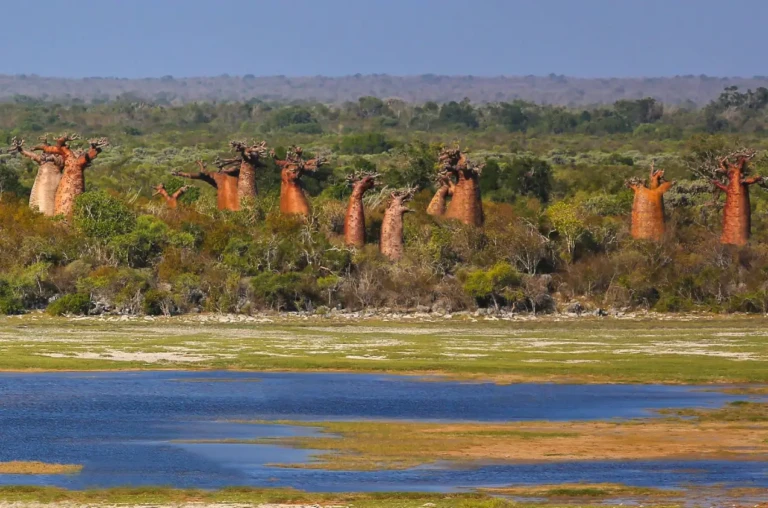
Depart west towards the semi-arid south. The drive takes you past the Andohahela National Park, a transitional zone featuring a unique mix of humid rainforest and dry spiny forest ecosystems. Pass through the Ranopiso transitional forest, famous for the endemic Dypsis decaryi palms and your first sighting of baobabs in the south. Continue to the private Berenty Reserve. After dinner, enjoy a guided night walk to observe nocturnal wildlife, including sportive lemurs and chameleons. Overnight at Berenty Lodge.
Day 5 – Berenty – Lavanono (180 km – approx. 6 hrs)
Morning guided visit of the Berenty Reserve, one of Madagascar’s premier sites for wildlife viewing. Walk along wide paths to see large troops of ring-tailed lemurs (“Maki”) and the dancing Verreaux’s sifakas. You will also see colonies of fruit bats and diverse birdlife. Visit the small local museum and the former sisal plantation to understand the region’s history. Afterwards, drive to Lavanono, an isolated coastal village famous for its impressive canyon-like cliffs and surf spots. Overnight at Chez Gigi or similar.
Day 6 – Lavanono – Cap Sainte-Marie – Lavanono (80 km – approx. 4 hrs)
Excursion to the dramatic Cap Sainte-Marie Special Reserve, the southernmost point of Madagascar where the Indian Ocean meets the Mozambique Channel. Visit the reserve’s botanical garden to see dwarf baobabs and radiated tortoises. Explore the windswept dunes and the cliffs to observe the fossilized fragments of giant Aepyornis eggs (elephant birds). You will also visit a spectacular cave sheltering thousands of tortoises. Return to Lavanono for the evening. Overnight at Chez Gigi.
Day 7 – Lavanono – Itampolo (270 km – approx. 8 hrs)
Prepare for an adventurous off-road journey through sandy and rocky tracks across the arid “Deep South.” The drive offers starkly beautiful landscapes dominated by xerophytic vegetation, including Alluaudia (octopus trees) and Pachypodium. Pass through remote Mahafaly villages before arriving in Itampolo, a peaceful coastal fishing village with vast white sand beaches. Overnight at Hotel Sud Sud or similar.
Day 8 – Itampolo – Beheloka (80 km – approx. 3 hrs)
Drive north to the Tsimanampetsotsa National Park. This park is centered around a massive shallow salt lake, often dotted with flamingos. Explore the limestone plateau, ancient caves with blind fish, and forests of baobabs and pachypodiums. After the visit, continue the coastal track to the village of Beheloka. Overnight at Domaine d’Ambola.
Days 9–10 – Beheloka – Anakao (50 km – approx. 2 hrs)
Transfer further north to Anakao, the main village of the nomadic Vezo fishermen. Settle in for two leisure days to enjoy the pristine beach and turquoise lagoon. During your stay, take a boat excursion to the nearby island of Nosy Ve, a protected islet with a long white sand spit and a nesting site for the rare red-tailed tropicbirds. You can snorkel in the coral reefs or simply relax. Overnight at Hotel Lalandaka or similar.
Days 11–12 – Anakao – Toliara – Ambatomilo (150 km – approx. 5 hrs + ferry)
Morning boat transfer across the bay to the port of Toliara. Meet your driver and vehicle, then drive north along the coast via the popular beach towns of Ifaty and Mangily. Continue by sandy track to Ambatomilo, one of the most beautiful and pristine coastal areas in Madagascar, known for its lagoon of varying shades of blue. Enjoy a relaxing two-night stay at Shangri-La Lodge or similar.
Day 13 – Ambatomilo – Morombe (90 km – approx. 6 hrs)
Leave the lagoon behind and drive inland through dry savanna landscapes dotted with majestic baobabs. The track can be sandy and challenging, adding to the adventure. Arrive in the dusty, colonial-era town of Morombe, situated on the Mozambique Channel delta. Overnight at Hotel Le Paletuvier or similar.
Day 14 – Morombe – Belo sur Mer (260 km – approx. 12 hrs)
A long day of off-road driving through the heart of the Menabe region. The journey involves crossing rivers, vast salt flats, and savanna plains. Stop briefly at the town of Manja for a break, then continue the trek to reach the coastal village of Belo sur Mer, famous for its traditional dhow (wooden boat) building workshops. Overnight at Belo Beach or similar.
Day 15 – Belo sur Mer
Enjoy a day dedicated to the sea. Embark on a boat excursion to the uninhabited islands of Nosy Andrahovo and nearby islets. These spots offer crystal-clear waters perfect for swimming and snorkeling to observe the coral reef life. Return to the mainland in the afternoon to watch the shipwrights at work. Overnight at Belo Beach.
Day 16 – Belo sur Mer – Kirindy (160 km – approx. 9 hrs)
Departure northwards through the dry forest. Make a stop at the world-famous Avenue of the Baobabs to see these giants in the afternoon light. Continue past Morondava to the Kirindy area. In the evening, join a guided night walk in the Private Reserve of Kirindy to search for the fossa (Madagascar’s largest predator) and various nocturnal lemurs. Overnight at Relais du Kirindy.
Day 17 – Kirindy – Bekopaka (140 km – approx. 8 hrs + ferry)
Morning visit in the Kirindy Reserve to see diurnal lemurs and birdlife. Then, drive to the banks of the Tsiribihina River. Board a ferry to cross the river, pass through the town of Belo-sur-Tsiribihina, and continue to the Manambolo River for a second ferry crossing. Arrive in Bekopaka, the gateway to the Tsingy. Overnight at Olympe du Bemaraha or similar.
Day 18 – Bekopaka – Grand Tsingy – Bekopaka
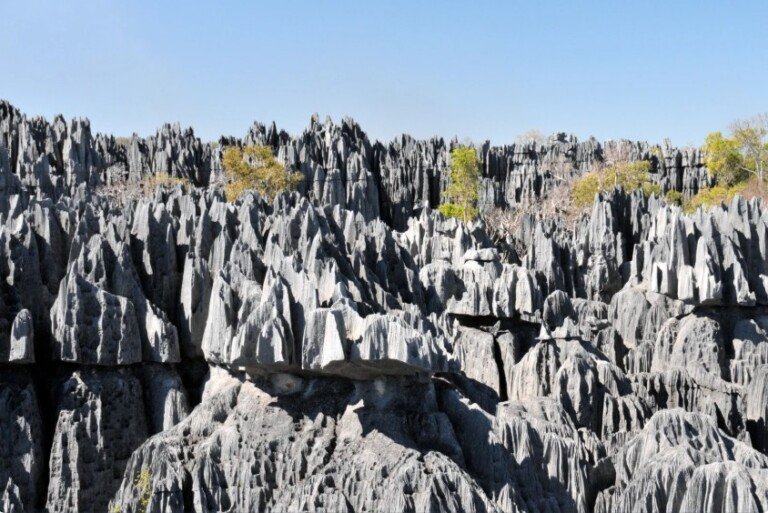
A full day dedicated to exploring the spectacular Tsingy de Bemaraha (UNESCO World Heritage Site). Hike through the “Grand Tsingy,” navigating a maze of razor-sharp limestone pinnacles, suspension bridges, and caves. The views from the top are breathtaking. You may also spot Decken’s sifakas leaping between the rocks. Overnight in Bekopaka.
Day 19 – Bekopaka – Morondava
Return journey south via the track and ferry crossings. Time your arrival to stop at the Avenue of the Baobabs right at sunset, the most magical time to photograph these ancient trees silhouetted against the orange sky. Continue to Morondava for the night. Overnight at Laguna Beach Hotel or similar.
Day 20 – Morondava – Betania – Miandrivazo
In the morning, take a pirogue trip to visit the Betania fishing village, located across the mangrove channel, to see the local lifestyle. Afterward, leave the coast and drive inland towards the warmer plains of Miandrivazo. Overnight at Princess Tsiribihina Hotel or similar.
Day 21 – Miandrivazo – Antsirabe
Drive back up into the Highlands, observing the landscape change from dry plains to terraced rice fields and hills. Arrive in Antsirabe. You have the option to visit the deep blue Lake Tritriva, located in an extinct volcanic crater nearby. Overnight at Royal Palace Hotel or similar.
Day 22 – Antsirabe – Antananarivo
Morning city tour of Antsirabe, visiting the colorful market and local craft workshops (miniature cars, zebu horn). Drive north back to the capital. Upon arrival in Antananarivo, you can make an optional visit to the Rova Palace (Queen’s Palace) for panoramic views of the city. Overnight near the airport.
Day 23 – Antananarivo
Enjoy a free morning for souvenir shopping or relaxation. Transfer to Ivato International Airport in time for your departure flight.
Prices per person
1 traveler: €5,800 – single room
2 travelers: €3,650 – double/twin room
3 travelers: €3,100 – triple room
4 travelers: €2,800 – two double/twin rooms
For other options, please contact us.
Best travel period: June – October
Included:
Domestic flight · Vehicle with English/French-speaking driver ·
Local guides · Entrance fees and excursions ·
Accommodation (dinner & breakfast) · All transfers
Not included:
Visa (€35) · Lunches · Drinks · Personal expenses ·
Anything not mentioned in “Included”
Fort Dauphin (Taolagnaro)
Located in southeastern Madagascar, Fort Dauphin combines dramatic landscapes of mountains, rainforest, and ocean. The town offers colonial history, beautiful beaches, and a lively local culture. It is a gateway to nearby national parks and pristine nature, ideal for hiking, surfing, and discovering rare flora, fauna, and traditional Antanosy culture.
Andohahela National Park
Andohahela National Park is unique for protecting three distinct ecosystems: rainforest, dry spiny forest, and high-altitude vegetation. Located near Fort Dauphin, it shelters exceptional biodiversity, including endemic plants, lemurs, and birds. Visitors enjoy varied hiking trails, dramatic scenery, and a rare opportunity to experience Madagascar’s ecological contrasts within one protected area.
Berenty Reserve
Berenty Reserve is a private reserve famous for its easily observable lemurs, especially ring-tailed lemurs and sifakas. Set along the Mandrare River, it features gallery forest, spiny desert vegetation, and rich birdlife. Ideal for wildlife photography and education, Berenty offers guided walks that highlight conservation, endemic species, and traditional Antandroy culture.
Lavanono
Lavanono is a remote coastal village in southern Madagascar, known for its wild beauty and excellent surfing conditions. Dramatic cliffs, strong waves, and unspoiled beaches attract adventurous travelers. Local fishing communities, baobabs, and spiny forest landscapes create a raw, authentic atmosphere, perfect for travelers seeking isolation, nature, and off-the-beaten-path experiences.
Itampolo
Itampolo is a quiet seaside village along Madagascar’s southwest coast, offering long sandy beaches and crystal-clear waters. Popular for swimming, snorkeling, and relaxation, it remains largely untouched by mass tourism. Surrounded by dry landscapes and fishing villages, Itampolo provides a peaceful escape and an authentic glimpse into traditional coastal Malagasy life.
Tsimanampetsotsa National Park
Tsimanampetsotsa National Park is renowned for its vast salt lake, limestone formations, and spiny forest ecosystem. Located in southwest Madagascar, it hosts flamingos, endemic birds, and rare reptiles. Sacred caves and unique vegetation add cultural and natural significance, making the park a fascinating destination for nature lovers and those curious about Madagascar’s arid landscapes.
Anakao
Anakao is a charming coastal village south of Tuléar, known for white-sand beaches and turquoise lagoons. Home to the Vezo fishing people, it offers snorkeling, diving, and boat trips to nearby islands. Relaxed and authentic, Anakao combines marine beauty, traditional culture, and stunning sunsets, making it a favorite seaside retreat.
Ambatomilo
Ambatomilo is a secluded beach destination with powdery white sand and clear, shallow waters. Ideal for swimming and relaxation, it offers a tranquil setting far from crowds. Nearby coral reefs attract snorkelers, while surrounding dunes and fishing villages provide scenic walks and cultural encounters in one of Madagascar’s lesser-known coastal gems.
Morombe
Morombe is a lively coastal town and gateway to Madagascar’s remote southwest beaches. Known for strong winds and waves, it attracts surfers and kitesurfers. The town reflects everyday Malagasy life, with colorful markets and fishing activities. From Morombe, travelers can explore isolated beaches, mangroves, and traditional Vezo communities along the coast.
Belo sur Mer
Belo sur Mer is a peaceful coastal village famous for traditional wooden boat building. Surrounded by lagoons, mangroves, and salt flats, it offers beautiful sunsets and a relaxed atmosphere. Visitors can observe craftsmen at work, enjoy boat trips, and experience authentic coastal life, making Belo sur Mer a charming and culturally rich stop.
Kirindy Reserve
Kirindy Reserve is one of Madagascar’s best places to spot wildlife, including the elusive fossa, giant jumping rats, and several lemur species. Located in a dry deciduous forest, it offers guided day and night walks. Rich in biodiversity, Kirindy provides an excellent introduction to Madagascar’s unique nocturnal and endemic fauna.
Bekopaka
Bekopaka is a small village on the Manambolo River and the main gateway to the Tsingy de Bemaraha. Simple and welcoming, it offers river crossings by ferry and local accommodations. The village provides insight into rural life while serving as a base for exploring one of Madagascar’s most spectacular natural wonders.
Tsingy de Bemaraha
The Tsingy de Bemaraha is a UNESCO World Heritage Site featuring dramatic limestone pinnacles, deep canyons, and hanging bridges. This extraordinary landscape shelters unique wildlife adapted to its sharp terrain. Exploring the Tsingy involves adventurous hikes, ladders, and viewpoints, offering unforgettable scenery and one of Madagascar’s most iconic natural experiences.
Morondava
Morondava is a relaxed coastal town best known for the famous Avenue of the Baobabs nearby. It serves as a gateway to western Madagascar’s parks and reserves. Beaches, markets, and vibrant sunsets define the town, while surrounding landscapes of baobabs, rivers, and dry forests make Morondava a highlight of the west coast.
Antsirabe
Antsirabe is a highland city known for its cool climate, colonial architecture, and relaxed atmosphere. Once a spa town, it features colorful rickshaws, local markets, and artisan workshops. Surrounded by volcanic landscapes, visitors can explore Lake Tritriva, Mount Ibity, and scenic countryside, making Antsirabe an ideal stop between regions.
Tours that may interest you
No pages found.
No pages found.