
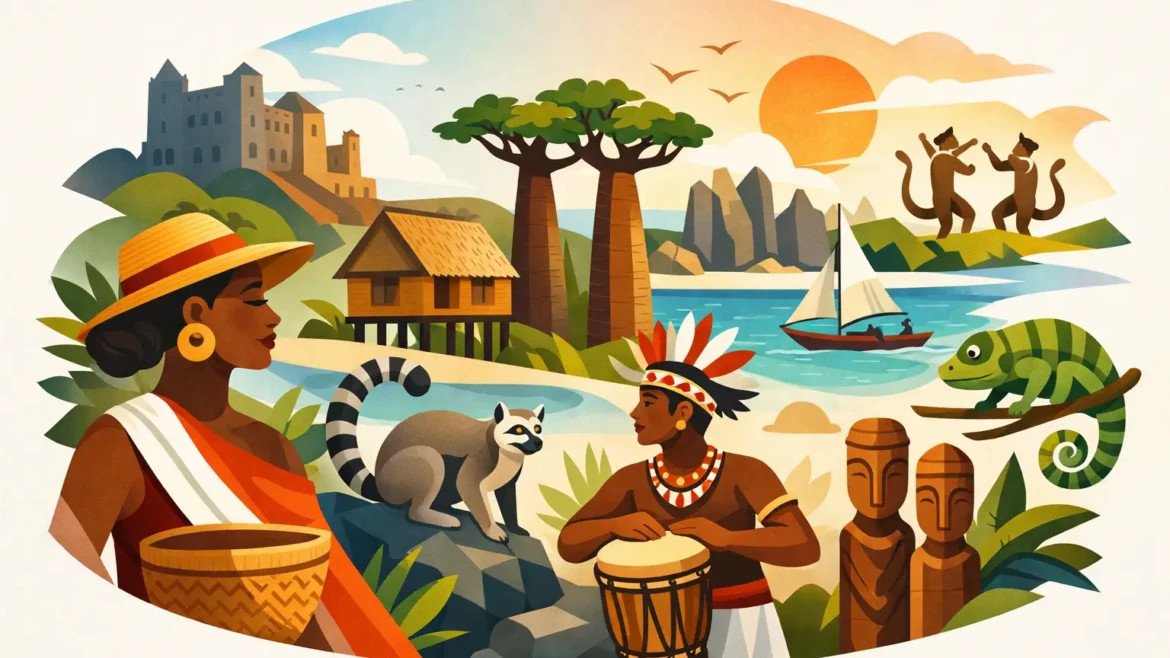
The first time you hear a salegy rhythm in northern Madagascar, it does not feel staged. It feels lived-in – loud, social, and impossible to separate from the place itself. That is the real appeal behind the mejores experiencias culturales Madagascar travelers remember most. They are not museum pieces. They happen in markets, villages, workshops, river towns, and family tables, often between the headline wildlife sites that bring people here in the first place.
For many US travelers, culture in Madagascar is easy to underestimate while planning. Lemurs, baobabs, tsingy, and beaches naturally take the spotlight. But if you want a trip that feels complete rather than rushed from one natural wonder to the next, cultural immersion matters. It gives meaning to the landscapes and adds context to the island’s extraordinary diversity of people, languages, beliefs, and regional traditions.
This is not a destination where one cultural experience fits every route. Madagascar is large, roads can be slow, and each region carries its own identity. The best approach is to build culture into the flow of the itinerary, not tack it on at the end.
What makes the best cultural experiences in Madagascar
The strongest cultural moments in Madagascar are usually local, regional, and specific. They are less about polished performances and more about access, timing, and respectful guidance. A market visit can be memorable if you understand what is being traded and why. A village stop can feel meaningful if it is welcomed, well-paced, and connected to real daily life.
That is why the mejores experiencias culturales Madagascar visitors enjoy most often happen with thoughtful planning. The right driver, the right local guide, and the right route make a huge difference. Without that structure, travelers can miss the nuance or arrive at the wrong time of day, when a place has lost its energy.
1. Walking through local markets
If you want to read Madagascar quickly, start in a market. In Antananarivo, Antsirabe, Ambalavao, and many smaller towns, markets reveal the texture of everyday life – rice varieties, spices, woven goods, seasonal produce, cooking charcoal, medicinal plants, and secondhand clothing all layered together.
For US travelers, this is often where the island starts to feel personal rather than scenic. You notice how regional economies work, how people shop, how transport shapes trade, and how strong local social networks are. Markets are also one of the best places to see the blend of Southeast Asian and African influences that makes Madagascar culturally distinct.
The trade-off is that markets are busiest, hottest, and most rewarding when they are also most chaotic. Some travelers love that energy. Others prefer a shorter, guided visit that helps them engage without feeling overwhelmed.
2. Meeting artisan communities in Antsirabe and beyond
Antsirabe is known for its craft traditions, and it is one of the most accessible places to see hands-on production during a classic overland route. Workshops may focus on embroidery, horn carving, miniature objects, metalwork, or recycled materials transformed into practical items.
What makes this valuable is not just shopping. It is the chance to understand resourcefulness and local skill in a country where handmade production remains part of the living economy. Done well, these visits feel less like retail stops and more like conversations about labor, technique, and tradition.
Not every workshop is equal. Some are more tourist-facing than others, and that is fine if expectations are clear. The best visits are transparent, unhurried, and tied to places where craftsmanship is still rooted in community life.
3. Music and dance in the north and west
Madagascar’s music changes by region, and that variation is part of the experience. In the north, salegy carries an infectious, fast-moving energy. In other regions, ceremonial music, community dancing, and local performance styles reflect different histories and social structures.
For travelers, music is often the most immediate way to feel the island’s cultural diversity. You do not need to speak Malagasy to understand the atmosphere when a crowd gathers and the rhythm takes over. Whether the setting is a town event, a hotel evening with local performers, or a community celebration, music can create the kind of memory that lasts longer than any viewpoint.
This is one area where timing really matters. A private itinerary allows more flexibility to align your route with weekends, local festivities, or seasonal events, rather than relying on luck.
4. Highland culture in the Merina and Betsileo regions
The central highlands offer some of the richest cultural context in Madagascar. Around Antananarivo and south toward Antsirabe, Ambositra, and Fianarantsoa, you see terraced rice fields, brick architecture, tomb traditions, layered social history, and a landscape shaped as much by agriculture as by nature.
This region helps travelers understand that Madagascar is not only wild and remote. It is also deeply cultivated, historical, and structured by long-settled communities. In the Betsileo areas especially, farming landscapes are part of the cultural story, not just the scenery between parks.
For first-time visitors, this can be one of the most rewarding parts of a cross-island journey because it balances the safari-like appeal of wildlife with a stronger sense of how people live across the island.
5. Zafimaniry woodcarving traditions
Near Ambositra, the Zafimaniry are internationally known for intricate woodcraft and architecture. If your route allows, this is one of the most distinctive cultural experiences in the country. The workmanship is highly detailed, but the deeper value lies in seeing how decorative and structural carving connect to identity, memory, and place.
This is not the easiest add-on for every itinerary. Access depends on road and weather conditions, and some visits require extra travel time. For travelers with limited days, it may not be the smartest choice compared with more accessible cultural stops. But for those who want depth over speed, it can be exceptional.
6. Traditional river life on western routes
Travelers heading toward western Madagascar often focus on the dramatic landscapes – baobabs, dry forests, tsingy formations, and coastal light. Yet river corridors and ferry crossings can also reveal a quieter cultural side of the island. Fishing methods, transport routines, cargo movement, and village life along the water show a different rhythm from the highlands.
These experiences are especially effective when paired with slower travel. If every day is packed with long road sections and fixed hotel arrivals, the subtler human moments can get lost. A well-designed itinerary leaves space to stop, observe, and engage rather than simply pass through.
7. Coastal communities and seafood traditions
Madagascar’s coastline is long and culturally varied. On beach extensions or island stays, culture does not disappear just because the pace relaxes. In fact, coastal communities can offer some of the most memorable insights into food, fishing, boat-building, and everyday life shaped by the sea.
A seafood lunch is not just a pleasant break. In the right place, it becomes part of the destination story – how ingredients are sourced, what is seasonal, which methods are local, and how coastal trade works. Around Nosy Be and other beach areas, this can add real substance to what might otherwise be treated as pure downtime.
8. Tombs, ancestors, and local belief systems
Madagascar’s cultural life is inseparable from ancestry and spiritual tradition. In many regions, tombs are not background details. They are central to how families understand identity, continuity, and obligation. Customs tied to ancestors, taboos known as fady, and local interpretations of sacred space all shape daily behavior.
For foreign travelers, this is where good guiding matters most. These topics are fascinating, but they should not be approached casually or reduced to quick facts. A respectful explanation helps visitors understand why certain places, gestures, or photos may be sensitive. It also prevents culture from being treated as spectacle.
9. Food as a cultural shortcut
Malagasy cuisine does not always get the same attention as the country’s wildlife, but it should. Rice remains central, often accompanied by greens, beans, zebu, freshwater fish, or seafood depending on the region. Street snacks, tropical fruit, local rum, and regional sauces also reveal a lot about climate and trade.
Food is one of the easiest and most enjoyable ways to add cultural depth without changing the route dramatically. The key is to eat with intention. A lunch stop chosen for convenience is one thing. A stop selected because it reflects the local region is much better.
Planning the mejores experiencias culturales Madagascar travelers actually enjoy
The best cultural travel in Madagascar is rarely accidental. It depends on where you go, how much time you have, and whether your route allows for meaningful stops instead of rushed photo breaks. A 10-day first trip may combine highland towns, one or two workshop visits, market time, and coastal community encounters. A longer custom route can go further, adding deeper regional traditions and more remote cultural landscapes.
This is where working with an on-the-ground specialist matters. Travelers of Madagascar can shape cultural moments around the logistics you already need – roads, internal pacing, park visits, beach time, and hotel selection – so the trip feels coherent rather than crowded.
If you are choosing between adding another park or making room for culture, the answer depends on your travel style. Wildlife-focused travelers may want just a few well-placed cultural encounters. Others may find that these are the experiences that make the island feel real.
Madagascar stays with people because it never feels like one thing. Give the culture enough room in your itinerary, and the island becomes more than a checklist of iconic sights. It becomes a place you actually got to know.