
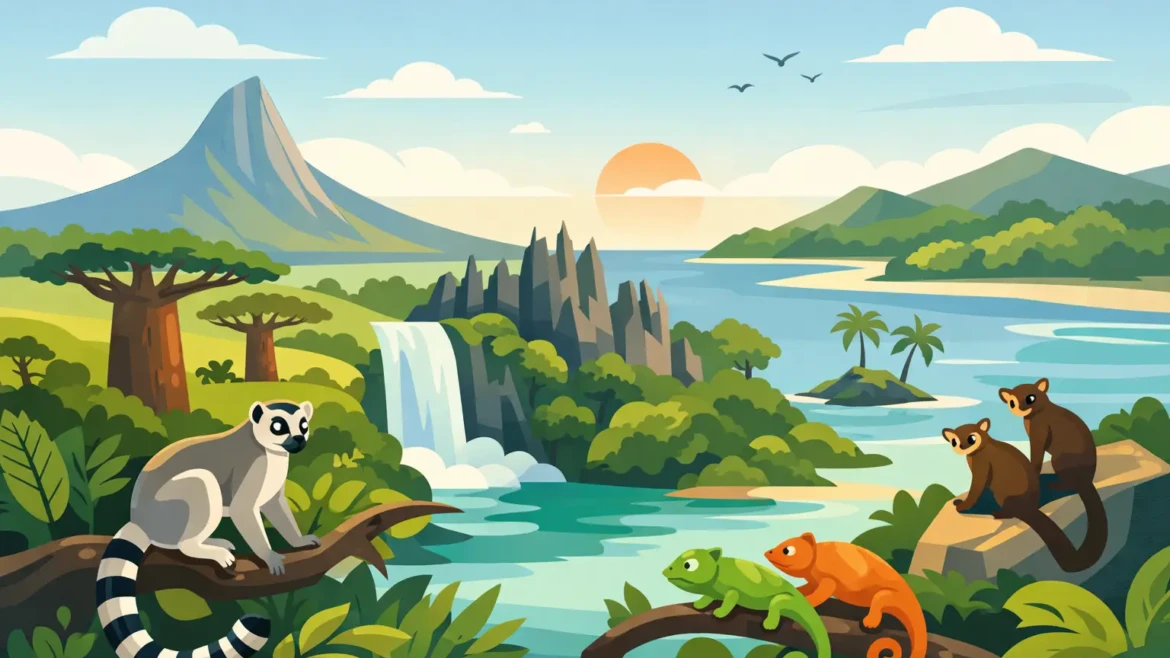
Madagascar does not reward rushed planning. A park that looks close on a map can take a full day to reach, and two reserves with “lemurs and rainforest” on paper can feel completely different on the ground. If you are researching the mejores parques nacionales Madagascar for a first trip, the real question is not just which parks are best. It is which parks fit your time, your route, and the kind of experience you want to remember years later.
That is where smart trip design matters. Some travelers want classic rainforest and easy wildlife viewing. Others want dramatic stone landscapes, deep canyons, rare species, or a park that pairs naturally with beach time. Madagascar has all of that, but very few visitors can see everything in one trip. The strongest itinerary is usually not the one with the most stops. It is the one that connects the right parks in the right order, with enough time to enjoy each region properly.
How to choose among the mejores parques nacionales Madagascar
A good Madagascar itinerary starts with geography. The island is huge, roads can be slow, and park visits often work best as part of a broader route rather than as isolated day trips. If you have 10 to 15 days, most travelers do best focusing on one major circuit – for example the east and south, or the central highlands with a western extension.
Season matters too. Rainforest parks are especially beautiful in the wetter months, but access can be harder. Dry-season travel usually makes overland routing smoother, especially for western landscapes and more remote parks. Wildlife also changes by month. If your dream is seeing active lemurs, chameleons, birds, or seasonal blooms, timing can shape which parks should move to the top of your list.
Comfort level is another factor. Some parks are ideal for travelers who want rewarding wildlife walks with manageable logistics. Others are better for those happy with longer drives, basic infrastructure in remote regions, or more physically demanding hikes. There is no single “best” answer. There is only the best fit for your trip.
Andasibe-Mantadia National Park
If you ask first-time visitors where to begin, Andasibe is often the answer. It is one of the most accessible wildlife destinations from Antananarivo, and it delivers quickly. This is where many travelers hear the haunting call of the indri, Madagascar’s largest lemur, in dense eastern rainforest that feels immediately alive.
Andasibe works so well because it gives a strong return on limited time. Wildlife viewing is excellent, day and night walks are rewarding, and the forest atmosphere is exactly what many people imagine when they picture Madagascar. It also pairs easily with a wider eastern or southern route.
The trade-off is that it is popular, and for good reason. If you want remote wilderness with very few other visitors, this is not the most isolated park on the island. But for classic lemur viewing, rich biodiversity, and a smoother introduction to Madagascar, it remains one of the strongest choices.
Ranomafana National Park
Ranomafana is one of Madagascar’s great rainforest experiences – deeper, wetter, and more immersive than many travelers expect. The forested hills seem to roll on forever, and the park is known for exceptional biodiversity, including several lemur species, reptiles, frogs, and birds.
This park is especially rewarding for travelers who enjoy walking and who want more than a quick wildlife checklist. Ranomafana has a real sense of ecological depth. The forest feels layered, complex, and scientific in the best way, as if every trail has something hidden just out of sight.
It is a better fit for some travelers than others. Trails can be slippery, conditions can be humid, and sightings sometimes require patience. But if you want rainforest that feels wild rather than easy, Ranomafana deserves a place high on any shortlist of the mejores parques nacionales Madagascar.
Isalo National Park
Isalo is the park that changes the rhythm of a Madagascar trip. After rainforest and highland scenery, the sandstone massifs, canyons, natural pools, and dry open landscapes feel like a different country. It is one of the island’s most photogenic national parks, and one of the best for travelers who want scenery as much as wildlife.
The appeal here is not just what you see, but how it feels. Hikes move through sculpted rock formations, palm-lined oases, and wide viewpoints that glow in late afternoon light. Lemurs are present, but Isalo is above all a landscape park.
That makes it ideal for travelers who want variety in a longer route, especially on classic overland circuits through the south. The main trade-off is simple – if your top priority is dense endemic wildlife at every step, Andasibe or Ranomafana may be stronger. If you want one of Madagascar’s most memorable hiking and scenery experiences, Isalo is essential.
Tsingy de Bemaraha National Park
For pure geological drama, Tsingy de Bemaraha stands apart. The limestone pinnacles here form one of the most extraordinary landscapes in Africa, sharp stone forests rising in chaotic formations that look almost unreal. Suspension bridges, elevated walkways, and viewpoints add a real sense of adventure.
This is not the easiest park to include, and that is exactly why it feels special. Reaching Tsingy usually requires commitment, careful routing, and tolerance for longer travel days. It is better suited to travelers with enough time and a real appetite for remote experiences.
The reward is enormous. Tsingy is one of those places that does not feel interchangeable with anything else on your trip. If you want a Madagascar itinerary with a true expedition feel, this park belongs near the top.
Masoala National Park
Masoala is for travelers who want rainforest on a grander, wilder scale. This is the largest protected rainforest area in Madagascar, a place where jungle, coast, and marine environments meet. It feels lush, remote, and deeply atmospheric.
What makes Masoala so compelling is that it offers more than a standard park visit. Depending on route and timing, the experience can combine forest walks, coastal scenery, and a sense of true isolation that is increasingly rare in global travel. Wildlife is rich, and the setting feels genuinely untamed.
The obvious limitation is logistics. Masoala is not the simplest addition to a short trip, and it works best for travelers willing to build part of their itinerary around it. For the right traveler, though, it can be one of the most rewarding parks in the country.
Amber Mountain National Park
In the north, Amber Mountain offers a different kind of rainforest experience. Compared with the larger southern and eastern parks, it is compact and relatively easy to explore, with crater lakes, waterfalls, lush trails, and excellent opportunities to spot reptiles and smaller wildlife.
It fits especially well into northern Madagascar itineraries that also include coastal time or the dramatic tsingy landscapes of Ankarana. That combination makes the north very appealing for travelers who want both nature and downtime without feeling they have to cross the entire island.
Amber Mountain may not have the same iconic status as Andasibe or Isalo, but it is often one of the most enjoyable parks on a well-designed northern route. It is green, refreshing, and full of detail.
Ankarafantsika National Park
Ankarafantsika is often overlooked by first-time visitors, which is a mistake. This western dry forest park is known for birdlife, lakes, baobab scenery, and species adapted to a very different ecosystem from the eastern rainforests. It gives you another face of Madagascar.
For travelers interested in biodiversity beyond the headline lemur photos, Ankarafantsika is impressive. The landscape is drier, the light is beautiful, and the wildlife experience feels more subtle. It rewards careful guiding and a little patience.
This is not usually the first park people build a trip around. But as part of a broader west or northwest route, it adds real depth and contrast.
Zombitse-Vohibasia National Park
Zombitse is one of the strongest additions for travelers moving between Ranomafana and Isalo. It is not usually the star of the itinerary, but it is exactly the kind of stop that makes a route feel richer and more complete. The transitional forest here supports distinctive birdlife and lemurs, and it breaks up a long overland journey with a worthwhile nature experience.
That is an important point when planning Madagascar. The best parks are not always the biggest or most famous. Sometimes the right park is the one that improves the flow of the trip, adds a new habitat, and keeps a long road section from becoming dead time.
Which national park is best for your trip?
If you are visiting Madagascar for the first time and want reliable wildlife viewing with manageable logistics, start with Andasibe. If your dream is immersive rainforest and serious biodiversity, Ranomafana is hard to beat. If landscapes and hiking matter most, choose Isalo. If you want the most dramatic geology and a stronger sense of adventure, Tsingy de Bemaraha is the standout.
For travelers with more time, the strongest trips usually combine contrasts. Rainforest with sandstone canyons. Tsingy with baobabs. Wildlife-rich parks with a few nights by the sea. That is often where Madagascar becomes unforgettable – not in choosing a single winner, but in pairing the right parks to create a route with rhythm, surprise, and breathing room.
This is also where local planning makes a real difference. On paper, adding one more park can seem efficient. On the ground, it can mean too many driving hours, weak hotel choices, or too little time in the places that matter most. A well-built itinerary feels easier than it looks because the sequencing has already been thought through carefully.
If you are deciding among the mejores parques nacionales Madagascar, trust the shape of the journey as much as the names on the list. The right park is not only the one with the biggest reputation. It is the one that fits your season, your pace, and the kind of Madagascar experience you came here to find.