
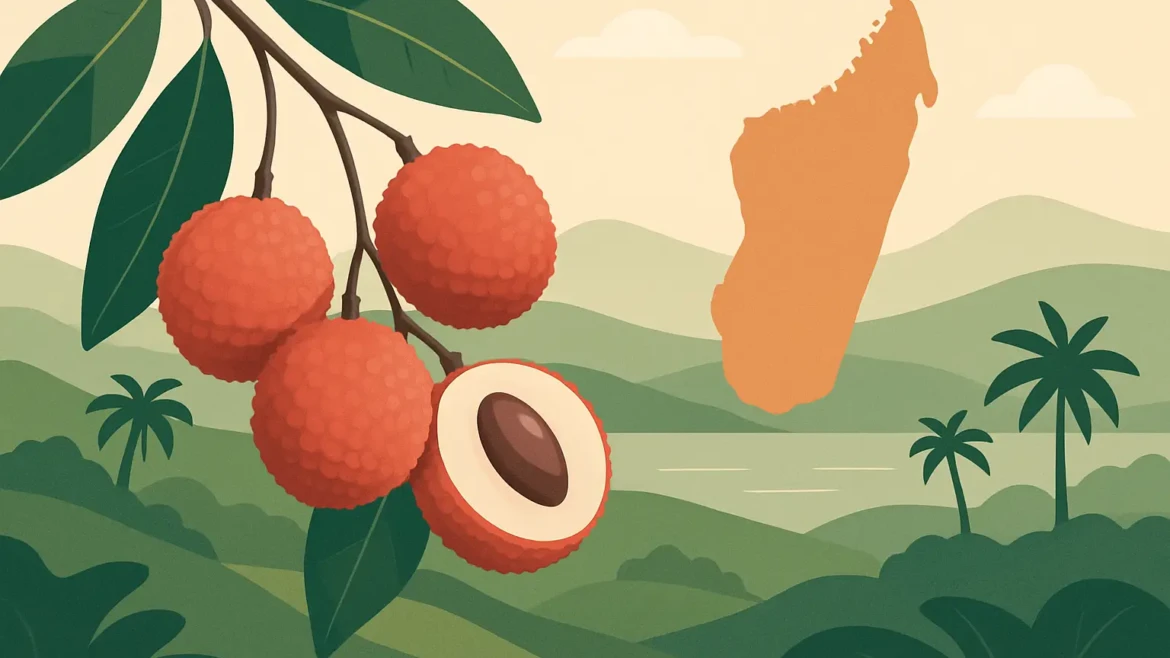
You can plan an entire Madagascar trip around lemurs, baobabs, and beaches and still end up talking most about a fruit.
That happens every year when the litchi arrives.
For a few short weeks, markets turn glossy red, roadside stalls pile up fragrant clusters, and families in the highlands and on the east coast treat the season like a celebration that just happens to be edible. If you’re traveling from the US, The Litchi is one of those small, vivid details that can make Madagascar feel even more distinct – not just a place you “visited,” but a place you tasted.
This guide is built for travelers, not botanists. You’ll get a clear sense of when the litchi season really happens, where it’s easiest to eat litchi fresh, how it shows up in Malagasy daily life, and how to work it into a wildlife-and-nature itinerary without forcing your whole trip to revolve around a single ingredient. Because it is a seasonal joy – but it’s also a moving target.
The Litchi: why it matters in Madagascar
Madagascar is famous for endemism: wildlife found nowhere else, forests that feel like another planet, and landscapes that shift from rainforest to spiny desert in a single cross-island route. The litchi fits that same theme of “rare at home, abundant here.” In the US, you might see litchi as a specialty fruit – a small box at an Asian grocery, a syrupy canned version, or a cocktail garnish. In Madagascar, it becomes ordinary in the best way.
During the season, litchi is not a delicacy. It’s a daily snack, a gift for neighbors, something a driver buys by the kilo for the road, and something you’ll be offered in homes and at hotels that take pride in local produce.
It matters for travelers for three practical reasons.
First, timing: litchi season overlaps with the start of the rainy season, especially on the east. That doesn’t mean “don’t go.” It means you plan smarter – route choice, buffer days, and expectations about road conditions.
Second, place: the litchi isn’t evenly distributed across Madagascar. If you want the best chance of eating it fresh and often, you’ll prefer certain regions and corridors.
Third, culture: litchi is one of those simple entry points into Malagasy life. Even if you’re not fluent in Malagasy or French, buying fruit at a market and sharing it in the car is a form of connection that feels natural.
What is “The Litchi,” exactly?
If you’ve never eaten litchi fresh, the experience is a quick sequence of surprises.
You start with a thin, bumpy shell that looks like it should be tough, but it cracks easily. Underneath is a translucent, pearly flesh that’s juicy and floral, with a sweetness that feels clean rather than heavy. The texture is firm but tender – closer to a very juicy grape than to a mango or pineapple. In the center is a smooth brown seed you don’t eat.
In Madagascar you’ll typically see litchi sold in clusters on stems, or heaped into baskets and sacks when the harvest is in full swing. Fresh litchi is best eaten within a few days of picking, which is why traveling during the season feels different: you’re eating it where it belongs.
You may also see it written as “litchi” (common in French-influenced spelling) rather than “lychee.” In everyday Madagascar travel, “litchi” is the form you’ll notice most.
Litchi season in Madagascar: the timing that trips people up
If you’re hoping to build a trip around The Litchi, the biggest mistake is assuming it runs for months.
The real season is short. In many years, you’ll see the strongest wave from late November into December, sometimes stretching into early January depending on region and weather. Peak abundance tends to cluster around December – which is why visitors arriving for the holiday period can feel like they landed in a fruit festival.
But it’s not a fixed calendar. A season can shift earlier or later with rainfall patterns and local conditions. One year might bring an early rush to the markets; another year might feel delayed. Even within the same season, availability can be uneven: one town is overflowing while a more inland stop has only a few small piles.
For travel planning, it helps to think in probabilities, not promises.
If you want the highest chance of eating fresh litchi every day, aim for a December trip with at least some time in litchi-producing corridors (more on those below). If you’re traveling in October, you should expect none. If you’re traveling in February, you might still see litchi products – jam, juice, dried fruit – but fresh fruit will likely be gone.
And then there’s the other side of the timing question: weather.
The trade-off: litchi season and the start of rains
Madagascar’s seasons don’t map perfectly onto “dry” and “wet” the way many travelers imagine. Conditions vary by region, and microclimates are real. That said, litchi season often overlaps with warmer, wetter months – especially on the east coast where rainforest climates rule.
For a traveler, this can show up as short, heavy showers rather than all-day rain. It can also show up as muddy stretches on secondary roads, slower drives, and the need for a bit more flexibility.
If your dream is pristine beach weather every day plus constant litchi, you may need to compromise. The best approach is usually to mix regions: include rainforest and cultural stops where litchi is plentiful, then finish with a beach escape where weather tends to be more forgiving depending on the coast and month.
Where litchi grows best – and where you’re most likely to taste it
Madagascar’s litchi production is strongest in humid, tropical conditions, which means the east coast and certain nearby zones tend to shine. But travelers don’t need to memorize agricultural maps. You just need to understand where you’ll naturally cross paths with the fruit.
The east coast: rainforest humidity and fruit country
The east is where Madagascar’s rainforest identity is most obvious: lush vegetation, rivers, and a feeling of green abundance. It’s also where litchi thrives.
If you’re visiting places like Andasibe (for indri and rainforest trails) and you’ve routed through the eastern corridor, litchi can appear in markets and roadside stands during season. The further you move into humid zones and towns connected to coastal supply chains, the more likely you’ll see it stacked high.
This matters because Andasibe is already a top wildlife stop for first-time visitors. When litchi season aligns with an Andasibe-focused itinerary, the fruit becomes an effortless bonus rather than a detour.
The central highlands: big markets, fast distribution
Antananarivo (Tana) sits in the central highlands, not in the humid lowlands where litchi grows best. Yet in season, you can still find excellent litchi in city markets and along roads because distribution networks pull produce inward.
For travelers, this is good news. Even if your itinerary begins or ends in Tana and you’re only doing a classic route, you can still get a taste of The Litchi. It might not be the same as eating it a few hours after harvest in the east, but it can still be sweet, fresh, and abundant.
The highlands are also where many travelers pass through for cultural stops, craft markets, and overnight breaks. A basket of litchi at a roadside stand on a long drive is one of the simplest pleasures of a Madagascar road trip.
The west and south: less reliable for fresh litchi
If your itinerary is heavily weighted toward the west (baobab avenues, dry forests) or the deep south (spiny forest, desert-like landscapes), fresh litchi becomes less predictable. You may still find it in larger towns or hotels that bring produce in, but you shouldn’t count on it.
That doesn’t mean these regions are “worse.” They’re spectacular, and for many travelers the west and south are the most dramatic landscapes in the country. It just means litchi is not the natural headline there.
If your dream trip is all baobabs and tsingy, you can still enjoy litchi if your timing hits and your route includes major hubs. But if The Litchi is a must-have, you’ll want at least a slice of east or highland market time.
The best ways to eat litchi in Madagascar (beyond “peel and eat”)
Fresh litchi eaten with sticky fingers in the back of a car is the classic. But Madagascar finds plenty of other ways to bring litchi into the everyday.
Fresh, chilled litchi at your hotel
In season, some lodges and hotels will serve litchi as part of breakfast fruit plates or as a simple dessert. If you’re traveling in December, it’s worth asking. Even a mid-range hotel often has access to seasonal fruit, and litchi is one of the most loved.
If you prefer it cold, you can ask the staff to chill some for you. It’s a small request, but it turns a good fruit into a great one – especially after a humid hike.
Juice and fruit salads
In towns with active markets, you may see fresh juices or fruit cups that include litchi. The flavor pairs well with pineapple and passion fruit, and it softens the tart edge of citrus.
A practical traveler note: juice hygiene varies by location. If you’re sensitive, choose juices served in reputable restaurants or hotels, or stick with fruit you peel yourself.
Jams, syrups, and sweets
Outside the peak window, litchi lives on in preserved forms. Jams and syrups show up in shops and sometimes as part of hotel breakfasts. The flavor becomes deeper and slightly more caramel-like, losing some of the fresh floral lift but gaining richness.
If you want a litchi souvenir that travels well, preserved products are far easier than trying to carry fresh fruit across long drives and flights.
Litchi in drinks
Some bars and restaurants will lean into litchi season with cocktails or spritz-style drinks. You don’t need to chase mixology, but if you see a litchi drink made with fresh fruit, it’s worth trying at least once. It’s one of those small vacation moments that sticks.
Buying litchi in markets: what to look for (and what to avoid)
If you want to experience The Litchi the way locals do, buy it in a market or at a roadside stand at least once. It’s simple, affordable, and it drops you right into everyday Madagascar.
A few practical cues help you get better fruit.
Fresh litchi usually has vibrant red or pink skin, sometimes with a little green. Some browning is normal, especially if it has been in the sun. But if the skin looks very dark, dried, or cracked all over, the fruit may be old and less juicy.
Heavier fruits tend to be juicier. If you can, pick up a cluster and feel the weight relative to its size.
Avoid fruit with mold around the stems or a fermented smell. Litchi can turn quickly in heat.
And don’t worry if the skin feels rough or spiky. That’s normal. The shell is meant to be peeled.
How much to buy
During the season, it’s easy to get carried away. But litchi is best fresh, and it’s easy to overestimate how much you’ll want after the first handful.
If you’re buying for the road, start modestly. You can always stop again. If you’re staying in one place for a few nights, you can buy more and keep it cool.
Paying and bargaining
Prices vary by place and by week of the season. In busy markets there may be room to negotiate a little, but the bigger point is to keep it friendly and fair. Litchi is often sold by pile, basket, or kilo, depending on the stand.
If you’re traveling with a local driver or guide, they can help you gauge a fair price without turning every purchase into a contest.
The litchi and Malagasy culture: small rituals that travelers notice
Madagascar travel is at its best when you balance big wildlife moments with small human ones: greeting people in villages, watching artisans work, sharing food.
Litchi fits right into that rhythm.
In season, it’s common to see people carrying bunches home, children eating it on the street, and families buying extra to share. Offering fruit is a simple form of hospitality. If someone offers you litchi, accepting a few is a warm way to connect.
You’ll also notice that litchi has a “gathering” quality. People eat it slowly, talking as they peel. It’s not fast food. It’s a pause.
For travelers who want cultural immersion without anything staged, these moments matter. They’re real. They happen because the season is short, and everyone knows it.
Where The Litchi fits into a Madagascar itinerary
Madagascar is not a destination you casually “wing.” Distances are real, roads can be slow, and the best experiences often require careful timing – park visits, guides, internal flights, and weather windows.
So where does litchi fit?
Think of it as a seasonal layer you can add to a route that already makes sense for wildlife and landscapes.
The classic first-timer route: Highlands + Andasibe + more
Many first-time visitors build around the central highlands and Andasibe because it delivers high-impact wildlife with manageable driving days. If you’re traveling during litchi season, this route often gives you multiple chances to see litchi in markets and roadside stands.
You might have litchi in Tana markets, pick up a bag on the drive east, and eat it at your lodge after a rainforest walk. It’s not forced. It’s just there.
If you’re still designing your route and want a structure that balances wildlife regions, travel time, and logistics, this planning resource can help you think through the building blocks: Madagascar Wildlife Tours: Build Your Best Route.
Adding the east coast beyond Andasibe
If your priority is to taste The Litchi as fresh as possible, spending more time in the east increases your odds. The trade-off is weather and road conditions, which can be more challenging as the rainy season starts.
This is where local routing decisions matter: which roads are reliable right now, where to place an extra night to reduce stress, and which experiences are worth pushing for.
Pairing litchi season with a beach finish
After humid rainforest days, many travelers love ending with the coast or an island. Litchi season doesn’t automatically equal perfect beach weather everywhere, but you can often still get excellent beach time if you choose the right region and keep your schedule flexible.
The main idea is to avoid stacking your itinerary so tightly that a single rainy day or slow road ruins the flow. A well-built trip has breathing room.
Litchi and wildlife: the unexpected connections
Litchi is not a wildlife attraction, but it often becomes part of wildlife travel days.
You might eat it before a morning walk in Andasibe, your fingers still sticky when you hear the first indri call. You might stop for a litchi purchase on a long transfer day and end up chatting with people selling fruit, watching daily life unfold.
There’s also a simple psychological connection: Madagascar’s biodiversity is all about rarity and seasonality. Some orchids bloom briefly. Some frogs are easier to find in wet months. Some landscapes feel totally different after rain. Litchi fits that pattern. It’s a reminder that nature runs on windows, not guarantees.
Food safety and comfort: how to enjoy litchi without consequences
Most travelers handle fresh fruit well when they peel it themselves. Litchi is perfect for that, because the shell is a natural barrier.
A few comfort-focused tips make a difference.
If you’re eating fruit on the road, have water or wipes available. Sticky hands and dusty roads are a messy combination.
If you have a sensitive stomach, be cautious with pre-cut fruit salads from roadside vendors, especially if they’ve been sitting in heat. Choose fruit you peel, or eat fruit served at reputable hotels and restaurants.
Don’t overdo it on day one. Litchi is juicy and sweet, and it’s easy to eat a lot without noticing. If you’re not used to it, moderation keeps the experience pleasant.
And keep the seed away from kids. It’s not something you nibble – it’s hard, smooth, and easy to choke on if someone is careless.
Bringing litchi home: what’s realistic for US travelers
Many travelers fall in love with The Litchi and immediately think, “Can I bring this back?”
Fresh fruit across international borders is complicated. Rules vary, inspections are real, and even when something is technically allowed, it can get confiscated if it doesn’t meet requirements.
For most US travelers, the best approach is simple: enjoy fresh litchi fully in Madagascar, then bring home a shelf-stable version if you want the flavor later.
Jams, candies, and syrups are generally easier to pack and declare. They also travel better during long flight days.
If you’re determined to explore fresh fruit transport, plan to ask at the airport and follow the official guidance you’re given at the time. But go in expecting that “no” is a common outcome.
Photography and small moments: making litchi part of your trip story
Madagascar photos often focus on lemurs and landscapes, and rightly so. But trips that feel personal usually include the small details: market scenes, hands holding fruit, the color of a roadside stand, the way light hits a pile of litchi.
If you like travel photography, litchi is an easy subject.
The red skin pops against woven baskets and dusty roads. A close-up of peeled litchi in your palm tells a sensory story. A market scene adds human scale to your nature-focused itinerary.
When you photograph markets, keep it respectful. Ask if you’re taking a close portrait of a vendor, and consider buying something as part of the interaction. It’s a simple way to keep the exchange fair.
How to plan a trip that catches litchi without risking the whole itinerary
The smartest way to travel for The Litchi is to treat it as a priority, not the only priority.
If litchi is a “nice-to-have,” you can travel almost any time and simply enjoy it if you hit the right weeks.
If litchi is a “must-have,” you plan for December and you build in a few structural choices.
You include at least one region with reliable access to litchi supply during season – the eastern corridor is the safest bet.
You avoid making your schedule too tight. Rain and road delays are more likely in that period, and a flexible plan keeps the trip feeling premium instead of stressful.
You choose accommodations that can handle weather swings comfortably. In humid months, details like good mosquito management, reliable meals, and a well-run property matter more.
And you accept one honest reality: you can time your trip well and still have a year where the harvest is early or late. That’s not bad planning. That’s nature.
If you want a private itinerary that’s built around Madagascar’s signature wildlife and landscapes while also taking seasonal highlights into account, this is exactly the kind of on-the-ground decision-making we handle at Travelers of Madagascar – especially when timing, roads, and region-to-region flow are the difference between a beautiful trip and a tiring one.
A traveler’s litchi checklist (the quick version you’ll actually use)
You don’t need a long packing list for fruit, but a few small habits make litchi season easier.
Carry a small pack of wipes or a bandana for sticky hands. Keep a zip bag for shells if you’re in the car and don’t want litter. If you’re buying a lot, ask your hotel if they can keep some cool. And if you’re prone to bugs, remember that fruit aromas plus humid evenings can attract insects – eat your litchi, then wash up and enjoy the night walk.
The real reason travelers remember The Litchi
Long after you’ve forgotten the exact drive time between towns, you’ll remember what Madagascar felt like at street level.
The litchi season is Madagascar in miniature: a burst of abundance, intensely local, impossible to schedule perfectly, and deeply worth showing up for anyway. If your trip lands in the right weeks, say yes to the fruit when you see it, buy a bag for the road, and let one simple taste become part of the story you carry home.