
“`html
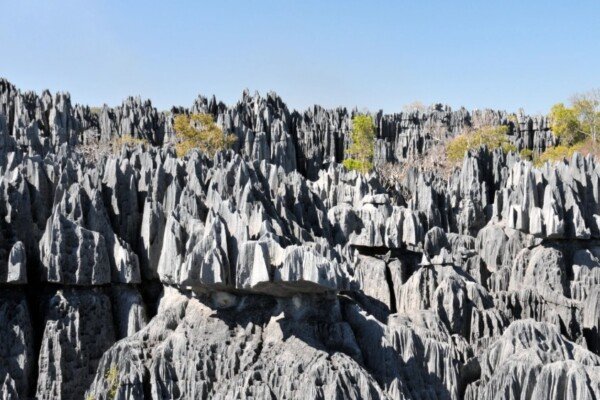
Tsingy de Bemaraha National Park: The Stone Forest of Madagascar
In a world filled with soft landscapes—rolling hills, sandy beaches, and swaying grasslands—Tsingy de Bemaraha National Park stands as a defiant, razor-sharp anomaly. It is a place where the earth seems to have sharpened its teeth against the sky.
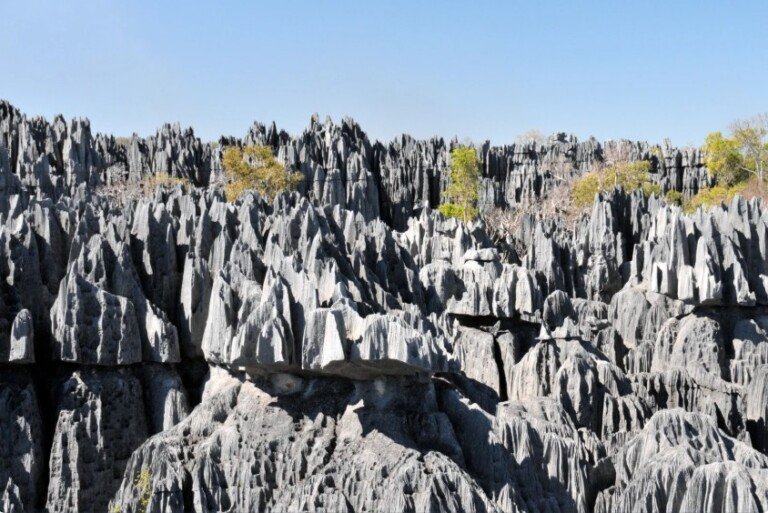
Located in the Melaky region of western Madagascar, this UNESCO World Heritage Site is a geological fortress. It consists of massive limestone cathedrals, some rising over 100 meters high, eroded over millions of years into a dense forest of jagged needles, slot canyons, and suspended bridges.
Visiting the Tsingy is not a casual sightseeing trip; it is an expedition. It requires traversing hanging bridges, crawling through caves, and navigating a labyrinth of stone. But for those who make the journey, it offers one of the most visually arresting and biologically unique experiences on the planet.
This guide explores the geology, the endemic wildlife hiding within the rock, and the practicalities of conquering the “Stone Forest.”
1. Introduction: What is a “Tsingy”?
The word *Tsingy* is Malagasy. It is derived from the verb *mitsingitsingy*, which roughly translates to “walking on tiptoes.” It is a fitting name. The rock formations here are so sharp and densely packed that it is impossible to walk normally; one would have to dance gingerly on the tips of one’s feet to avoid being cut.
Geologically, the Tsingy is a **karst landscape**.
- The Origin: About 200 million years ago, this entire region was submerged under a warm, shallow sea. Layers of shells and coral accumulated, forming a massive plate of limestone.
- The Uplift: Tectonic activity eventually pushed this limestone plate upwards, exposing it to the air.
- The Erosion: For millennia, heavy tropical rains carved the soft rock. The water dissolved the limestone along vertical fissures, widening them into deep canyons and leaving behind the harder rock as knife-edged pinnacles.
Today, the park covers 157,710 hectares and is divided into two sections: the Grand Tsingy (strict access, high cliffs) and the Petit Tsingy (easier access, smaller formations).
2. The Landscape: A Tale of Two Worlds
The magic of Bemaraha lies in its verticality. The environment at the top of the pinnacles is completely different from the environment at the bottom of the canyons. It is essentially two ecosystems stacked on top of each other.
The Summit (The Roof of the World)
At the top of the Tsingy, the conditions are harsh. The grey limestone absorbs the tropical sun, creating temperatures that can exceed 40°C (104°F).
- The Vibe: Arid, hot, and exposed.
- The Flora: The plants here are *xerophytes* (dry-adapted). You will see succulents like *Pachypodiums* (Elephant’s Foot) clinging to the bare rock with swollen trunks, and thorny vines that seem to grow out of solid stone.
The Canyons (The Underworld)
Descend a few meters into the fissures, and the world changes. The tall pinnacles block the sun, creating deep, permanent shadows.
- The Vibe: Cool, humid, and mysterious.
- The Flora: The bottom of the Tsingy acts as a moisture trap. Here, tall forest trees grow in the narrow corridors, reaching for the light. Mosses, ferns, and orchids thrive in the damp air. It is a secret rainforest hidden inside a desert of rock.

3. The Wildlife: Life on the Edge
Despite the seemingly inhospitable terrain, Tsingy de Bemaraha is a fortress of biodiversity. The rugged landscape has protected the animals from human encroachment and predators, allowing unique species to evolve.
The Lemurs
There are 11 species of lemurs recorded in the park, inhabiting both the dry deciduous forests surrounding the Tsingy and the canyons within it.
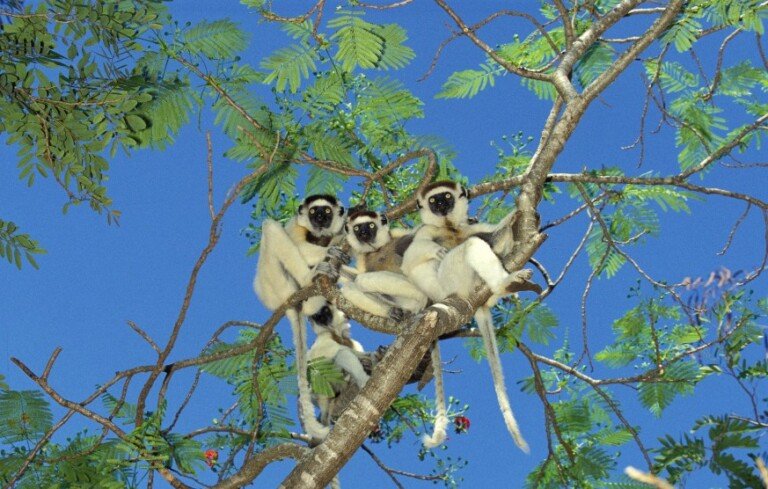
- Decken’s Sifaka (Propithecus deckenii): The icon of the park. These lemurs are creamy white with black faces. They are famous for their incredible agility, leaping from one razor-sharp limestone needle to another without ever cutting their hands or feet. Seeing a white Sifaka bounding across the grey stone forest is a photographer’s dream.
- Red-Fronted Brown Lemur: Often found in the forested canyons and easier to spot in the campsite areas.
- Fat-Tailed Dwarf Lemur: A nocturnal species that hibernates during the dry season (a rare trait for primates).
- Grey Mouse Lemur: One of the smallest primates in the world, spotted during night walks.
The Birds
The park is an Important Bird Area (IBA) with over 100 species.
- Madagascar Fish Eagle (Haliaeetus vociferoides): Critically endangered. The park’s Manambolo River is one of the few places where you might see this majestic raptor.
- Giant Coua: A large, ground-dwelling bird with blue skin around its eyes.
- White-browed Owl: Often seen roosting in the dark crevices of the canyons.
Reptiles and Amphibians
The nooks and crannies of the limestone provide perfect homes for “herps.”
- Antsingy Leaf Chameleon (Brookesia perarmata): Endemic to this park. It is a small, prehistoric-looking chameleon covered in thorny scales that mimic the jagged rock.
- Iguanas: Madagascar has iguanas (Opluridae), which is a biogeographical mystery (as most iguanas are in the Americas). You will see them basking on the hot rocks.
4. The Adventure: Exploring the Park
Tsingy de Bemaraha is not a “drive-through” park. It is an adventure playground. To explore it, you must wear a harness. The park infrastructure is a marvel of engineering, featuring Via Ferrata-style cables, ladders, and suspension bridges.
Safety: You must hire a certified guide. You will be provided with a climbing harness and carabiners to clip onto steel cables for safety in exposed areas.
The Grand Tsingy Circuits
Located about 17km from the park entrance, this is the main event.
- Andamozavaky Circuit (4-6 hours): The most popular and spectacular route.
- The Forest Walk: It starts with a hike through the dry forest, where you might spot lemurs.
- The Ascent: You climb up ladders and scramble over rocks to reach the top of the pinnacles.
- The Suspension Bridge: The highlight is a 20-meter long rope bridge suspended over a deep chasm between two limestone towers. It is terrifying for those with vertigo but offers the definitive view of the park.
- The Caves: The route often descends into the cool, dark caverns below before looping back.
- Broadway Circuit: An extension of the Andamozavaky, exploring more underground tunnels and narrow passages. It requires more crawling and flexibility.
The Petit Tsingy Circuits
Located right next to the village of Bekopaka (the base for all visitors), this area is accessible without the long 4×4 drive required for the Grand Tsingy.
- The Experience: The formations are smaller (10-20 meters high), but the labyrinth is just as intricate. It is an excellent introduction to the geology and a great place to spot the Decken’s Sifaka up close. It usually takes 2 hours and is less physically demanding, making it suitable for children or older travelers.
The Manambolo River Gorge
Most tours include a pirogue (traditional canoe) trip up the Manambolo River.
- The Gorge: The river cuts through the limestone plateau, creating vertical cliffs on both sides. It is a stunning, silent canyon.
- The Caves: Along the river, you can visit stalactite-filled caves.
- The Vazimba Tombs: High up on the cliff faces, you can see ancient burial sites of the *Vazimba* (the first inhabitants of Madagascar). These are sacred and inaccessible, but clearly visible from the boat.
5. Logistics: The Journey is Half the Adventure
Tsingy de Bemaraha is notorious for being difficult to reach. It is one of the most isolated parks in Madagascar. The journey is an integral part of the experience, often described as a “rite of passage.”
Getting There: The Road from Morondava
The standard route starts in the coastal town of Morondava.
- Vehicle: You absolutely need a robust 4×4 vehicle.
- The Route: You drive north on a dirt track (parts of the RN8). The journey takes a full day (8 to 10 hours) to cover roughly 200km.
- The Ferries: You must cross two rivers (the Tsiribihina and the Manambolo) on makeshift ferries. These ferries are essentially wooden platforms balanced on two canoes, sometimes powered by a small motor, sometimes by poles. It is chaotic, slow, and undeniably African.
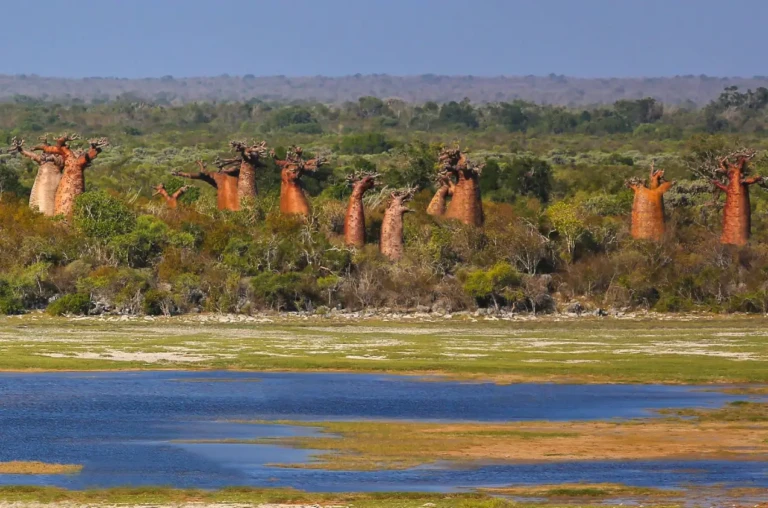
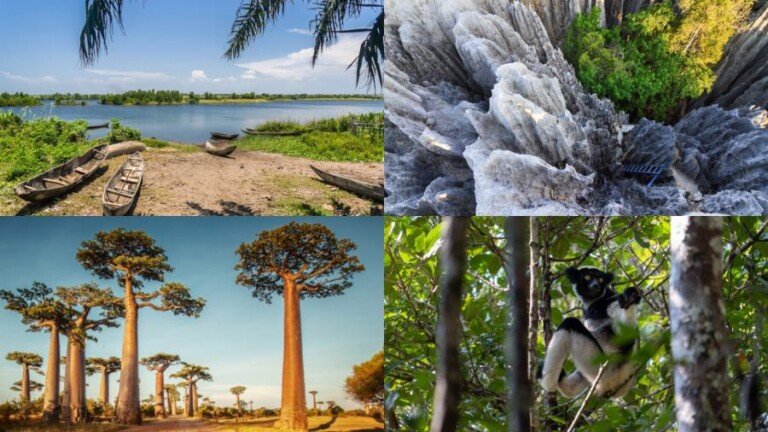
- Stops: The route passes the famous Avenue of the Baobabs. Most travelers stop here for sunrise or sunset on the way to or from the Tsingy.
The Alternative: The Tsiribihina River Descent
Many travelers choose to arrive by boat.
- The Trip: You take a 2.5-day river cruise down the Tsiribihina River on a barge or canoe, camping on sandbanks at night.
- The Arrival: The boat trip ends near Belo sur Tsiribihina, where your 4×4 meets you to complete the drive to the park.
When to Go (Crucial!)
The park is seasonal.
- Open: May to November (Dry Season).
- Closed: December to April (Rainy Season).
- Why? During the rains, the dirt road from Morondava turns into impassable mud, and the river levels rise, making the area completely inaccessible. The park effectively shuts down.
- Best Time: June to October offers the coolest temperatures. September and October are hotter, but excellent for wildlife.
6. Accommodation: Bekopaka
The village of Bekopaka sits on the banks of the Manambolo River and serves as the base camp for the park. Over the years, infrastructure has improved significantly.
- Luxury: *Soleil des Tsingy* and *Le Grand Hotel des Tsingy* offer high-end bungalows, swimming pools, and sweeping views. A pool is a godsend after a hot day on the rocks.
- Mid-Range: *Olympe du Bemaraha* offers comfortable rooms and a great hilltop restaurant.
- Budget/Camping: There are several campsites and basic guesthouses in the village. Camping is a great way to save money, but be prepared for heat and mosquitoes.
7. Cultural Context: The Vazimba and the Sakalava
The region is steeped in history. Before the current Sakalava ethnic group dominated the area, it was inhabited by the Vazimba, a semi-mythical people often described as small in stature.
- The Tombs: As mentioned, the Vazimba buried their dead in the cliff faces of the gorge.
- Fady (Taboos): The Tsingy is a sacred place. There are strict *fady* to observe.
- It is forbidden to point at the tombs with your index finger (use a knuckle).
- It is forbidden to urinate in the Tsingy (it is considered a natural cathedral).
- Local guides will always perform a small prayer or offering before entering certain caves.
The Sakalava people of this region are known for their cattle culture (zebus) and their unique funerary art, including erotic wooden sculptures on tombs (though these are mostly found further south near Morondava).
8. What to Pack for the Tsingy
This is a specific environment requiring specific gear.
- Headlamp: Essential for the caves. The park sometimes provides them, but bring your own to be safe.
- Gloves: *Highly recommended.* The limestone is razor-sharp. Scrambling up rocks can shred your hands. A pair of gardening gloves or fingerless cycling gloves works wonders.
- Sturdy Shoes: Do not wear flip-flops or Converse. You need hiking boots or trail shoes with a thick sole and good grip.
- Sun Protection: The Grand Tsingy is a solar oven. Bring a hat, high SPF sunscreen, and sunglasses.
- Water: You need to carry at least 2-3 liters per person for the Grand Tsingy hike. It is dehydrating work.
- Small Backpack: A daypack to carry your water and camera. It should be small enough not to get stuck when you are squeezing through narrow rock fissures.
- Long Pants: While it is hot, lightweight long pants protect your knees from scrapes against the rock.
9. Photography Tips
The Tsingy is one of the most photogenic spots on earth, but it is challenging to shoot.
- Contrast: The grey rock and the bright sun create high contrast. Shoot in RAW to recover shadows.
- Golden Hour: The best light is early morning or late afternoon when the sun casts long shadows, emphasizing the texture of the pinnacles.
- Wide Angle: Essential for capturing the scale of the landscape and the suspension bridge.
- Telephoto: Necessary for the Sifakas, who are often perched high on the spires.
- Perspective: Try to include people in your shots. Without a human figure for scale, it is hard to convey how massive the formations are.
10. Conclusion: A Geological Masterpiece
Tsingy de Bemaraha is more than just a national park; it is a testament to the power of time and water. It is a landscape that defies logic—a forest made of stone, a desert that hides a jungle, a fortress that invites exploration.
The journey to get there is long, bumpy, and exhausting. The heat can be oppressive. The climbing can be tiring. But the moment you step onto that suspension bridge and look down into the abyss of grey needles and green canopy, every bump in the road is forgotten.
It is a bucket-list destination for a reason. Nowhere else on earth can you navigate such a labyrinth, lock eyes with a white lemur atop a razor blade of rock, and feel so completely removed from the modern world. For the adventurous soul, Tsingy de Bemaraha is the crown jewel of Madagascar.
“`