
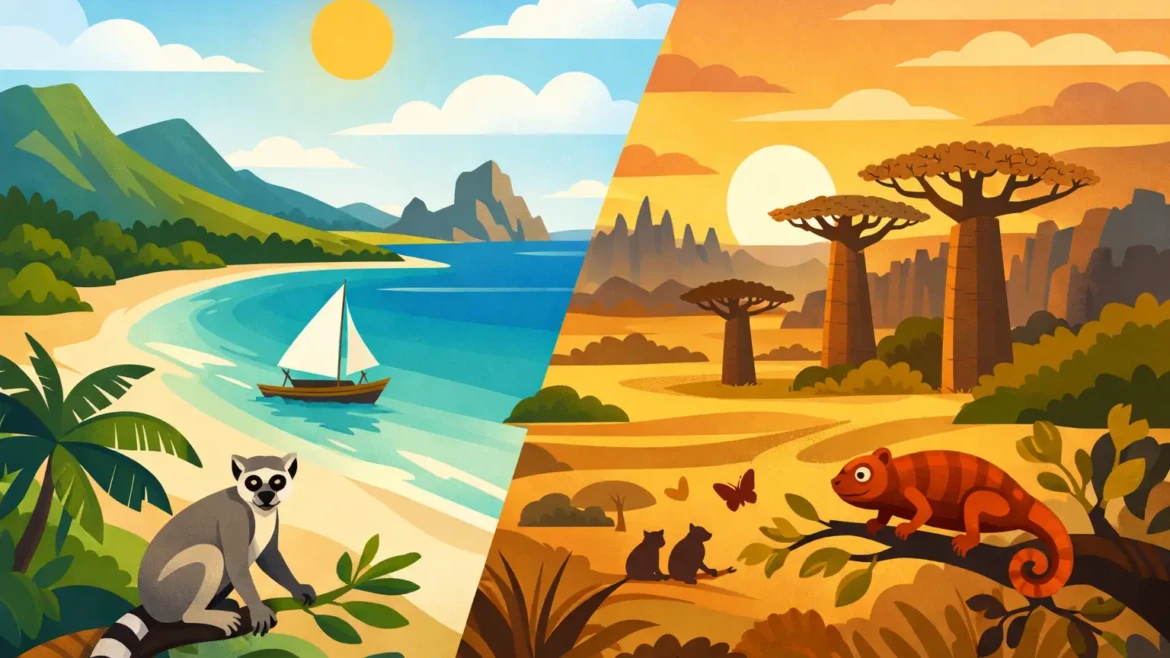
You can hear indri calls rolling through the rainforest at dawn, watch the sun drop behind the baobabs, and finish your trip on a warm Indian Ocean beach – but the timing of your Madagascar journey shapes all of it. If you are asking when should I visit Madagascar, the honest answer is not one single month. It depends on what you most want to experience, how far you plan to travel, and how comfortable you are with heat, rain, rougher roads, or bigger crowds.
Madagascar is not a one-season destination. It is a large island with very different climates from east to west and from the highlands to the coast. A trip focused on lemurs in the rainforests, the baobabs in the west, and a beach extension in Nosy Be has different timing considerations than a route built around the south, tsingy, or a river descent. That is why the best travel window is really the best window for your itinerary.
When should I visit Madagascar for the best overall trip?
For most travelers, the sweet spot is April to November. These months usually bring drier conditions, easier road travel, and strong wildlife viewing across many of the island’s classic routes. If you want a balanced trip with parks, landscapes, and beach time, this is the period that works best most often.
Within that broad window, there are meaningful differences. April and May are lush after the rains, with greener scenery and fewer travelers in many areas. June through August are cooler and dry, which is excellent for road trips and hiking, but some evenings in the highlands can feel surprisingly chilly. September to November is one of our favorite periods for many custom trips because conditions are often pleasant, wildlife activity can be rewarding, and the island feels vivid without the heavier rains of summer.
If you are trying to avoid the most complicated weather period, January through March is the trickiest time to plan. This is cyclone season, especially affecting coastal regions. Heavy rain can disrupt roads, domestic logistics, and access to some parks. Travel is still possible in some places, but this is not the easiest season for a classic first-time Madagascar itinerary.
Madagascar by season
April to May
This is a strong shoulder season for travelers who want green landscapes and a little more breathing room. The rains have eased in many parts of the country, forests look fresh, and the country can feel especially photogenic. If your priority is scenery and a more relaxed rhythm, these months deserve serious attention.
The trade-off is that some routes may still be recovering from the wet season, especially if they depend on secondary roads. If your itinerary includes remote western or southern stretches, timing and route design matter. A locally managed trip helps here because conditions can shift year to year.
June to August
These are among the most reliable months for overland travel. Roads are generally drier, temperatures are manageable, and many of Madagascar’s classic parks are in good shape for visiting. This is a good fit for travelers who want to cover a lot of ground with confidence.
The compromise is temperature, especially in the highlands. Antananarivo and inland stops can be cool in the morning and evening, so you should not expect tropical warmth at every point of the trip. If beach time is central to your trip, you may prefer the later dry-season months when the water and air feel a bit warmer.
September to November
If you want a trip that feels full of life, this is often an excellent time to go. Wildlife viewing is strong in many regions, temperatures are warming, and conditions remain generally favorable before the main rains return. Many travelers find this the most satisfying period for combining nature, road travel, and coastal time.
It is also a smart choice if you want variety. A trip might begin with rainforest wildlife, continue through highland landscapes and western icons, and end with beach time under clear skies. For travelers looking for that classic Madagascar arc, these months often deliver beautifully.
December to March
This is the wet, hot season, and planning becomes more selective. Rainforests are vibrant and some wildlife experiences can still be rewarding, but transport can become a real issue. Cyclones are the biggest concern, particularly for anyone trying to lock in domestic flights, island stays, or routes with fragile road access.
This season is not automatically off limits, but it is better suited to flexible travelers with a narrower regional focus rather than a long cross-island itinerary. If this is your only possible travel window, the trip should be built carefully around regions with more dependable access.
Best time for wildlife in Madagascar
Many travelers come for one reason first: wildlife that exists nowhere else on Earth. The good news is that there is no single bad season for seeing lemurs and other endemic species, but different months favor different experiences.
For general wildlife viewing, the dry season from about May to October is very dependable. Trails are easier, forests are more accessible, and sightings can be more comfortable because you are not dealing with frequent heavy rain. This is a strong window for first-time visitors who want a classic wildlife-focused itinerary.
If reptiles and amphibians are high on your list, the wetter months can be appealing because the forests are active and conditions suit many smaller species. The trade-off is that access becomes less predictable. Birders may also find the transition months especially rewarding, depending on the region.
September to November often strikes a very good balance for travelers who want active wildlife, easier logistics, and pleasant temperatures. If your dream is to combine rainforest parks with western landscapes and a few beach days, this period is hard to beat.
Best time for beaches and islands
Madagascar’s coastal and island extensions change the answer to when should I visit Madagascar. If you are adding Nosy Be or other beach time, weather and sea conditions matter as much as wildlife.
The drier, sunnier period from around May to November is generally the safest bet for beach extensions. Conditions are often more pleasant for boat trips, snorkeling, and simply enjoying the coast after a road-based circuit. September to November is especially attractive if you want warm beach weather without the heaviest summer rains.
If your whole trip is built around beach time with just a little inland touring, the shoulder months can be lovely. But if island time is only one part of a broader itinerary, it makes sense to choose the season based on the full route rather than the coast alone.
Best time for road trips and classic circuits
Madagascar rewards travelers who move through the country, not just those who stay in one place. The island’s magic often comes from contrast: highland towns, eastern rainforest, western baobabs, dramatic stone formations, river valleys, and then the sea. For that kind of trip, road conditions are a major factor.
The best period for classic multi-day circuits is usually April to November, with June to October offering the most reliable overland conditions. This is especially important if your trip includes long drives, remote lodges, or regions where a bad stretch of weather can slow everything down.
That does not mean every route is equally ideal in every dry-season month. Some travelers prefer the greener shoulder periods, while others want the crisp predictability of mid-season travel. The right choice depends on whether your priority is comfort on the road, dramatic scenery, specific wildlife, or beach time at the end.
How to choose your month
If you are still deciding when should I visit Madagascar, start with your top priority rather than the calendar. If you want the easiest first trip with a broad mix of highlights, plan for the dry season. If you want greener landscapes and fewer travelers, look at April, May, or early November. If beach time matters as much as wildlife, lean toward the later dry months. If you can only travel in the wet season, keep the route simpler and more region-specific.
This is also where private trip planning really matters. Madagascar is not a destination where a generic answer works for every traveler. A honeymoon with luxury lodges and island time, a photography trip centered on baobabs and lemurs, and a longer adventure with tsingy and remote roads should not all be scheduled the same way. At Travelers of Madagascar, that is exactly why trips are built around the season, the route, and the traveler’s goals rather than forcing everyone into one fixed template.
The best time to visit Madagascar is the time that matches the version of the island you most want to see – wild, green, dry, beachy, remote, or all of the above with the right route behind it.