
Ambalavao: gateway to Andringitra, soul of Antaimoro paper and home of silk
At the southern edge of Madagascar’s Highlands, where the RN7 gives way to the vast landscapes of the south, lies the busy town of Ambalavao. More than a picturesque stop, Ambalavao is of great cultural importance: a gateway to wilderness and ancient traditions. The last major centre before the Andringitra massif and the Tsaranoro valley, the air here blends local wine and the earthy smell of handmade paper. Here, the terraced rice paddies of the Betsileo meet the herds of the Bara, creating a cultural and economic crossroads.
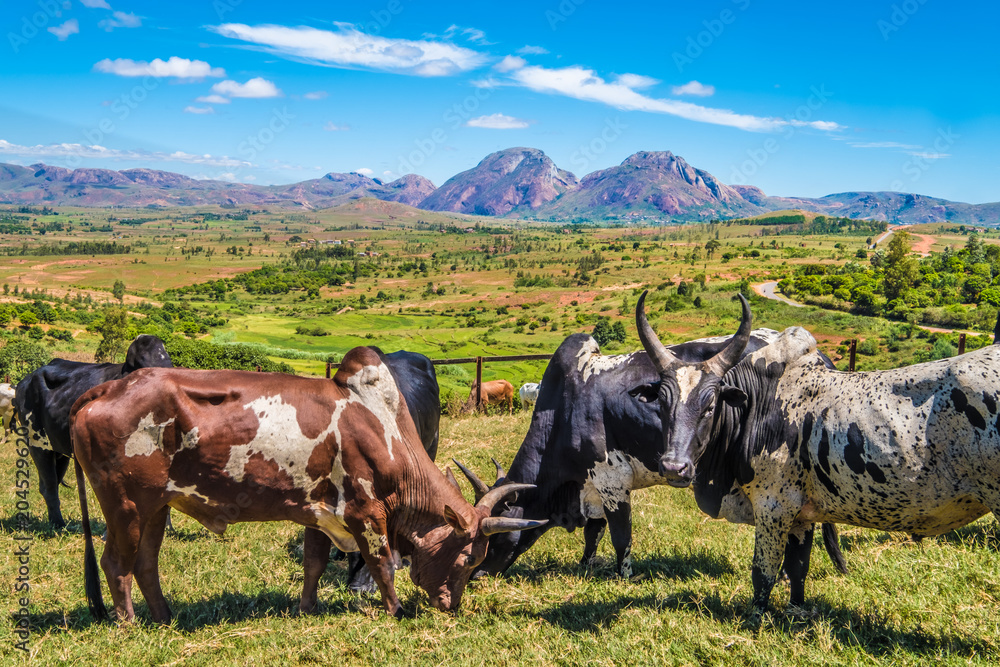
Ambalavao: crossroads of culture and trade
Ambalavao means “at the new village”, but its roots are deep and its cultural fabric rich. At over 1,000 m altitude, the town enjoys a cool climate. Nicknamed the “wine town”, it produces a often sweet grape wine and a strong spirit called betsabetsa, made from fermented cane.
The cattle market: a weekly spectacle
The famous zebu market of Ambalavao is the largest in Madagascar. Every Wednesday and Thursday the town buzzes: thousands of zebu arrive, brought by the Bara herders, for whom cattle are wealth and status.
The artisanal soul: Antaimoro paper and Landibe silk
Antaimoro paper: a fragrant story
The Antaimoro, of Arab‑Shirazi origin, introduced the art of paper to transcribe the Quran and sorabe. In Ambalavao, making it is an art: avoha bark is boiled and beaten into pulp, poured onto a frame, then flowers (jacaranda, bougainvillea, eucalyptus) are pressed in before sun‑drying, producing textured, scented sheets.
Landibe: the silk of wild butterflies
Landibe silk comes from the endemic caterpillar Borocera madagascariensis living on tapia trees. Cocoons are collected, boiled to remove sericin, hand‑spun, then dyed with natural pigments. The strong thread is woven on traditional looms into lambas and scarves, often by women’s cooperatives.
Gateway to nature: Andringitra and Tsaranoro
The real magic lies in access to the Andringitra massif, a mosaic of granite peaks, valleys and páramos, UNESCO‑listed. Ambalavao is the administrative base for expeditions.
Pic Boby (Imarivolanitra)
The main challenge: climbing Pic Boby (2,658 m), an accessible summit offering exceptional panoramas. The round trip takes 2–3 days.
Tsaranoro Valley: a climber’s paradise
The 800 m granite wall attracts climbers from all over the world. The area is also suitable for hiking, birdwatching and cultural visits to the Betsileo villages below.
Organising a trek from Ambalavao
Registration and payment are mandatory at the Madagascar National Parks (MNP) office in Ambalavao. Hire of guides (compulsory), porters, purchase of supplies, and arrangement of 4×4 transport for 45 km to Namoly.
Sample 3‑day itinerary (Andringitra circuit)
Day 1: Drive to the entrance and walk to base camp (4–6 h). Overnight in camp.
Day 2: Summit Pic Boby (7–9 h). Descend to camp.
Day 3: Return via a different path, visit the sacred Imaitso waterfall and return to the entrance.
Preservation and responsible tourism
Hire locally, ask permission for photographs, respect village dress codes, leave no trace, and buy directly from craft cooperatives to support the community.
Conclusion: where tradition meets the trail
Ambalavao contrasts the chaos of the market with the delicacy of paper; the cool highland air with the call of granite. It is not just a stop on the RN7, but a threshold: the last bastion before the physical challenge of Andringitra or the spiritual vastness of Tsaranoro. A journey through Ambalavao reveals the resilience, art and connection to the land that define southern Madagascar.
Access and best time to visit
The best time to visit Ambalavao and explore Andringitra National Park runs from May to October, during the dry season. Temperatures are pleasant, hiking trails remain passable and landscapes offer spectacular panoramas with often clear skies.
May–June: nature is still green after the rains, temperatures are mild and conditions ideal for trekking and photography.
July–August: cooler period, especially in the Highlands and at altitude around Pic Boby. Days are sunny but nights can be very cold.
September–October: excellent season for hiking, birdwatching and excursions in the Tsaranoro valley. Landscapes become drier but visibility is exceptional.
The rainy season, from November to March, can make some tracks difficult, especially in mountainous areas. However, this period brings lush vegetation and very green landscapes.
To attend the famous Ambalavao zebu market, plan your visit for a Wednesday or Thursday, the busiest days of the traditional market.