
Mananjary: the town where the Indian Ocean meets the Pangalanes Canal
From the endless Indian Ocean waves breaking along miles of palm-and-pandanus-lined shoreline to this town that so many continue through without getting to know, few destinations in Madagascar encapsulate local color like Mananjary. Mananjary is not polished. It is not a made-for-tourist destination. And that is exactly the reason why it never leaves you.
Over here, life flows with the rhythm of the tides, the arrival of fishing pirogues and the slow traffic of boats moving on top of the Pangalanes Canal. The clove, coffee, damp soil and Atlantic salt air are thick in the humid air. A cyclone lives beside them, eroding colonial buildings underneath clamouring markets that masks their decay; this town has become as it is over generations of traditions.
While Madagascar’s national parks and beaches seem to command the most attention, Mananjary offers visitors something that is much more rare: authenticity. For culture in Madagascar’s east coast, it’s one of the best places in the country to immerse yourself in a world where history, spirituality and everyday life stay close.
History of a Town Between River, Ocean and Canal
Before comprehension of Mananjary, one must first have a geography lesson. The town is located between the Indian Ocean and a series of rivers and waterways that flow towards the famous Pangalanes Canal.
Traditionally this area acted as a trading port for inland people with others from more coastal regions for centuries. Long before the advent of modern roads, spices, coffee, rice and medicinal plants spooled down these waterways.
In contrast to the dry highlands or the arid south, Madagascar’s southeast coast is a zone of extreme green. Rain pours throughout the year, nourishing thick walls of greenery and endless rivers heading to the ocean.
The mindset of the local population shaped and was determined by this environment — into a vicious circle.
The Antambahoaka People
Mananjary is the longtime cultural center of the Antambahoaka, one of Madagascar’s 18 main ethnic groups.
Antambahoaka oral history states that their ancestry includes a group of Arab migrants who landed centuries ago on Madagascar’s eastern coast. This information has been reproduced from winespectator.com Under the Att Soba Influences blended over time with adorable traditions to breed a different unified personality.
Of all ceremonies, however, the Antambahoaka people in particular have gained a reputation across Madagascar for just one: their Sambatra.
The Sambatra: The Most Unique Ceremony In Madagascar
Mananjary is the focus of one of Madagascar’s most important traditional events, held every seven years.
The Sambatra is a collective ritual of circumcision signifying an entry into manhood for the young boys of the Antambahoaka community.
To reduce it to just the circumcision is to utterly diminish its significance.
The town becomes a festive, musical procession and ceremonial space for more than 30 days. Families return from across Madagascar. Networks in which entire neighborhoods gather around the traditional rites that are repeated from generation to generation.
A Sacred Celebration
Ancestors rules strictly govern the Sambatra.
Specific songs must be performed. Sacred waters are collected. Traditional clothing is worn. Foods and practices are prohibited during the ceremonies.
It reaffirms the unity and identity of Antambahoaka people, being one of those living Malagasy traditions today that are well alive.
Very few outsiders see the whole ceremony, making it one of the least known yet foremost culturally important ceremonies in Madagascar.
Orthos, Colonisation and the Eastern Seaboard
Despite its more modest stature, like so many towns on Madagascar’s east coast, Mananjary really boomed with the French colonial era.
This served as a center for the export of cloves, coffee, vanilla and other hardwoods. Along the waterfront were warehouses, offices and trading houses.
A legacy of this colonial age is still evident today:
- Creole features, wooden balconies of slightly aged houses
- Weathered colonial offices
- Abandoned warehouses near the river
- Spacious tree-lined roads with traveller’s palms
Unlike cities transformed by modernization, however, Mananjary held onto its rough and tumble frontier feel.
Cyclones battered the town again and again in the twentieth century, halting growth and maintaining much of its old-world charm.
Madagascar’s Hidden Water Highway: The Pangalanes Canal
Mananjary’s biggest gifts is that it linked to Pangalanes Canal, a long channel of coastal on Madagascar’s east coast natural rivers and lakes and artificial waterways.
The route was originally built in colonial times to move cargo out of the way of ferocious ocean currents, but is still vital for numerous villages without any road access.
Life Along the Water
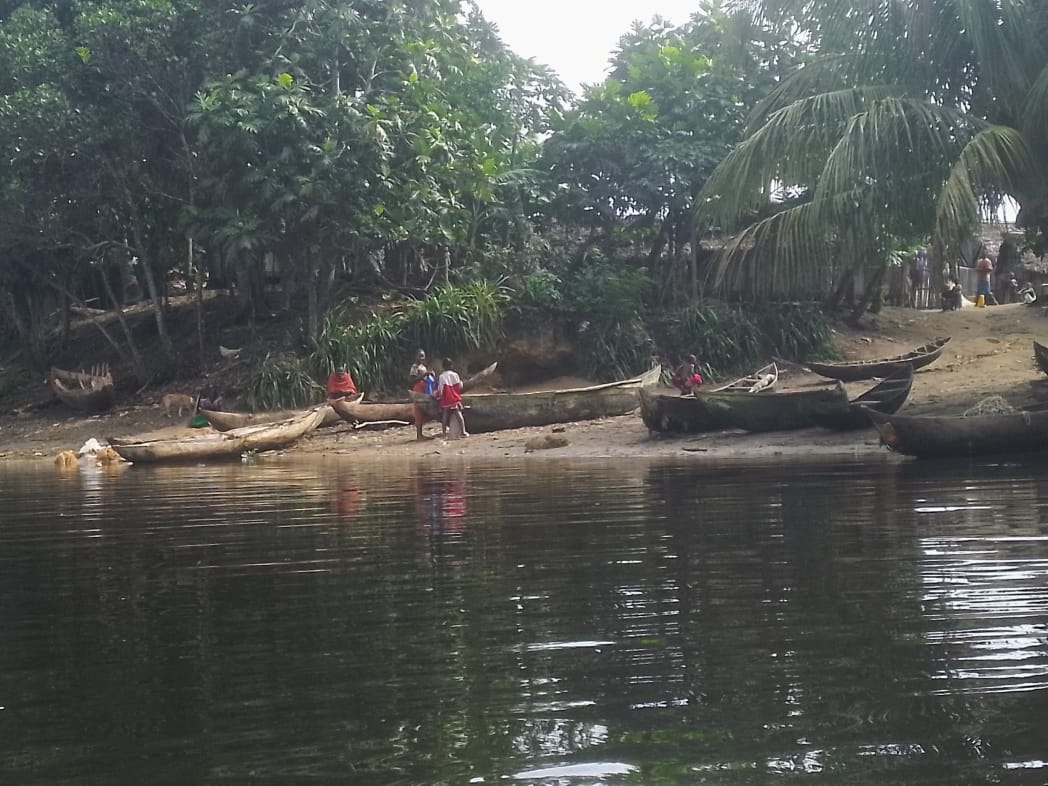
The Madagascar revealed by travelling north from Mananjary by boat is an entirely different one.
- Villages hidden among palm forests
- Children paddling dugout canoes
- Fishermen checking bamboo traps
- Women washing clothes on wooden pier
- Tiny rivers disappearing into rainforest
In much of the world, however, daily life has barely changed in a century.
The travel that takes place on the Pangalanes is by no means a fast one. It is about immersion.
Cyclones, Rain and Resilience
The south east coast is the rainiest area of Madagascar but also one of the most unsafe against tropical cyclones.
In Mananjary, cyclones are not exceptional disasters, but repeated material realities informing architecture and agriculture and everyday life.
Roofs are rebuilt. Boats repaired. Crops replanted.
It made them adaptive; accustomed to adversity, and the returning gratefulness they saw in their town was a part of that.
But travelers on the east (or wet) coast during that part of year soon experience the brute force of this climate.
Markets, Spices and Everyday Life
The ambitious markets of Mananjary are some of the most atmospheric on the island:
- Fresh lychees
- Cloves drying in the sun
- Coffee beans
- Cinnamon
- Smoked fish
- Wet raffia baskets
Agriculture — especially spice production, with Mananjary being one of Madagascar’s premier growing regions for these crops — encompasses most livelihoods around the city.
Coffee and Cloves
The surrounding countryside is predominately covered by clove trees. In harvest season, the roadsides transform into drying carpets of cloves.
Coffee production, especially in nearby rural communities, also holds importance.
In other words, Mananjary is not a place geared toward tourists here (at least not yet) but instead are absolutely local and incredibly vibrant.
The Beaches and Wild Indian Ocean
Endless, windy and almost empty the beaches of Mananjary.
This is not where people come to lounge on a luxury beach holiday. This ocean here is not gentle at all, the waves are restless and erratic.
The pirogue fishing vessels are parked along the shore as massive waves of ox-eye hammers never stop tumbling toward it.
Fishermen paddle wooden boats into the surf at sunrise in scenes that have changed little for centuries.
The beaches are perfect for photography long walks and experiencing Hauser of Madagascar on the southeast coast.
Conclusion
Mananjary is hardly a postcard destination in Madagascar however. It allows visitors no attempt to seduce them with luxury hotels or spruced up attractions.
It is more than that, much simpler but so much stronger as it allows us to immerse ourselves into the spirit of the eastern shores of Madagascar.
Still one of the more authentic, culturally rich towns on the island (connected to ocean, river and canal), sculpted by rain, cyclones and ancient ways is Mananjary.
It also can be unforgettable for travelers ready to face humidity, grumpy roads and uncertainty.