
Ambositra: gateway to the Zafimaniry kingdom and the heart of woodcarving
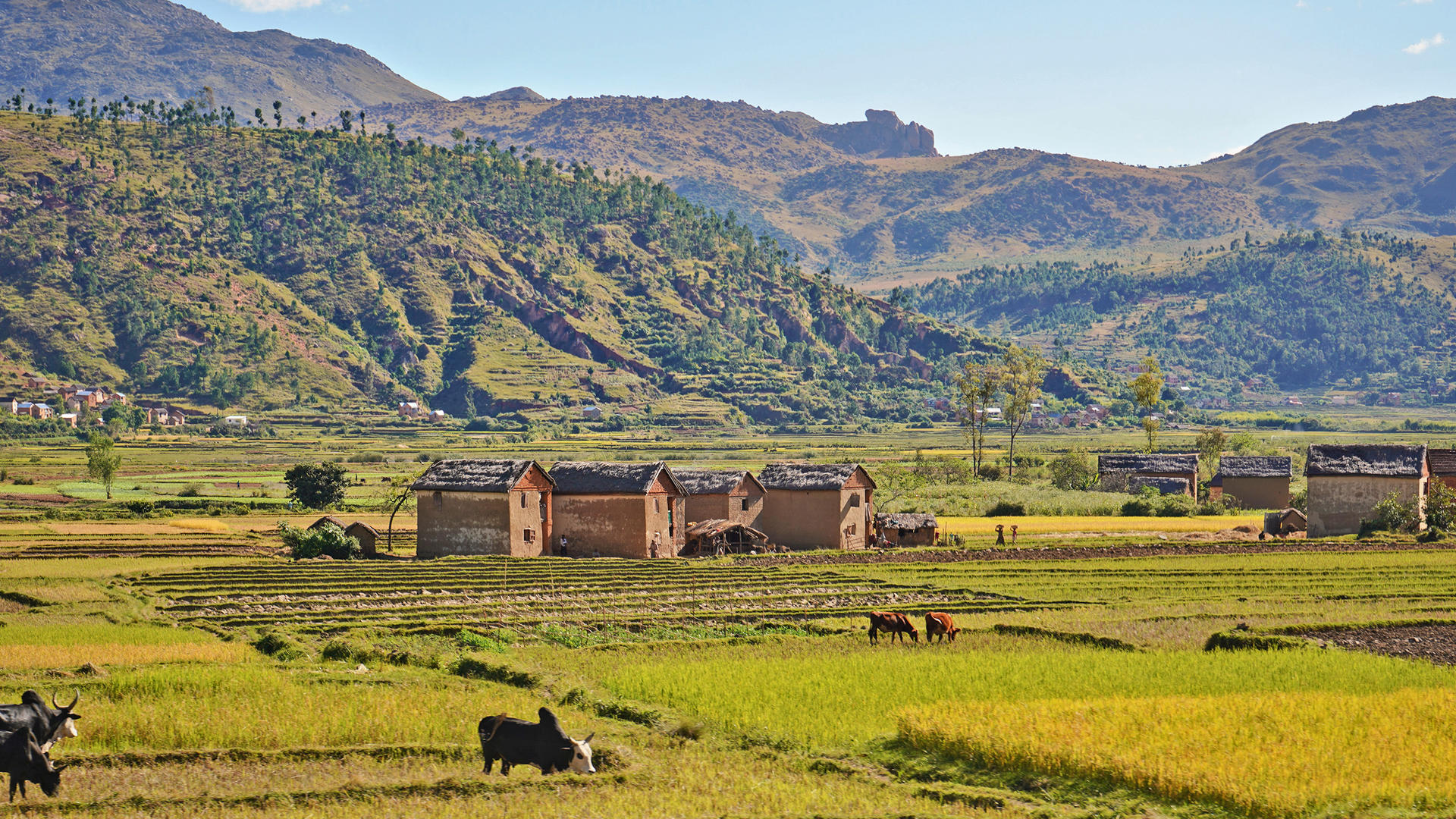
Nestled in Madagascar’s central Highlands, the busy town of Ambositra is far more than just a convenient stop on the RN7. Nicknamed the “capital of woodcraft”, it is the cultural and artistic gateway to one of the island’s most unique and isolated cultures: the Zafimaniry people. In this region, where cool terraced rice paddies drape the rolling hills and the air carries the scent of eucalyptus and pine, travellers immerse themselves in Malagasy craft traditions and the grand landscapes of the Highlands.
The real adventure, however, begins beyond the town limits, on multi‑day treks leading to remote Zafimaniry villages, a UNESCO‑recognised culture whose intricate wood‑carving skills are one of the last living legacies of Madagascar’s ancient forest culture. From workshops where rosewood is shaped to the entirely carved houses of mountain villages, the journey links contemporary creation with ancestral heritage.
Ambositra: the heartbeat of Malagasy craftsmanship
Ambositra is the capital of the Amoron’i Mania region and historically a crossroads between the Betsileo and Merina peoples. Its name, “where there are many soldiers”, recalls its former strategic importance; today the battle being fought is for cultural preservation, waged with wood chisels and undiminished talent.
Dozens of workshops and shops line its streets, displaying an impressive variety of handmade pieces. Behind the windows, master craftsmen and apprentices transform rosewood, ebony and other precious woods into fine marquetry, furniture, boxes, models and decorative panels. The Craft Centre is an essential stop to appreciate the delicacy and diversity of the work.
Beyond wood, Ambositra is an excellent introduction to Betsileo culture, famous for its skilfully engineered terraced rice paddies. The surrounding countryside forms a chessboard of fields carefully sculpted into the slopes. The local market, brimming with vegetables, spices, baskets and textiles, is a permanent theatre of colour and scent. For travellers, the town also serves as a handy base camp before and after treks into Zafimaniry country.
The Zafimaniry: UNESCO guardians of a forest culture
A Betsileo sub‑group, the Zafimaniry took refuge several centuries ago in the forested mountains east of Ambositra to escape the political turmoil and deforestation linked to the Merina kingdom. This isolation has preserved a unique culture, declared a Masterpiece of the Oral and Intangible Heritage of Humanity by UNESCO in 2003.
They are the last heirs of a wood culture once widespread throughout the forested Highlands. Their world view is expressed through wood: every man is a carpenter, mastering the choice of species, their symbolic and practical properties, and complex joinery techniques without nails or screws. Traditional houses, built entirely of wood with perfectly fitted pegs and tenons, are covered with carved motifs evoking family, ancestors, protection and social cohesion.
This symbolic language is also found on everyday objects – plates, tools, boxes – and on the famous Alando panels. To pass through villages like Sakaivo, Fempina or Ifasina is to wander through an open‑air museum where every surface tells a story.
The trek: several days in the heart of a living heritage
A Zafimaniry trek is the highlight of a stay in Ambositra. It is a demanding but deeply rewarding experience, combining mountain landscapes, sacred forests and cultural immersion.
A trek of 2 to 3 days is strongly recommended rather than a simple day trip. It allows you to reach more authentic and less‑visited villages, sleep in local homes, share meals and observe the rhythm of life from sunrise to sunset. A classic 3‑day itinerary includes an initial 4×4 transfer to the end of the track, 3‑5 hours of walking on the first day, a longer central day linking several villages via ridges and undergrowth, then a morning of wandering in the village before returning to Ambositra.
A local guide is essential, both for navigation and for respecting fady (taboos) and customs. Operators such as Ivato River Lodge, near Ambositra, specialise in these treks and work closely with the communities.
Marolambo: the wild counterpart deep in the rainforest
If Ambositra and the Zafimaniry embody the crafted expression of Highland forest culture, Marolambo, far to the east, is its raw counterpart in the heart of the rainforest. Accessible only by difficult tracks, by boat or on foot, this isolated district borders vast forest blocks linked to Marolambo National Park and other protected areas.
Here, villages cling to slopes covered in dense vegetation, rivers cut deep gorges and the canopy shelters lemurs, chameleons and a rich endemic birdlife. Multi‑day expeditions from Marolambo lead into some of the least‑visited forest massifs.
Conclusion
Ambositra, the Zafimaniry Highlands and the remote forests of Marolambo together tell the whole story of wood in Madagascar: from material transformed into a sculpted language to the rainforest that still sustains the villages. Walking between workshops, carved houses and jungle trails is far more than a beautiful journey – it is supporting communities that are actively, and skilfully, preserving a living heritage.
Access and best time to visit
Visit Ambositra between May and October for cooler, drier weather, less muddy trails and better conditions for day walks and multi‑day treks to Zafimaniry villages.
Practical tips
- Bring warm clothing for cool evenings at altitude.
- Take good walking shoes, a light rain jacket and sun protection.
- A local guide is mandatory for Zafimaniry treks – book in advance.