
The Cirque Rouge of Majunga – red canyons, pinnacles and erosion landscapes of north‑western Madagascar
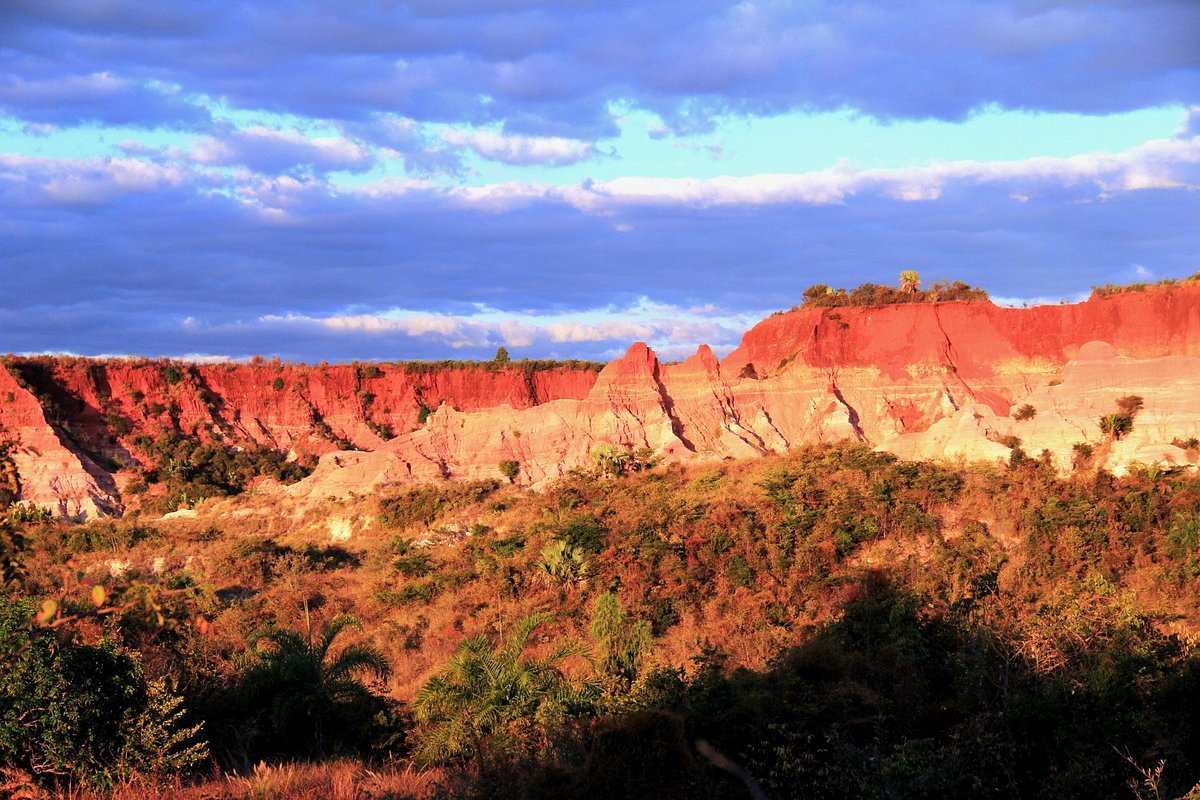
The Cirque Rouge of Majunga (Mahajanga) is one of the most unusual landscapes in north‑western Madagascar. Unlike the country’s large national parks, you don’t come here to see lemurs or tropical forests, but to admire an almost unreal landscape of canyons, pinnacles and red hills sculpted by erosion.
Located about an hour from Majunga, the site appears suddenly in the middle of a relatively flat, dry region. The formations are composed of sand, clay and laterite that, over the years, rain and wind have transformed into a veritable labyrinth of spires and colourful walls.
What makes the Cirque Rouge particularly spectacular are the colours. Depending on the time of day, the landscape shifts from deep red to orange and ochre. In the late afternoon, when the sun drops, the shadows accentuate the shapes of the formations and the whole natural amphitheatre resembles an almost desert‑like scenery.
The site is not very large, but the atmosphere is unique. The contrast between the red earth, the blue sky and the dry north‑western vegetation creates a setting completely different from other regions of Madagascar.
The Cirque Rouge is often combined with a stay in Majunga, famous for its long seafront promenade, markets, giant baobabs and the relaxed atmosphere of the west coast.
How to get there
The Cirque Rouge lies about 40 km from Majunga (Mahajanga). It is generally reached by 4×4 or a vehicle suited to dirt tracks, especially during or just after the rainy season. The journey takes about 1 hour to 1 hour 30 depending on track conditions.
Many travellers visit the site as a half‑day excursion from Majunga, often in the afternoon to take advantage of the best light.
When to go
The best time to visit the Cirque Rouge generally runs from May to November during the dry season. From June to September temperatures are more pleasant and the tracks are normally in better condition. During the rainy season, from December to March, some tracks can become muddy or difficult.
The best time of day is late afternoon, when the warm light enhances the red and orange colours of the formations.
Tips
- Bring water, a hat and sun protection. The area is very exposed and can become extremely hot in the middle of the day.
- Good shoes are useful as the ground can be crumbly and slippery after rain.
- The visit does not require strenuous trekking, but it is worth walking a little along the edges of the cirque to take in the different perspectives and colours.
- If possible, avoid the midday hours. The afternoon light makes the site far more spectacular for photography and panoramas.