
Ankarafantsika National Park – dry forests, sacred lakes and baobabs of north‑western Madagascar
Ankarafantsika National Park is one of the most important protected areas in Madagascar, a vast expanse of dry forests, sacred lakes, canyons, savannas and baobabs in the north‑west of the island. Located along the RN4 between Antananarivo and Mahajanga, the park combines accessibility with wilderness, offering one of the best introductions to western Madagascar’s ecosystems.
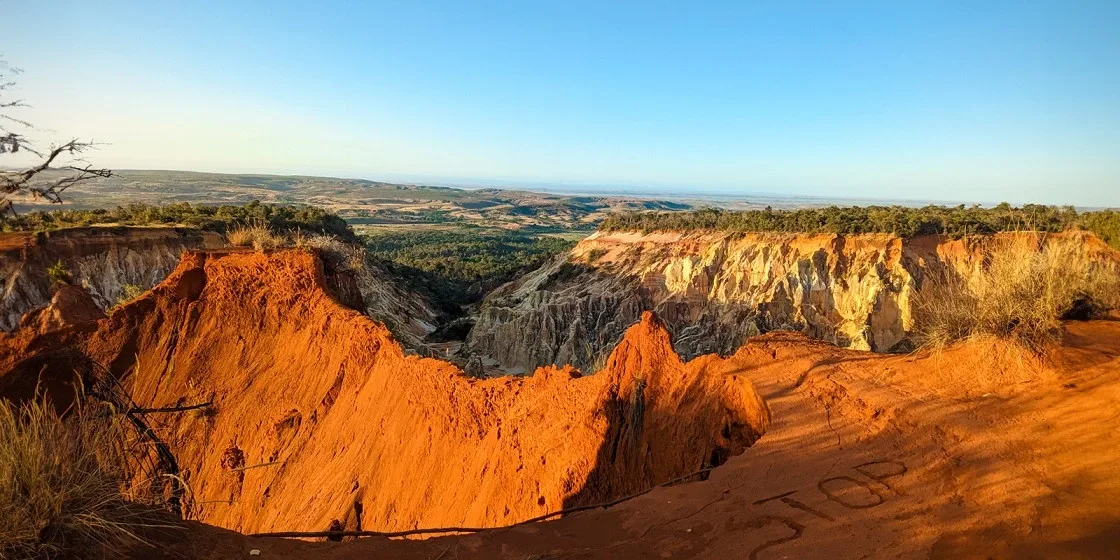
Unlike the eastern rainforests, Ankarafantsika reveals a completely different landscape: dry forests shaped by seasonal drought, lakes surrounded by dense vegetation, red sandstone canyons and gigantic baobabs scattered between savannas and hills. The contrast between the red earth and the wooded areas creates spectacular panoramas, especially at dawn and dusk when the warm light filters through the trees.
Covering more than 1,300 square kilometres, the park is part of one of the largest remaining corridors of dry forest in Madagascar and plays a vital role in the protection of endemic species unique to the world.
For many travellers, Ankarafantsika represents the perfect balance of wildlife, landscapes, trekking and authentic wilderness.
Geography and landscapes of the park
Ankarafantsika National Park is situated in north‑western Madagascar, in the Boeny region. The landscape is dominated by dry deciduous forests, sandy hills, canyons, lakes and vast savannas shaped by erosion and seasonal rivers.
The park’s territory includes: dry forests, sandstone canyons, sandy plateaus, wetlands, sacred lakes and rocky viewpoints.
The climate is tropical but strongly seasonal. Between April and November conditions are generally dry and sunny, while the rainy season transforms the landscape into an intensely green forest criss‑crossed by temporary streams.
One of the most fascinating features of the park is the presence of large sacred lakes, especially Lake Ravelobe, surrounded by dense forest and considered sacred by the Sakalava communities.
The combination of red earth, baobabs and lakes makes Ankarafantsika one of the most emblematic landscapes of western Madagascar.
Trails and circuits
Ankarafantsika offers a network of accessible trails suitable for different fitness levels, always accompanied by local guides.
The park is particularly appreciated because it allows excellent wildlife sightings even on short excursions.
Among the most popular circuits:
Coquerel’s sifaka circuit
One of the best trails to observe the famous white sifaka, known for its spectacular sideways leaps.
Canyon circuit
A panoramic route through dry forests and eroded formations with magnificent views over the lakes and savannas.
Lake Ravelobe circuit
A quiet walk around one of the park’s sacred lakes where crocodiles and waterbirds can be observed.
Birdwatching trails
Short paths ideal for spotting endemic birds hidden in the forest.
Night walks
Guided walks to look for chameleons, geckos, nocturnal lemurs and reptiles active after sunset.
The trails are generally easy or moderate, although the heat can become intense in the middle of the day.
Wildlife
Ankarafantsika National Park is considered one of the great biodiversity sanctuaries of western Madagascar, especially for birdlife and fauna adapted to dry environments.
The park harbours numerous endemic species perfectly adapted to high temperatures and seasonal water scarcity.
Among the most important species:
- Coquerel’s sifaka (Propithecus coquereli): symbol of the park, famous for its white coat and elegant movements.
- Common brown lemur (Eulemur fulvus): frequently observed in forested areas searching for fruit and leaves.
- Mongoose lemur (Eulemur mongoz): a rarer species present in the park’s wetter areas.
- Madagascar fish eagle (Haliaeetus vociferoides): one of the rarest raptors in the world, occasionally seen near the lakes.
- Nile crocodile (Crocodylus niloticus): present in several lakes and wetlands of the park.
The park also hosts numerous bird species, reptiles, geckos and chameleons.
Flora and vegetation
The vegetation of Ankarafantsika perfectly reflects the dry ecosystems of western Madagascar.
The plant structure combines: dry deciduous forest, savanna vegetation, riparian forests and landscapes dominated by baobabs.
During the dry season many trees lose their leaves to conserve water, transforming the landscape into shades of red, gold and brown. After the rains the forest becomes intensely green.
Among the most representative plant species:
- Baobabs: iconic trees scattered throughout the park and surrounding savannas.
- Pachypodium: succulent plants adapted to arid conditions.
- Endemic dry forests: numerous tree species typical of western Madagascar.
- Raffia palms and riparian vegetation: found near lakes and wetlands.
The vegetation plays a fundamental role in soil stabilisation and water resource conservation.
Ecological importance
Ankarafantsika National Park represents one of the most important conservation areas in Madagascar.
The park protects one of the last large dry forests of the country, ecosystems heavily threatened by deforestation and agricultural expansion.
Its ecological importance includes:
- protection of endemic fauna
- conservation of dry forests
- safeguarding of lakes and watersheds
- refuge for rare birds
- maintenance of ecological corridors in western Madagascar
The park also holds strong cultural importance for the Sakalava communities, who consider certain lakes and forest areas sacred.
Despite its protected status, Ankarafantsika still faces threats from fires, illegal logging and agricultural pressure.
Access and best time to visit
Ankarafantsika National Park is located in north‑western Madagascar along the RN4 between Antananarivo and Mahajanga.
Indicative travel times:
- about 8–9 hours from Antananarivo
- about 2–3 hours from Mahajanga
Its accessibility makes it one of the easiest national parks to include in an itinerary through western Madagascar.
The best time to visit Ankarafantsika National Park is generally between April and November, when the weather remains dry and sunny, ideal for trekking and wildlife observation.
Between June and September temperatures are slightly cooler and conditions excellent for photography and birdwatching.
The rainy season from December to March transforms the landscape into lush forest, although some tracks may become difficult due to mud.
Conclusion
Ankarafantsika Park offers one of the best introductions to the wild landscapes of western Madagascar. With its dry forests, sacred lakes, endemic fauna, baobabs and red sandstone canyons, the park reveals a face completely different from the eastern rainforests.
Whether observing sifakas leaping among the trees, exploring red canyons, searching for rare birds around the lakes or walking under ancient baobabs at sunset, the visitor quickly understands why Ankarafantsika remains one of the most fascinating national parks in Madagascar.
The park combines biodiversity, accessibility, landscapes and cultural value in a way that few places on the island can match.